
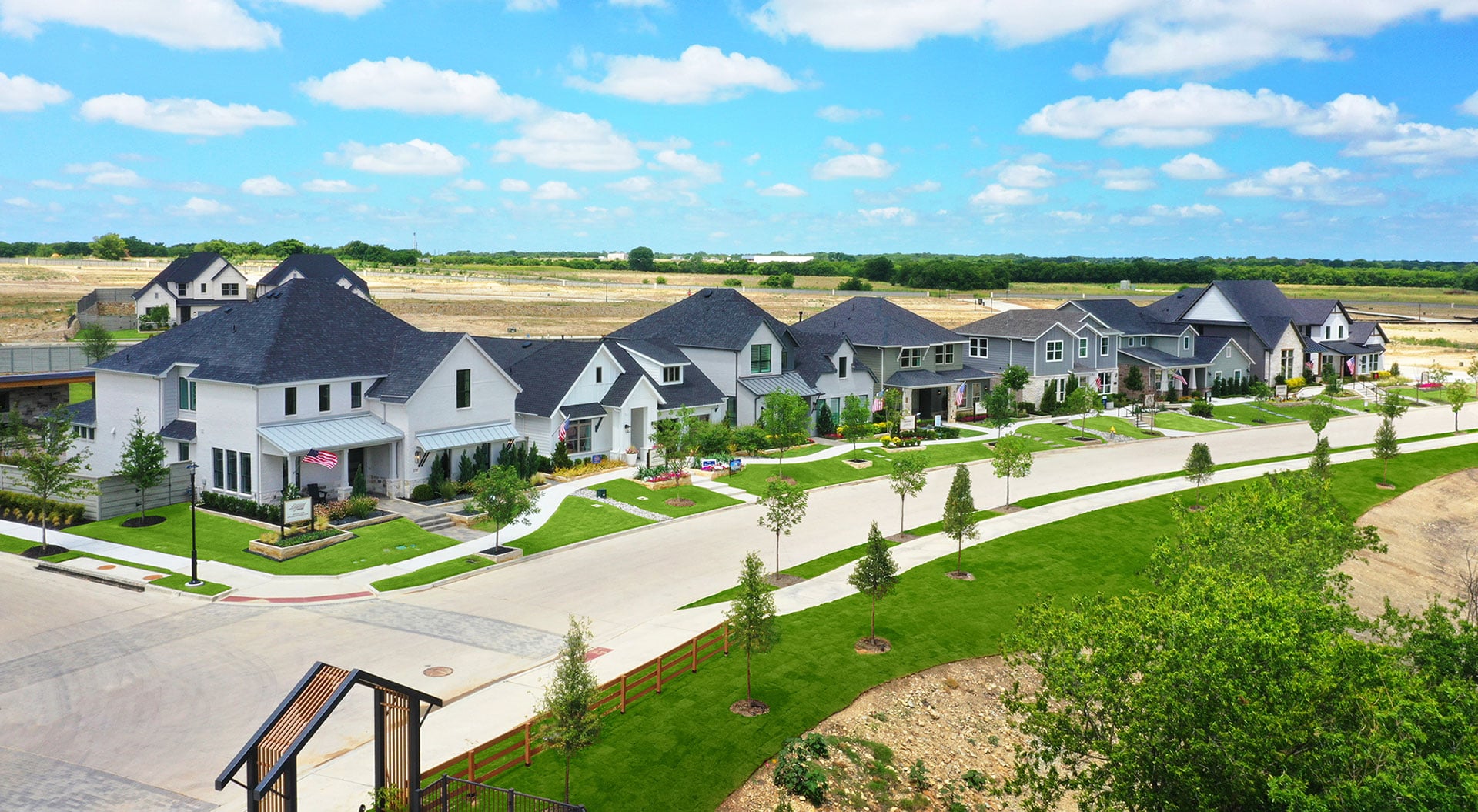
Thinking about buying in Treeline located in Justin, TX? Before you tour a model home or sit down with a builder's sales rep, here's what you actually need to know about pricing, taxes, and what's really included — so you can walk in with clear eyes instead of being caught off guard by numbers that don't show up on the brochure.
Treeline is one of the newer master-planned communities in the fast-growing Justin, TX corridor, and it's attracting a lot of attention from families looking for new construction in a strong school district without the price tags attached to closer-in DFW suburbs. That combination is genuinely appealing. But like any new construction purchase, the full picture is more complex than the model home makes it look. This guide is designed to give you that full picture — calmly, without pressure, so you can make a decision that actually makes sense for your family and your budget.
If you're just starting to explore the area, our Justin, TX neighborhood guide is a great place to start building context before diving into the specifics of Treeline.
Key Takeaways: Treeline Justin TX
- Location: Treeline is a master-planned community in Justin, TX (76247), in Denton County — approximately 30–40 minutes north of downtown Fort Worth with strong access to the AllianceTexas employment corridor.
- Home prices range from roughly $350,000 for entry-level homes to $600,000+ for premium lots and fully upgraded builds — but the final number depends heavily on upgrades, lot selection, and builder.
- Total monthly cost includes your mortgage P&I, Denton County property taxes (~2.3% effective rate), potential MUD district taxes, HOA fees ($50–$150/month), and homeowners insurance — always calculate all of these before deciding what you can afford.
- School district: Treeline is zoned to Northwest ISD, which consistently earns "A" or "B" ratings from the Texas Education Agency and is a major driver of long-term home values in the area.
- Builder representation: The builder's sales rep works for the builder — not you. An independent buyer's agent represents your interests, reviews contracts, and helps you negotiate.
- MUD taxes: Verify whether Treeline falls within a Municipal Utility District before committing — this can add $1,500–$3,000+ annually to your tax bill.
- Market conditions in 2026: More inventory and moderated pricing compared to 2021–2022 peaks give buyers more leverage than they've had in years — but interest rates remain a key variable in your monthly payment calculation.
What Is Treeline Justin TX? Location & Why It Matters
Treeline is a master-planned community located in Justin, TX, within the 76247 zip code and Denton County. If you're not familiar with the area, Justin sits roughly 30–40 minutes north of downtown Fort Worth — close enough to access major employment centers, far enough to feel removed from the density and cost of closer-in suburbs. That balance is a big part of what makes this corridor interesting for buyers right now.
The community is positioned near the AllianceTexas development, one of the largest master-planned business parks in the country. AllianceTexas spans more than 27,000 acres and houses major logistics, manufacturing, and corporate operations — creating a significant employment base that draws residents to the surrounding communities. For buyers who work in the Alliance corridor or commute to Fort Worth, Treeline's location makes genuine logistical sense.
Highway access via US-287 and FM 156 connects residents to Fort Worth employment centers, retail, and entertainment. Alliance Town Center — a large retail and dining hub — is just minutes away, which means you're not sacrificing convenience for affordability. That combination of access and price point is exactly what's driving growth in this part of Denton County.
Speaking of growth: Denton County has consistently ranked among the fastest-growing large counties in the United States, with a population now exceeding 900,000 and projections pointing toward continued expansion through 2027. That growth isn't random — it's driven by economic opportunity, quality school districts, and the relative affordability compared to closer-in Dallas and Fort Worth suburbs. Understanding the real estate process in North Texas means understanding that location in a growth corridor like this isn't just about today's commute — it's about long-term value.
Why Justin Is Attracting New Families
Justin's appeal is straightforward: it offers an affordable entry point into a strong school district with a manageable commute to major employment centers. Compared to Southlake, Keller, or even parts of North Fort Worth, Justin delivers more home for the money — and that gap is meaningful when you're looking at $350,000 vs. $550,000 for a comparable square footage.
The "next wave" growth corridor comparison is worth taking seriously. Communities like Prosper and Frisco were once considered "too far out" — and buyers who purchased there 10–15 years ago have seen significant appreciation as the DFW metro expanded northward. Justin is positioned similarly today. That doesn't mean appreciation is guaranteed, but the structural drivers — employment, infrastructure, school quality, and population growth — are all pointing in the right direction.
Strong population growth in Denton County also creates sustained demand for new housing, which supports property values over time. When a community is growing, it's not just about what your home is worth today — it's about whether there will be buyers when you're ready to sell. In Justin's case, the demand fundamentals look solid.
For a broader look at how Treeline compares to other new construction options in the area, our guide to new home communities in Justin, TX walks through multiple communities side by side.
Treeline Home Prices: What You'll Actually Pay
Let's slow this down and look at the numbers — because the price on the builder's website and the price you'll actually pay are often two different things. Here's how pricing typically breaks down in Treeline.
Entry-level homes start around $350,000–$450,000. These are typically 1,500–1,800 square foot homes with 3 bedrooms, standard builder finishes, and smaller lots. They're the most accessible price point in the community and tend to attract first-time buyers and downsizers.
Mid-range homes fall in the $450,000–$600,000 range. These are 3–4 bedroom homes in the 1,900–2,500 square foot range, often on larger lots with some upgrades already included or available at a modest premium. This is where most family buyers land after factoring in their space needs and lifestyle preferences.
Premium homes start at $600,000 and go up from there — typically 2,600+ square feet, 4–5 bedrooms, premium lot locations (greenbelt, corner, cul-de-sac), and extensive customization. These homes are often in later phases of the community as builders respond to demand for larger, more feature-rich options.
Price variation within Treeline depends on several factors: which builder you choose, what lot you select (size, location, view), which elevation package you pick, how many upgrades you add, and whether you're buying a spec home or building from scratch. Two homes with the same base floor plan can easily differ by $80,000–$120,000 depending on these variables.
Builder incentives — rate buydowns, closing cost credits, free upgrade packages — are common in 2026 and vary by builder and sales pace. These are worth evaluating carefully, but don't let an attractive incentive distract you from the full cost picture. Understanding the things you shouldn't do when buying a home includes letting incentives drive decisions that don't otherwise make financial sense.
Base Price vs. Upgrades: What's Included?
The base price covers the structural components of the home, builder-grade finishes (think standard flooring, laminate or basic quartz countertops, stock cabinets), standard appliances, and the lot itself. It's a functional home — but it's not the home you saw in the model.
The model home is almost always loaded with upgrades. That's intentional. Builders invest heavily in model homes to show you what's possible, and the gap between what you see and what's in the base price can be significant. Upgrades typically include hardwood or LVP flooring, quartz or granite countertops, upgraded cabinet hardware, enhanced appliance packages, exterior elevation changes, extended patios, smart home features, and additional lighting. Each of these costs extra — sometimes a lot extra.
Upgrade packages can add $30,000–$100,000 or more to the final price. That's not an exaggeration. A buyer who walks in expecting to pay $420,000 and falls in love with $65,000 worth of upgrades is suddenly looking at a $485,000 home — which changes the monthly payment calculation substantially. Always request a detailed list of what's standard and what's an upgrade before you start making selections.
Closing costs typically run 2–5% of the loan amount and may be partially covered by builder incentives. On a $500,000 home, that's $10,000–$25,000 in closing costs to budget for. Some builders offer to cover a portion in exchange for using their preferred lender — which we'll address in detail later.
Hidden Costs Buyers Often Miss
Beyond the purchase price and closing costs, there are several recurring expenses that significantly impact your monthly budget. HOA fees in master-planned communities like Treeline typically run $50–$150+ per month, depending on the amenities and services provided. That's $600–$1,800 per year that doesn't go toward your mortgage principal.
MUD district taxes — if Treeline falls within a Municipal Utility District — are added on top of regular Denton County property taxes and can be substantial. We'll cover this in detail in the next section, but budget for it now as a potential line item.
Denton County's effective property tax rate after homestead exemptions runs approximately 2.0%–2.5%. On a $500,000 home, that's $10,000–$12,500 per year in property taxes alone — roughly $833–$1,042 per month added to your payment.
Post-closing landscaping is another cost that surprises many new construction buyers. Builders typically provide sod in the front yard and sometimes the back, but mature landscaping, trees, shrubs, and irrigation systems are usually your responsibility. Budget $5,000–$15,000 or more for a well-landscaped yard, depending on your preferences. And while new homes require less maintenance than older ones, it's still wise to set aside $1,000–$3,000 per year for potential HVAC, appliance, or minor repair costs.
Understanding Your Monthly Payment: Taxes, HOA & Mortgage
Your monthly payment is not just your mortgage. This is one of the most important things to understand before you fall in love with a home. Let's break down what actually goes into that number.
A typical monthly payment for a Treeline home includes:
- Principal & Interest (P&I): The base mortgage payment based on your loan amount, interest rate, and loan term.
- Property Taxes: Collected monthly by your lender in escrow and paid annually to Denton County. At approximately 2.3% effective rate, a $500,000 home generates roughly $11,500/year — about $958/month.
- MUD Taxes (if applicable): Added on top of regular property taxes. Verify this before you commit — it can add $125–$250+ per month.
- Homeowners Insurance: Typically $150–$250/month for a home in this price range in North Texas.
- HOA Fees: $50–$150/month depending on community amenities.
Add it all up, and the gap between your mortgage payment and your total monthly housing cost can be $500–$800 or more. That's why getting pre-approved for the right loan amount means understanding the full payment picture — not just the principal and interest. A lender who only quotes you P&I isn't giving you the complete story.
The MUD Tax Question: What You Need to Know
A Municipal Utility District (MUD) is a political subdivision created under Texas law to provide water, sewer, and drainage services to areas that aren't yet served by a city's infrastructure. New development in fast-growing areas like Justin often falls within MUD boundaries because the city hasn't yet extended its utility services to those areas.
Here's the catch: MUD districts levy their own taxes on top of regular property taxes. These taxes fund the infrastructure bonds used to build the water, sewer, and drainage systems serving the community. Once those bonds are paid off — which can take 20–30 years — the MUD tax typically decreases or is absorbed by the city. But in the early years of a new community, MUD taxes can be significant.
For a $500,000 home in a MUD district, you could be looking at an additional $1,500–$3,000+ per year in MUD taxes — that's $125–$250 per month on top of your regular property tax bill. To verify MUD status and the specific tax rate for Treeline, check the Denton County Appraisal District website, ask the builder's sales representative directly, or review the community's developer information packet. Don't assume — confirm.
What MUD Taxes Actually Mean for Your Budget
If Treeline is in a MUD district, you'll pay an extra tax on top of regular property taxes to fund water, sewer, and drainage infrastructure. This can add $1,500–$3,000+ annually to your tax bill — or $125–$250 per month to your housing costs. Always verify MUD status and the specific rate before committing to a purchase. The builder's sales rep should be able to provide this information, and you can also confirm it through the Denton County Appraisal District.
You're Right to Ask About Hidden Costs
Most buyers don't realize that property taxes, MUD taxes, and HOA fees can add $300–$600+ to their monthly payment beyond the mortgage itself. It's smart — not paranoid — to calculate the full cost before you fall in love with a home. The numbers should make sense on paper before they make sense emotionally.
Not Sure If the Numbers Work for Your Budget?
If you're trying to figure out whether a Treeline home fits your budget, that's exactly what a free consultation is designed to help with. We can walk through the full monthly payment picture with you — taxes, MUD, HOA, mortgage — so you know exactly what you're looking at before you walk into a model home.
Schedule a Free ConsultationNorthwest ISD: Why the School District Matters for Treeline Buyers
Treeline homes are zoned to Northwest ISD — and that's not a minor detail. School district assignment is one of the most powerful drivers of home value, demand, and long-term appreciation in the DFW market. Families prioritize it when choosing where to live, and buyers without school-age children still benefit from the demand it creates.
Northwest ISD consistently earns "A" or "B" accountability ratings from the Texas Education Agency (TEA), reflecting strong academic performance across the district. The district has experienced significant enrollment growth over the past several years — a direct reflection of the area's desirability for families relocating to North Texas. When families are actively choosing to move into a district, it signals sustained demand for housing within that boundary.
The practical impact on home values is well-documented. Homes in top-rated school districts in the DFW area typically appreciate faster, sell more quickly, and attract a larger pool of qualified buyers when it's time to resell. That's not just a nice-to-have — it's a financial consideration that affects your long-term return on investment.
When evaluating neighborhoods for family needs, school quality is consistently one of the top factors buyers cite — and for good reason. A strong school district creates a self-reinforcing cycle: families want in, demand stays high, values hold or appreciate, and the community remains desirable for years to come. Northwest ISD's trajectory supports that pattern for Treeline.
Treeline Community Amenities & What Daily Life Looks Like
Master-planned communities like Treeline are designed around a lifestyle vision — not just a collection of houses. The amenities package is part of what you're buying when you choose a community like this, and it directly affects both your quality of life and your home's long-term resale appeal.
Treeline typically includes community amenities standard for master-planned developments in this corridor: a community pool, playground and park areas, walking trails, and green spaces throughout the neighborhood. Many communities in this category also feature a community center or fitness room available to residents. These amenities are maintained through HOA fees and are designed to encourage neighborhood connection and outdoor activity — things that matter to families with kids and to buyers who value a sense of community.
The proximity to Alliance Town Center adds a layer of everyday convenience that's easy to underestimate until you're living there. Major grocery stores, restaurants, retail, and entertainment are minutes away — which means you're not trading convenience for affordability when you choose Justin over a closer-in suburb. That combination of community amenities and nearby retail creates a lifestyle appeal that supports long-term property values.
If you're exploring single-family homes in the DFW area, it's worth comparing the amenity packages across communities — not all master-planned developments offer the same level of investment in shared spaces, and that difference shows up in both quality of life and resale value.
What's Included in Your HOA Fees?
HOA fees in Treeline typically cover maintenance of common areas — pools, parks, trails, and landscaping — as well as community events and administrative costs. Some communities also include fitness facilities, clubhouse rental access, or security services. The specific inclusions depend on the community's HOA documents, which you should request and review before buying.
Before closing, always ask for a detailed HOA budget and reserve study. The reserve study tells you how much money the HOA has set aside for future major expenses (pool resurfacing, playground equipment replacement, etc.) and whether the current fee level is sustainable. A community with an underfunded reserve is a red flag — it often means a special assessment (a one-time charge to all homeowners) is coming.
Also review the HOA's rules and restrictions before you buy. HOA covenants govern everything from exterior paint colors to fence styles, landscaping requirements, parking, and pet policies. Most are reasonable, but it's important to know what you're agreeing to before you sign.
Home Styles, Floor Plans & Builder Options in Treeline
Treeline homes feature contemporary or modern farmhouse exteriors — clean lines, board-and-batten siding, mixed materials — with traditional or transitional interiors. It's a look that photographs well and has broad market appeal, which is good for resale. Floor plans emphasize open-concept living, primary suites on the main floor, large kitchens with islands, and flexible spaces that can serve as game rooms, home offices, or guest suites.
Multiple builders typically operate in Treeline, with names like D.R. Horton, Perry Homes, Highland Homes, and others representing different price points and specialties. D.R. Horton tends to anchor the entry-level and mid-range tiers; Perry Homes and Highland Homes typically operate in the mid-to-premium range with more customization options and higher-quality standard finishes. Each builder has a distinct approach to construction quality, customer service, and warranty coverage — which is why builder selection matters as much as floor plan selection.
Home sizes range from 1,500 square foot 3-bedroom homes to 3,000+ square foot 5-bedroom executive homes, with multiple elevation packages and floor plan variations available within each builder's lineup. The variety means most buyers can find something that fits their space needs — but it also means you need to be disciplined about what you actually need versus what looks appealing in the model home.
For a broader comparison of builders active in this part of North Texas, our guide to the best home builders in Northlake, TX provides useful context on builder reputation, quality tiers, and what to look for when evaluating your options.
Questions to Ask When Evaluating Floor Plans
Before you fall in love with a floor plan, ask yourself — and the builder — these questions:
- Is the primary suite on the main floor? This matters for aging in place and has strong resale appeal for a broad buyer pool.
- How is the kitchen positioned relative to the living area? Open concept is popular, but it means cooking smells and noise travel freely — consider whether that works for your household.
- Are there flexible spaces? A room that can serve as a home office, game room, or guest suite adds long-term value and adaptability.
- What's the garage configuration? A 3-car garage or tandem setup can be a meaningful differentiator in resale, especially for buyers with trucks, boats, or storage needs.
- How much storage is included? Check closet sizes, pantry space, and garage storage — these are often underestimated until you're living in the home.
Choosing a Builder in Treeline: Credentials & Red Flags to Watch
Not all builders are created equal — and in a community where multiple builders operate, the quality of your experience and your home can vary significantly depending on who you choose. Here's how to evaluate your options with clear eyes.
Reputable builders offer comprehensive warranties: 1-year coverage for workmanship defects, 2-year coverage for mechanical systems (HVAC, plumbing, electrical), and 10-year structural coverage for the foundation and framing. These aren't just marketing claims — they're your primary protection if something goes wrong after closing. Always request a copy of the specific warranty document before you sign anything, and read it carefully.
Check the builder's rating and complaint history on the Better Business Bureau (BBB) website. A builder with a pattern of unresolved complaints — particularly around warranty claims, construction defects, or customer service — is telling you something important. Don't dismiss negative reviews as outliers if there's a consistent pattern.
Reputable builders should welcome independent home inspections at key stages of construction: after framing, after rough-in (plumbing, electrical, HVAC), and before closing. These inspections protect you by catching issues before they're covered by drywall and finishes. If a builder discourages or restricts independent inspections, that's a significant red flag.
Having a buyer's agent who understands new construction is one of the best protections you can have when evaluating builders. An experienced agent has seen how different builders operate, knows what to look for in contracts, and can help you identify issues before they become expensive problems.
Pro Tip: Get Everything in Writing
When the builder's sales rep mentions incentives, upgrades, timeline promises, or anything else that influenced your decision to buy — ask for it in writing before you sign anything. Verbal promises don't hold up if there's a dispute later. If the builder won't put it in writing, treat that as information about how they operate.
Key Questions to Ask the Builder's Sales Rep
Go into your first meeting with the builder's sales rep prepared. Here are the questions that matter most:
- "What is included in the base price vs. what are typical upgrade costs for [specific feature]?" Get specific — ask about flooring, countertops, appliances, and exterior elevation separately.
- "What is the estimated property tax rate, including any MUD or PID taxes?" This should be a number they can provide. If they can't or won't, find out why.
- "What are the HOA fees and what do they cover?" Ask for the HOA documents, not just a verbal summary.
- "Can I use my own independent home inspector, and at what stages?" The answer should be yes. If it's not, that's a red flag.
- "What are the current incentive programs, and are they tied to using your preferred lender?" Understanding the strings attached to incentives is critical.
- "What is the estimated completion timeline, and what happens if there are delays?" Ask specifically what protections you have if the home isn't finished on time.
- "Can you provide references from recent buyers in this community?" Builders who are confident in their product will say yes.
Want Help Evaluating Builder Contracts and Options?
If you're ready to start looking at homes in Treeline but want guidance on evaluating builders and understanding what's actually in the contract, we can help you navigate that process without pressure. Our job is to make sure you understand what you're signing before you sign it.
Schedule a Free ConsultationFinancing Your Treeline Home: Builder Lenders vs. Shopping Around
This is where a lot of buyers make a costly mistake — and it's worth taking the time to understand how builder financing actually works.
Builders often offer attractive incentives for using their preferred lender: closing cost credits of $5,000–$15,000, interest rate buydowns (like a 2-1 buydown that reduces your rate for the first two years), or free upgrades. These incentives are real and can be genuinely valuable. But they don't automatically mean you're getting the best overall loan terms.
The builder's preferred lender has a financial relationship with the builder. That doesn't mean they'll give you a bad loan — but it does mean their primary loyalty isn't to your financial interests. You have the legal right to use any lender you choose, and comparing offers is strongly recommended. Comparing mortgage offers and understanding loan terms is one of the most impactful financial decisions you'll make in this process — even a 0.25% difference in interest rate on a $450,000 loan adds up to thousands of dollars over the life of the loan.
The right approach: get a Loan Estimate from the builder's preferred lender and compare it to Loan Estimates from at least 2–3 independent lenders. A Loan Estimate is a standardized form that makes comparison straightforward — same loan amount, same term, same down payment. Look at the interest rate, APR, and total closing costs side by side.
Red Flag: Pressure to Use the Builder's Lender
If the builder strongly discourages you from shopping for your own mortgage, makes it difficult to use an outside lender, or implies that you'll lose your lot or incentives if you don't use their preferred lender — that's a sign to be cautious. You have the legal right to choose any lender. Comparing offers could save you thousands of dollars over the life of your loan, and a builder who pressures you otherwise is prioritizing their relationship over your financial interests.
What to Compare When Evaluating Loan Offers
When you receive Loan Estimates from multiple lenders, here's what to compare:
- Interest rate: The annual percentage you pay on the loan balance.
- APR (Annual Percentage Rate): Includes interest plus fees — gives you a true cost comparison across lenders.
- Loan term: 15-year vs. 30-year significantly impacts both monthly payment and total interest paid.
- Down payment required: Some loan programs allow lower down payments but require mortgage insurance.
- Total closing costs: Lender fees, title insurance, appraisal, prepaid items — compare the full picture.
- Fixed vs. adjustable rate: Fixed rates provide payment stability; adjustable rates carry risk if rates rise.
- Prepayment penalties: Can you pay off the loan early without penalty? Most conventional loans don't have these, but confirm.
Working with a Buyer's Agent vs. Going Direct to the Builder
This is one of the most important decisions you'll make in the new construction buying process — and it's one that many buyers don't think carefully about until it's too late.
The builder's sales representative is a licensed real estate agent. They're professional, knowledgeable about the community, and often genuinely helpful. But they legally represent the builder's interests — not yours. That distinction matters when it comes to contract negotiations, pricing discussions, warranty terms, and any disputes that arise during or after construction.
An independent buyer's agent represents your interests. They review the builder's contract and explain the terms in plain language. They identify negotiable items — price, closing date, included upgrades, seller concessions — that you might not know to ask about. They ensure you understand MUD taxes, HOA fees, and other costs before you commit. And they provide market context so you know whether the price you're being offered is competitive. Understanding buyer representation in new construction is something every buyer should do before walking into a model home.
In Texas, buyer's agents must be licensed by the Texas Real Estate Commission (TREC). You can verify any agent's license at trec.texas.gov — it takes about 30 seconds and tells you their license status, expiration date, and any disciplinary history.
It's Okay to Slow Down and Ask Questions
Buying a home is one of the biggest financial decisions you'll make. Taking time to understand the process, ask questions, and get independent advice isn't overthinking — it's exactly what smart buyers do. There's no rush if it's not the right move. A good buyer's agent will tell you that directly.
What a Buyer's Agent Does in New Construction
A buyer's agent who understands new construction does more than open doors. Here's what they actually do for you:
- Reviews the builder's contract and explains terms in plain language — including the clauses that favor the builder.
- Identifies negotiable items: price, closing date, included upgrades, lot premiums, and seller concessions.
- Ensures you understand MUD taxes, HOA fees, and all other costs before you commit.
- Coordinates with your lender and title company to keep the process on track.
- Represents your interests if issues arise during construction or at closing.
- Provides market context so you know whether the builder's pricing is competitive.
The builder typically pays the buyer's agent commission — meaning this representation costs you nothing out of pocket in most cases. There's genuinely no reason not to have your own representation. If you're exploring your options in the Justin area, our Justin, TX real estate resources can help you understand the local landscape before you commit to any community.
Market Trends in 2026: Is Now the Right Time to Buy in Treeline?
The honest answer is: it depends on your situation. But let's look at the market context so you can make that assessment with real information rather than headlines.
Denton County has experienced strong population growth and is projected to continue expanding through 2027. New construction inventory has increased significantly from the supply-constrained environment of 2020–2022, when builders couldn't keep up with demand and buyers were paying over asking price with minimal leverage. That dynamic has shifted.
The DFW market saw substantial price appreciation from 2020–2022, followed by stabilization in 2023–2024 as interest rates rose sharply. In 2026, the market has moderated — days on market for new construction have increased from pandemic-era lows, and absorption rates (how quickly homes sell) have slowed from peak levels. That's actually good news for buyers: more inventory, more choices, and more negotiating leverage than you would have had three or four years ago.
Strong school districts and growing employment centers like AllianceTexas support long-term appreciation expectations of 3–6% annually for well-located homes in this corridor. That's not a guarantee — it's an expectation based on the structural drivers in place. Historical appreciation in comparable North Texas communities like Prosper and Frisco averaged 4–8% annually over 3–5 year periods during similar growth phases.
"The 'right time' depends on your personal situation, not market headlines. Focus on whether this move makes sense for you — your timeline, your budget, your goals."
What This Means for Your Decision in 2026
More inventory means more choices and potentially better negotiating leverage than buyers had in 2021–2022. Stabilized pricing — rather than rapid appreciation — can actually be a good time to buy if you're planning to stay long-term, because you're not buying at a peak and hoping the market keeps running.
Interest rates remain a key variable. Even a 0.5% change in your mortgage rate significantly impacts your monthly payment and total interest paid over 30 years. If rates shift meaningfully, your purchasing power changes with them — which is why locking in a rate at the right time matters.
If you're weighing whether to rent or buy right now, our rent vs. buy analysis walks through the financial comparison in a straightforward way that doesn't push you toward either answer — just helps you think it through clearly.
Wondering If Now Is the Right Time for You?
That depends on your situation, not market headlines. Let's talk through your timeline, budget, and goals — and figure out together whether buying in Treeline makes sense for you right now, or whether waiting makes more sense.
Schedule a Free ConsultationResale Value & Long-Term Appreciation: What to Expect from Treeline
New construction in desirable DFW growth corridors has historically held value well — particularly from reputable builders in top school districts. Treeline checks several of the boxes that support long-term appreciation: Alliance corridor location, Northwest ISD assignment, master-planned community amenities, and proximity to growing employment centers.
Historical appreciation in comparable North Texas communities has averaged 4–8% annually over 3–5 year periods during similar growth phases. That said, it's important to understand that initial depreciation can occur with new construction — typically 5–10% in the first 1–2 years as the community matures and comparable sales establish market value. This isn't unique to Treeline; it's a pattern common to most new construction communities. Buyers who plan to stay 5+ years typically absorb this initial dip and come out well ahead.
Homes in well-managed master-planned communities with strong amenities typically resell more quickly than non-planned neighborhoods. The combination of maintained common areas, consistent architectural standards, and community identity creates a product that appeals to a broad buyer pool when it's time to sell. In a strong DFW growth corridor like Justin, homes in communities like Treeline have historically sold within 30–90 days depending on market conditions.
Long-term value is tied to location, community management, builder reputation, and overall market demand — not just the home itself. Choosing a reputable builder, maintaining your home well, and staying in the community long enough to ride out the initial depreciation period are the most reliable ways to protect and grow your investment.
If you're thinking about how a Treeline purchase fits into a longer-term real estate strategy, our guide to turning your property into a rental investment explores how North Texas homeowners are building equity over time.
Consumer Protections & Your Legal Rights When Buying New Construction in Texas
Buying new construction in Texas comes with specific legal protections — and specific risks that differ from buying a resale home. Understanding both puts you in a much stronger position.
The Texas Real Estate Commission (TREC) oversees real estate agents and brokers in Texas. You can verify any agent's license at trec.texas.gov — including the builder's sales representative. If you ever have a concern about agent misconduct, TREC has a formal complaint process.
You have the right to have the builder's contract reviewed by a real estate attorney before signing. Builder contracts are not standard TREC forms — they're written by the builder's legal team and often contain provisions that heavily favor the builder. An attorney review typically costs $300–$600 and can save you from signing away rights you didn't know you had. It's money well spent on a $400,000+ transaction.
The Texas Deceptive Trade Practices Act (DTPA) provides legal recourse against deceptive business practices and false advertising. If a builder makes material misrepresentations about the home, the community, or the costs involved, the DTPA may provide a path for legal action. Understanding your rights as a home buyer in Texas before you start the process is one of the most valuable things you can do.
Builder contracts often include specific terms about completion dates, warranty coverage, dispute resolution (many require arbitration rather than litigation), and what happens if the builder can't deliver on time. Read these sections carefully — and ask questions about anything you don't understand.
Builder Warranty: What's Covered & How to Make Claims
Reputable builders offer multi-tiered warranties that provide meaningful protection if construction defects emerge after closing. Here's the standard structure:
- 1-year workmanship warranty: Covers defects in materials and workmanship — things like paint issues, trim problems, door alignment, and minor finish defects.
- 2-year systems warranty: Covers mechanical systems including HVAC, plumbing, and electrical. If your AC fails due to a defective installation in year one, this should cover it.
- 10-year structural warranty: Covers major structural components — foundation, load-bearing walls, roof framing. This is the most significant protection for long-term structural integrity.
Always request a copy of the builder's specific warranty document before closing — not a summary, the actual document. Understand what is covered, for how long, what the claims process looks like, and what exclusions apply. Document any issues in writing and submit warranty claims promptly — delays can affect your rights under the warranty terms. If the builder disputes a legitimate claim or refuses to make repairs, consult an attorney who specializes in construction law.
Frequently Asked Questions: Treeline Justin TX
The base price covers the builder's standard structural components, basic finishes (builder-grade flooring, countertops, and cabinets), standard appliances, and the lot itself. Upgrades typically involve premium materials like hardwood or LVP flooring, quartz countertops, enhanced appliance packages, exterior elevation changes, extended patios, smart home features, and upgraded lighting. The gap between the base price and what you see in the model home can easily be $30,000–$100,000 or more, so always request a detailed list of standard features and upgrade costs from the builder's sales representative before you start making selections.
Your monthly payment includes Principal & Interest (P&I) on your mortgage, property taxes (including MUD taxes if applicable), homeowners insurance, and HOA fees — typically all collected by your lender in escrow. For Treeline, estimate Denton County property taxes at approximately 2.3% of home value annually after homestead exemptions, plus potential MUD taxes (variable — check with the builder or Denton County Appraisal District), plus HOA fees of $50–$150 per month. On a $500,000 home, the non-mortgage components alone can add $800–$1,200+ per month to your payment, so calculating the full number before you commit is essential. Your lender can provide a precise breakdown based on your loan amount and the specific community's fees.
You absolutely can — and should — shop around. While builders offer incentives like closing cost credits, rate buydowns, and free upgrades for using their preferred lender, these incentives don't always result in the best overall loan terms or interest rate. Compare Loan Estimates from the builder's preferred lender and at least 2–3 independent lenders to ensure you're getting competitive rates, fees, and terms. An independent lender ensures you're getting financing based on your financial profile and needs — not the builder's referral relationship — and even a small difference in interest rate can save you thousands of dollars over the life of a 30-year loan.
The primary risk is that the builder's sales representative legally represents the builder's interests, not yours — and that distinction matters in contract negotiations, pricing discussions, and any disputes that arise during or after construction. Without your own buyer's agent, you might miss negotiation opportunities, overlook crucial contract clauses, or not fully understand the implications of builder-specific addendums, warranty limitations, or MUD tax disclosures. An independent buyer's agent provides unbiased advice, reviews the contract on your behalf, and represents your interests throughout the process — typically at no cost to you, since the builder usually pays the buyer's agent commission.
In a strong DFW growth corridor like Justin, homes in well-managed master-planned communities with good amenities and strong school district assignments often resell within 30–90 days depending on current market conditions. New construction from reputable builders in Northwest ISD typically holds value well, with long-term appreciation expectations of 3–6% annually in this region based on comparable North Texas growth corridors. It's worth noting that initial depreciation of 5–10% can occur in the first 1–2 years as the community matures and comparable sales establish market value — buyers who plan to stay 5+ years typically absorb this and come out ahead.
It's possible that Treeline falls within a Municipal Utility District (MUD), which adds to your property tax bill to fund water, sewer, and drainage infrastructure — and this can add $1,500–$3,000+ annually to your tax costs. To verify MUD status and the specific tax rate, check the Denton County Appraisal District website, review the community's official developer information packet, or ask the builder's sales representative directly for the specific MUD boundaries and current tax rate. Don't assume the builder will volunteer this information upfront — ask specifically, confirm it in writing, and factor it into your monthly payment calculation before you commit to a purchase.
Ready to Explore Treeline? Let's Talk Through Your Options
Buying a home in Treeline can be a smart move — the location, school district, and growth corridor all support long-term value. But it only makes sense if it fits your timeline, budget, and goals. That's where we come in.
We help buyers understand the full picture — taxes, MUD, HOA, builder contracts, financing — so you can move forward with confidence instead of surprises. If you're thinking about Treeline or exploring options in the Justin area, let's schedule a free consultation. We'll walk through the numbers, answer your questions honestly, and help you figure out if now is the right time for you. No pressure. No rush. Just clear information so you can make the decision that's right for your family.
Schedule a Free ConsultationCheck out this article next