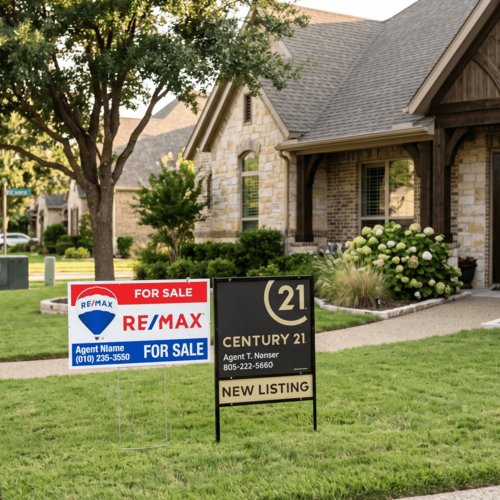

You're sitting at your kitchen table in Keller, and this is the third real estate agent you've invited over this week. The first two seemed knowledgeable enough — both had glossy business cards, confident handshakes, and impressive-sounding numbers. But somewhere between the second agent's pitch and this third appointment, you realize something uncomfortable: you have no real idea how to evaluate any of them. You don't know what questions to ask. You don't know what separates a great agent from an average one. And you're about to hand someone the keys to a $550,000+ transaction.
That feeling — equal parts overwhelmed and uncertain — is more common than you might think. Most people buy or sell a home only a handful of times in their lives, so there's no reason you'd automatically know how to vet a real estate professional. The process is unfamiliar, the stakes are high, and the internet is full of conflicting advice that seems designed to confuse rather than clarify.
Let's slow this down. Choosing the right Keller, TX real estate agent doesn't have to feel this way. When you know exactly what to look for, what questions to ask, and what answers should concern you, this decision becomes much more manageable. That's what this guide is for — to replace the overwhelm with calm confidence, so you can make a choice that genuinely serves your financial interests and your family's timeline.
Key Takeaways: Choosing a Keller Real Estate Agent
- Choosing the wrong agent can cost sellers $27,500–$55,000+ on a $550K Keller home through mispricing, weak negotiation, and inadequate marketing.
- FSBO homes typically sell for 10–15% less than agent-assisted sales — the right agent almost always earns their fee many times over.
- Always verify an agent's license status and complaint history through TREC's free public database before your first meeting.
- Interview at least 2–3 agents — according to NAR data, 68% of buyers and 77% of sellers only interview one, which is a costly mistake.
- Post-NAR settlement (effective August 2024), buyer-broker agreements are now mandatory in Texas — understand what you're signing before you commit.
- Keller's median home sale price is $550K–$580K with 30–45 days on market — an agent who doesn't know these numbers doesn't know your market.
- Meaningful designations (CRS, ABR, SRS, GRI) indicate real additional training; internal company awards are often just marketing.
- Red flags to watch for: vague pricing strategies, pressure to sign immediately, unwillingness to discuss commission, and inability to speak specifically about Keller neighborhoods.
Why Choosing the Right Keller Real Estate Agent Actually Matters (More Than You Think)
Here's something the real estate industry doesn't always say out loud: not all agents produce the same results. The gap between a highly experienced, deeply local Keller agent and a licensed agent who handles a handful of transactions per year isn't just a difference in personality or presentation style — it's a measurable difference in the money you walk away with. Let's put some numbers to it. Keller's median home sale price sits at $550,000–$580,000 in 2026. Research consistently shows that homes listed with experienced, skilled agents achieve 1–3% higher sale prices on average than those handled by less experienced agents. On a $550,000 home, that's $5,500–$16,500 in additional proceeds — often more than enough to cover commission entirely. The downside risk is even more significant. Mispricing a home — whether too high or too low — can cost a seller 5–10% in net proceeds. Zillow Research data shows that overpriced homes sit longer, undergo multiple price reductions, and frequently sell below true market value. On a $550,000 Keller home, that's $27,500–$55,000+ in lost equity. Weak negotiation compounds the problem: an agent who doesn't know how to handle multiple-offer situations or push back on inspection demands can cost you thousands more in concessions. For buyers, the stakes are equally real. A poorly represented buyer might overpay, miss critical inspection issues, or agree to unfavorable contract terms — all because their agent lacked the experience or local knowledge to guide them effectively. For sellers, inadequate marketing means fewer showings, longer days on market, and ultimately less leverage at the negotiating table. There's also the matter of time and stress. A skilled agent handles the complexity so you don't have to — contract negotiations, inspection responses, title coordination, lender communication. An inexperienced or disorganized agent turns all of that into your problem. If you're trying to get a full picture of understanding the full financial picture of a real estate transaction, the right agent is the person who walks you through every line item with patience and clarity. The bottom line: this is not a decision to make based on who gave you the most confident pitch or who your neighbor used three years ago. It's a financial decision that deserves the same careful evaluation you'd give any major investment.It's Normal to Feel Overwhelmed by Agent Choices
You're not alone in feeling confused about how to evaluate agents or what questions to ask. Most people buy or sell a home only a few times in their life, so it's completely normal to feel uncertain. The good news: armed with the right questions and criteria, choosing an agent becomes straightforward — and this guide gives you exactly that.Understanding Keller's Real Estate Market: The Foundation for Choosing an Agent
One of the most reliable ways to evaluate a Keller real estate agent is to see how well they understand the local market. An agent who truly knows Keller should be able to speak specifically and confidently about current conditions — not just recite general DFW statistics. Before we get to the questions you should ask, let's make sure you understand the market yourself, so you can recognize a knowledgeable answer when you hear one. Keller is a community of approximately 47,000 residents with a median household income of $150,000–$160,000 — significantly above the DFW metro average. The homeownership rate sits at 85–90%, which tells you something important: this is a stable, invested community of long-term owners, not a transient rental market. That stability shapes how the real estate market behaves. In 2026, Keller's median home sale price is approximately $550,000–$580,000. The pandemic-era boom that pushed prices up 20%+ in 2021–2022 has normalized, with annual appreciation settling into a more sustainable 2–5% range. Current inventory sits at roughly 2.5–3.5 months of supply — still a seller's market by most definitions (a balanced market is 5–6 months), but far less frenzied than the peak years. Homes are selling in 30–45 days on average, which is faster than the broader DFW metro average of 50–70 days and well below the Texas state average of 55–75 days. What drives demand in Keller? Two factors dominate: Keller ISD's reputation as one of the top-rated school districts in North Texas, and the community's proximity to major DFW employment centers — Fort Worth, AllianceTexas, and the broader Metroplex. Corporate relocations to the DFW area continue to bring high-income families who prioritize school quality and quality of life, and Keller consistently ranks near the top of their list. If you want to explore what makes Keller's neighborhoods so distinct, our guide to Keller's unique neighborhoods and lifestyle appeal breaks it down in detail. Understanding how local market conditions affect your buying or selling strategy is exactly what a good agent should be able to explain to you — in plain language, with specific data, not vague generalities.⚠ Red Flag: An Agent Who Can't Explain Keller's Market
If an agent can't speak specifically about Keller's neighborhoods, schools, recent sales data, or current inventory levels, they don't have deep local expertise. In a market like Keller where pricing accuracy and neighborhood knowledge are critical, this is a major red flag. Move on to an agent who knows the market inside and out.What Questions to Ask an Agent About Keller's Market
When you sit down with a prospective agent, these questions will quickly reveal whether they truly know Keller or are just broadly familiar with the DFW area:- "How many homes have you personally closed in Keller's 76248 ZIP code in the last 12–24 months?" — This separates agents who work in Keller regularly from those who occasionally drift in from other markets.
- "What's the current days-on-market for homes in my price range and neighborhood?" — A knowledgeable agent should be able to give you a specific range, not a vague estimate.
- "How has pricing changed in Keller over the past 2–3 years, and what does that mean for my home's value or buying strategy?" — This tests whether they understand the transition from the pandemic boom to the current normalized market.
- Red flag to watch for: An agent who answers these questions with broad DFW statistics rather than Keller-specific data is telling you something important — they're not deeply familiar with your market.
If you're trying to figure out whether now is the right time to buy or sell in Keller, that's exactly what a good agent should help you work through — with your specific situation in mind, not a generic market forecast. We're happy to walk through the numbers with you, no pressure, just clarity.
Talk Through Your Situation With Us
What to Look For: Agent Credentials, Experience & Track Record
Let's move from impressions to evidence. When evaluating Keller TX real estate agents, the goal is to shift away from vague feelings ("they seemed really knowledgeable") toward concrete, verifiable performance indicators. Here's what actually matters. Transaction volume is a starting point, not the whole picture. Look for agents who are closing 20 or more transactions per year — and specifically in Keller, not just broadly across DFW. The DFW market is enormous and diverse; an agent who primarily works in Frisco or Arlington is not the same as one who has deep roots in Keller's specific neighborhoods, price points, and buyer pool. Volume matters because it indicates an active, current understanding of the market — not just a license that's been renewed a few times. Local market expertise is non-negotiable. Ask specifically how many homes the agent has closed in your neighborhood or ZIP code in the past 12–24 months. An agent who has closed multiple transactions in your specific area understands the nuances — which streets command premium prices, which features Keller buyers prioritize, how local HOA dynamics affect value, and what comparable sales actually look like in your micro-market. Designations indicate real additional training — when they're the right ones. More on this below. But don't confuse a wall of certificates with actual competence. The most important indicator is still a verifiable track record of recent transactions in Keller. References from recent Keller clients are gold. Ask for three references and actually call them. Ask about communication, negotiation, how the agent handled problems, and whether they'd use this agent again. Patterns in feedback — both positive and negative — reveal far more than any marketing material. For buyers exploring the Keller area, our buyer resources page walks through the full process of purchasing a home in North Fort Worth. For sellers, our seller resources page covers what to expect from listing through closing.How to Verify an Agent's License & Complaint History (It's Easier Than You Think)
Before you sit down with any agent, spend five minutes on this step. Go to the Texas Real Estate Commission's public license search at trec.texas.gov/apps/license-holder-search/ and search by the agent's name or license number. Here's what to look for:- Active status — The license should show as "Active." A lapsed or inactive license is an immediate disqualifier.
- Disciplinary Actions or Enforcement History — Look for any sections labeled with these terms. A clean record doesn't guarantee competence, but a history of complaints is a clear warning sign of a pattern of problems.
- License type — Note whether they're a Sales Agent (works under a broker's supervision) or a Broker (can operate independently). Both can be excellent; understanding the structure helps you know who's ultimately accountable.
💡 The 2-Minute TREC Check That Could Save You Thousands
Before you interview any agent, spend 2 minutes verifying their license status and complaint history on TREC's free public database. A clean record doesn't guarantee competence, but a history of complaints is a clear warning sign. This simple step filters out agents with a pattern of problems — and it costs you nothing but a few minutes of your time.Credentials That Actually Matter vs. Marketing Fluff
Not all designations are created equal. Here's a straightforward breakdown:- CRS (Certified Residential Specialist): Held by the top 3% of agents nationwide. Requires extensive experience and advanced training in residential sales. This one is meaningful.
- ABR (Accredited Buyer's Representative): Specialized training focused on effectively representing buyers. Meaningful for buyer clients specifically.
- SRS (Seller Representative Specialist): Specialized training in listing strategy and negotiation for sellers. Meaningful for seller clients specifically.
- GRI (Graduate, REALTOR® Institute): Comprehensive advanced training covering legal issues, technology, and professional standards. Meaningful across the board.
- Internal company awards or "Top Producer" titles: These are often based on internal metrics or sales volume within a specific brokerage, not independently verified performance data. Treat them as marketing, not credentials. Ask for transaction data instead.
Critical Questions to Ask Before Hiring a Keller Real Estate Agent
Here's the thing about interviewing agents: most people go into it hoping the agent will impress them, rather than going in with a clear framework for evaluation. That puts you in a reactive position. The better approach is to arrive with specific questions and listen carefully — not just to the answers, but to how the agent handles the questions themselves. These questions are designed to reveal what matters: genuine local expertise, honest communication, and alignment with your interests rather than their timeline.- "What's your average transaction volume per year, and how many active clients do you currently have?" — You're looking for an agent who is active and productive, but not so stretched that they can't give your transaction proper attention. An agent with 50+ active clients may not have the bandwidth to serve you well.
- "How many homes have you personally closed in my specific Keller neighborhood in the last 12–24 months?" — This is the most important question. Broad DFW experience is not the same as deep Keller expertise.
- "What's your detailed marketing plan for my property, including professional photography, online presence, and local outreach?" — For sellers, this question separates agents with a real strategy from those who will just list your home on the MLS and wait.
- "What's your negotiation strategy in a multiple-offer situation, or when a buyer comes back with inspection demands?" — Vague answers here are a red flag. A skilled negotiator should be able to walk you through their approach with specifics.
- "What's your preferred communication method, and what's your typical response time during critical phases of a transaction?" — Communication failures are among the most common complaints against agents. Get clarity on this upfront.
- "How does your brokerage handle intermediary situations — where you might represent both buyer and seller?" — In Texas, true dual agency is illegal. Understanding how an agent handles this protects your interests. For more on understanding how buyer-broker agreements work in Texas post-NAR settlement, we're happy to walk through the specifics with you.
"The agent who listens more than they talk in the first meeting is often the one who will actually serve your interests throughout the transaction. Pay attention to whether they ask about your timeline, your concerns, and your goals — or whether they jump straight into selling themselves."
Red Flag Answers That Should Make You Walk Away
Knowing what a bad answer looks like is just as important as knowing the right questions. Here are the responses that should concern you:- Vague pricing strategy: If an agent can't provide a detailed Comparative Market Analysis (CMA) backed by recent Keller sales data — not just a ballpark number — they're not prepared to price your home accurately.
- Pressure to sign immediately: Any agent who rushes you into agreements without time to review and consider is prioritizing their timeline, not yours. This is a significant red flag.
- Unwillingness to explain commission clearly: Post-NAR settlement, transparency about compensation is non-negotiable. Ambiguity or evasiveness here is a warning sign.
- Promises of unrealistic sale prices: No ethical agent can guarantee a sale price. An agent who tells you what you want to hear to win the listing is setting you up for disappointment — and potentially a prolonged, frustrating sale process.
- Lack of specific local knowledge: If they can't discuss specific Keller neighborhoods, Keller ISD schools, or recent local sales by name, they're not the Keller specialist they're presenting themselves as.
- Stretched too thin: An agent who admits to 50+ active clients or can't commit to timely communication is telling you that your transaction will be one of many competing for their attention.
Ready to start interviewing agents? Use these questions as your guide. If you'd like to add TK Realty to your list, we're here to answer every one of these questions about our approach, our track record, and our experience in Keller — no pressure, no rush.
Add TK Realty to Your Interview List
Understanding Real Estate Commissions & Costs in Keller (Post-NAR Settlement)
The financial structure of a real estate transaction changed significantly in August 2024, and if you haven't been following the details, it's worth understanding clearly — because it affects what you'll pay and what you'll sign. Before the NAR settlement took effect, the standard practice was for sellers to pay a total commission of 5–6% (split between the listing agent and the buyer's agent), with the buyer agent's compensation offered through the MLS. That system is gone. Here's how it works now in 2026: For sellers: You negotiate your listing agent's commission directly. In the Keller market, this typically runs 2.5–3.5% of the sale price. This is the fee for the agent who lists, markets, and negotiates the sale of your home. For buyers: You now sign a written Buyer Representation Agreement (BRA) before receiving significant services from an agent. This agreement explicitly states how your agent will be compensated — either as a percentage of the purchase price, a flat fee, or an hourly rate. You may pay this directly at closing, or your agent can negotiate for the seller to contribute to their compensation as a concession in the purchase contract. The key shift is transparency: buyer agent compensation is now explicitly negotiated, not automatically embedded in the seller's MLS offer. This change affects how you shop for agents, what you sign, and how you budget. For a detailed breakdown of how the NAR settlement changes affect what you'll pay in the North Texas market, that resource covers the specifics in plain language. One important note: discount and flat-fee brokerages do exist in the DFW market, but they have a smaller market share in premium communities like Keller. In a market where pricing accuracy, professional marketing, and skilled negotiation directly impact your outcome, full-service agents often deliver meaningfully better ROI than the percentage points you'd save on commission. That said, this is a decision worth thinking through carefully based on your specific situation.Hidden Costs Beyond Commission That Buyers & Sellers Should Budget For
Commission is only part of the financial picture. Here's what else to plan for: For buyers:- Closing costs: 2–5% of the loan amount (lender fees, title, escrow, appraisal, survey)
- Option period fee: $150–$500, paid directly to the seller — non-refundable, but buys you the right to walk away during the inspection period
- Earnest money: Typically 1–2% of the sale price ($5,500–$11,000 on a $550K home), held in escrow and credited at closing
- Home inspection: $400–$600+ depending on home size and age
- Title insurance: In Texas, the seller customarily pays for the owner's title insurance policy — rates are regulated and based on sale price
- Escrow fees and prorated property taxes
- HOA transfer fees if applicable
- Professional staging: $1,000–$5,000+ depending on scope
- Professional photography and videography: $200–$500+ — essential, not optional
- Repair concessions negotiated after inspection: Variable, but budget for it
- Home warranty: Often negotiated, typically $500–$800 for one year
What a Buyer-Broker Agreement Actually Commits You To
A Buyer Representation Agreement (BRA) is a legally binding contract. Before you sign one, understand what it contains:- Compensation structure: How your agent will be paid — percentage, flat fee, or hourly rate — and under what circumstances
- Duration: How long the agreement lasts. This is negotiable; don't accept an unreasonably long term without understanding the termination clauses
- Termination clauses: Under what conditions you can end the relationship, and whether there are any fees associated with doing so
- Scope of services: What the agent is committing to provide in exchange for their compensation
Texas Real Estate Regulations: What You Need to Know
Texas has a robust regulatory framework that protects buyers and sellers — and understanding it gives you confidence that agents operate within a system of accountability, not as unregulated salespeople. All real estate agents in Texas must be licensed by TREC (Texas Real Estate Commission) and sponsored by a licensed broker. Sales agents work under a broker's supervision; brokers can operate independently, sponsor agents, and manage trust accounts. This means there's always a supervising professional accountable for an agent's conduct. Continuing education is mandatory. Texas agents must complete 18 hours of continuing education every two years to renew their license, including mandatory courses on legal updates and ethical practices. This ensures agents stay current with changing laws and regulations — including the post-NAR settlement changes that affect how buyer representation works. TREC promulgated contract forms protect you. Unlike many states where agents draft their own contracts, Texas agents are required to use standardized contract forms promulgated by TREC for most residential transactions. This means you're working with legally vetted, standardized agreements — not something an agent wrote themselves. Texas-specific protections you should know about:- The option period: A unique Texas protection that gives buyers an unrestricted right to terminate the contract within 7–10 days for a small non-refundable fee. This is your inspection window — use it wisely.
- Homestead protections: Texas offers robust homestead protections against forced sale to satisfy certain debts.
- The Texas DTPA: The Deceptive Trade Practices Act provides strong consumer protections against false, misleading, or deceptive acts in real estate transactions.
Understanding the Option Period: A Texas Protection You Should Know About
Texas contracts include an "option period" (typically 7–10 days) where buyers can terminate the contract for any reason by paying a non-refundable fee to the seller — usually $150–$500. This is a crucial protection that gives you time to conduct thorough inspections and renegotiate repairs without losing your earnest money. A good agent will explain this clearly and help you use it strategically — including how to negotiate the length of the option period and what to do if inspection results reveal significant issues.Your Consumer Recourse Options in Texas
If something goes wrong in a real estate transaction, you have real options:- File a complaint with TREC: TREC investigates violations and can impose disciplinary actions — fines, license suspension, or revocation. Note that TREC cannot directly award monetary damages; that requires a separate legal action.
- Texas DTPA (Deceptive Trade Practices Act): If an agent's conduct was deceptive or misleading, you can sue for actual damages — and potentially treble damages (up to 3x) if the act was knowing or intentional — plus attorney fees. This is a meaningful consumer protection.
- Texas Real Estate Recovery Trust Account: This TREC-administered fund provides financial relief to consumers who suffer actual damages due to an agent's illegal acts if a court judgment cannot be collected from the agent directly.
- Errors and Omissions (E&O) Insurance: Most brokers carry E&O insurance, providing an additional layer of protection against agent negligence. Ask your agent's brokerage about their coverage.
Evaluating Agent Marketing Plans (For Sellers)
If you're selling your Keller home, the quality of your agent's marketing plan is one of the most direct determinants of your sale price and days on market. This is where agent quality becomes immediately visible — and where the gap between a skilled listing agent and an average one translates directly into dollars. The first two weeks after a listing goes live are the most critical window. Buyer interest is highest when a home is new to the market, and that initial momentum — or lack of it — sets the tone for the entire sale. An agent who launches your listing with professional photography, a compelling MLS description, active online promotion, and coordinated outreach to buyer agents maximizes that window. An agent who lists your home with mediocre photos and waits for the phone to ring is burning that opportunity. Professional photography and videography are non-negotiable in 2026. Buyers find homes online first, and the photos are what determine whether they schedule a showing. Poor photography directly reduces showings, which reduces offers, which reduces your negotiating leverage. Ask every agent specifically whether professional photography is included in their plan — and what "professional" actually means to them. MLS optimization matters more than most sellers realize. A detailed, keyword-rich listing description that highlights your home's specific features — the Keller ISD school zones, the proximity to parks, the specific neighborhood amenities — attracts the right buyers and helps your listing perform in online searches. Ask your agent to show you examples of their past listing descriptions. Online presence across major platforms is essential. Your listing should appear on Zillow, Realtor.com, Redfin, and the agent's own website, with paid advertising targeting buyers actively searching in Keller's price range. Ask specifically about their paid advertising strategy — not just organic MLS syndication. For sellers thinking about pricing strategy, our free home value estimate tool gives you a starting point before you sit down with any agent. And our seller resources page walks through what a strong listing process actually looks like from start to finish. For developing a pricing strategy that positions your Keller home competitively, we're happy to provide a free market analysis.Questions to Ask About an Agent's Marketing Plan
- "Will you use professional photography and videography? What's included, and is there any additional cost to me?"
- "How will you market this home on social media and paid advertising platforms?" — Ask for specifics, not generalities.
- "What's your strategy for generating buyer interest in the first two weeks after listing?" — This is the critical window; an agent without a clear answer for this doesn't have a real launch strategy.
- "How will you handle showing feedback? How often will I hear from you about market activity?" — Communication during the listing period is essential. You should know what's happening with your home.
- "If the home doesn't sell in 30 days, what's your plan to adjust pricing or marketing strategy?" — A good agent has a contingency plan. An agent without one is hoping things work out rather than managing the process.
Agent Types in Keller: Solo, Team, Boutique, or Franchise — Which Is Right for You?
The Keller real estate market has a diverse landscape of agent types, and understanding the differences helps you choose based on your actual needs rather than brand recognition or marketing. Solo agents offer highly personalized service — you're working directly with one person throughout the entire process. The quality varies enormously depending on the individual. A highly experienced solo agent with deep Keller roots can be exceptional. A solo agent who's juggling too many clients without support staff may leave you waiting for callbacks during critical moments. Team-based agents operate with specialized support — buyer agents, transaction coordinators, marketing specialists. This division of labor can mean better availability and more consistent communication. The tradeoff is that you may interact with different team members at different stages, rather than one person throughout. Ask specifically who will be your primary point of contact and who handles what. Boutique brokerages are smaller, locally owned firms that often emphasize hyper-local expertise and personalized service. They may be more flexible on terms and more deeply invested in community relationships. The tradeoff is a smaller network compared to large franchises. Large franchise offices — Keller Williams, RE/MAX, Coldwell Banker, Compass — have strong brand recognition, robust training programs, and wide networks. Agents within these brokerages operate with varying degrees of independence, and the quality varies just as much as it does at any other brokerage. The franchise brand doesn't guarantee the individual agent's quality — you're still hiring the person, not the logo. For a deeper look at how different brokerage models compare in the Texas market, our post on eXp Realty vs. Keller Williams vs. local brokerages in Texas breaks down the structural differences honestly.
Wondering how different agent structures actually affect your experience and outcome? We'd be happy to explain how TK Realty's model is designed to prioritize your interests over speed or volume — and what that means for how we work with buyers and sellers in Keller.
Learn How TK Realty Works
How to Interview Keller Real Estate Agents: A Step-by-Step Process
Here's a statistic that should give you pause: according to NAR's 2024 Profile of Home Buyers and Sellers, approximately 68% of buyers and 77% of sellers interviewed only one agent before hiring. Only one. That means most people are making a decision that directly affects tens of thousands of dollars based on a single conversation with a single person. This needs to make sense for you. Interviewing 2–3 agents takes a few hours — a small investment compared to the financial stakes involved. And the comparison is invaluable. You'll quickly see which agents truly understand Keller, which ones are responsive and clear, and which ones seem more interested in closing quickly than in understanding your situation. Here's how to approach the process:- Prepare your questions in advance. Use the questions from the section above. Write them down and bring them to each interview. Take notes on each agent's answers so you can compare afterward.
- Ask for specific data, not general claims. Request their transaction history in Keller for the past 12–24 months: number of sales, average days on market, and list-to-sale price ratio. A strong agent will have this data ready.
- Request references and actually call them. Ask references specifically about communication during critical moments, how the agent handled problems, and whether they'd use this agent again. Patterns in feedback reveal what marketing materials never will.
- Pay attention to how the agent listens. Does the agent ask about your timeline, your concerns, and your goals? Or do they jump straight into their pitch? An agent who listens carefully in the interview will listen carefully throughout your transaction.
- Notice how they handle your questions. Do they answer directly and specifically? Or do they deflect, generalize, or become defensive? How an agent handles a pointed question in the interview predicts how they'll handle difficult moments in the transaction.
- Trust your gut — but verify it with data. If something feels off, pay attention to that. But don't let a confident personality override the absence of verifiable local experience. Both matter.
The Interview Checklist: What to Evaluate
- Knowledge: Can they speak intelligently about Keller's market, neighborhoods, schools, and local trends — with specific data?
- Experience: Do they have a strong, verifiable track record in Keller specifically, not just the broader DFW area?
- Communication: Are they responsive, clear, and willing to explain things in plain language without jargon?
- Alignment: Do their services and approach match your needs, timeline, and goals?
- Trustworthiness: Do they prioritize your interests and timeline, or do they seem focused on closing quickly?
- Transparency: Are they upfront about commission, the buyer-broker agreement, and what to expect at every stage?
💡 Interview at Least 2–3 Agents (Most People Only Interview One)
Most buyers and sellers only interview one agent, which is a mistake that can cost you thousands. Interviewing 2–3 agents takes a few hours but gives you a clear basis for comparison. You'll quickly see which agents truly understand Keller, which ones are responsive and clear, and which ones prioritize your interests over their commission. The comparison alone is worth the time.Common Mistakes Buyers & Sellers Make When Choosing a Keller Real Estate Agent
Learning from others' mistakes is one of the most efficient ways to protect yourself. Here are the most common errors we see buyers and sellers make in the agent selection process — and how to avoid them. Choosing based on personality alone. A likable, confident agent without deep local expertise and a strong track record will cost you money. Personality is a plus, but it's not a substitute for competence. The most charming agent in the room may also be the one who misprices your home or mishandles your negotiation. Not verifying credentials through TREC. This takes five minutes and is simply due diligence. TREC's public database shows license status, complaint history, and disciplinary actions. Skipping this step means you might be handing a $550,000+ transaction to someone with a history of problems. Accepting the first agent you meet. As the NAR data shows, most people do this — and it's a mistake. You have no basis for comparison after one interview. Interview at least two or three agents before making a decision. Ignoring red flags. Pressure to sign immediately, vague answers about pricing strategy, unwillingness to discuss commission clearly, inability to speak specifically about Keller — these are warning signs, not quirks. Trust them. Not discussing commission upfront. Post-NAR settlement, commission transparency is non-negotiable. Get the compensation structure in writing before you sign anything. Any agent who is evasive about how they're paid is telling you something important about how they operate. Assuming all agents are the same. This is perhaps the most costly assumption of all. Agent quality varies dramatically, and that variance directly impacts your outcome. The difference between a skilled Keller agent and an average one isn't just service quality — it's measurable in dollars. Understanding the true cost of choosing the wrong agent starts with recognizing that this decision is as consequential as any other financial choice you'll make in this process. For first-time buyers in Keller specifically, our guide for first-time homebuyers in Keller covers the process from start to finish in plain language. And if you're curious about what the broader North Fort Worth market looks like beyond Keller, our North Fort Worth area guide provides helpful context.77% of home sellers interview only ONE agent before hiring — making it nearly impossible to evaluate quality or compare approaches. Don't be in this group.
Frequently Asked Questions About Choosing a Keller Real Estate Agent
Do I really need a real estate agent to buy or sell a home in Keller, or can I do it myself?While you can technically buy or sell independently, using a qualified agent is strongly recommended — especially in a market like Keller where the median sale price exceeds $550,000 and transaction complexity is high. Experienced agents bring local market knowledge, negotiation skills, and contract expertise that consistently produce better outcomes: NAR data shows that FSBO homes typically sell for 10–15% less than agent-assisted sales. On a $550,000 Keller home, that gap can represent $55,000–$82,500 in lost proceeds — far more than the cost of commission. For buyers, a skilled agent helps you navigate inspection negotiations, multiple-offer situations, and contract terms in ways that protect your financial interests throughout the process.
How can I evaluate a Keller real estate agent's actual track record and performance, not just their marketing claims?Request specific, verifiable data on their Keller transaction history for the past 12–24 months: number of homes closed, average days on market, and list-to-sale price ratio. A strong agent should be able to provide this without hesitation. Ask for references from recent Keller clients — not just names, but people you can actually call — and ask those references specifically about communication during critical moments, how the agent handled problems, and whether they'd hire this agent again. Patterns in reference feedback reveal far more than any marketing material or online review, and a verifiable local track record is always more reliable than general claims about years in the business or brokerage affiliation.
What does a buyer-broker agreement in Texas commit me to, and how do I ensure it's fair?A Buyer Representation Agreement (BRA) is a legally binding contract that formalizes your agent's representation and clarifies how they'll be compensated before you receive significant services — a requirement that became mandatory in Texas following the NAR settlement effective August 2024. The agreement specifies the compensation structure (percentage of purchase price, flat fee, or hourly rate), the duration of the agreement, and the termination clauses. Before signing, ensure you fully understand every term: how much you're committing to pay, under what circumstances, and how you can exit the agreement if the relationship isn't working. Always ask for a clear explanation before signing, negotiate any terms that feel unreasonable, and never sign under pressure — a good agent will welcome your questions and give you time to review.
Should I consider using the listing agent as my buyer's agent for a home I like in Keller?In Texas, true dual agency — where one agent fully represents both buyer and seller — is illegal. If the listing agent's brokerage represents both parties, they operate as an "intermediary," which means they cannot advocate for either party over the other. They become a neutral facilitator rather than your dedicated advocate. For most buyers, this is a significant disadvantage: you lose the full negotiating representation you'd have with your own dedicated agent, particularly when it comes to price negotiations, inspection responses, and contract terms. It's generally recommended that buyers work with their own agent who is exclusively focused on their interests — especially in a transaction involving $550,000+ and significant contract complexity.
How do the NAR settlement changes (effective August 2024) specifically affect what I, as a buyer, will pay my real estate agent in Keller?As a Keller buyer in 2026, you will explicitly agree to your agent's compensation through a written Buyer Representation Agreement before receiving significant services — this is now mandatory, not optional. The compensation may be structured as a percentage of the purchase price (commonly 2.5–3%), a flat fee, or another agreed-upon arrangement. You have two primary options for how this gets paid: you can pay it directly at closing, or your agent can negotiate for the seller to contribute to their compensation as a concession within the purchase contract. The critical shift from the pre-settlement system is transparency — buyer agent compensation is now explicitly negotiated and documented, rather than automatically offered through the MLS. This means you should understand and agree to your agent's compensation before you start touring homes.
What specific questions should I ask a Keller agent about their marketing plan if I'm selling my home?Start with the fundamentals: Will they use professional photography and videography, and is it included in their services? What is their strategy for the first two weeks after listing — the critical window when buyer interest is highest? How will they market the home across major online platforms (Zillow, Realtor.com, Redfin) and paid advertising channels, and what does their social media strategy look like specifically for Keller buyers? Ask how they'll handle showing feedback and how often you'll receive updates on market activity. Finally, ask what their plan is if the home hasn't received offers within 30 days — a good agent has a clear adjustment strategy, not just hope that the right buyer will eventually appear.
Ready to Make a Confident, Informed Decision About Your Keller Real Estate Agent?
Choosing the right real estate agent is one of the most consequential decisions in this entire process — and you deserve to make it from a place of clarity, not pressure. If you've read this far, you're already better prepared than most buyers and sellers who walk into this decision. If you're ready to have a conversation with an agent who prioritizes your timeline, your financial interests, and your understanding of every step — not their commission or their closing speed — we'd genuinely welcome the chance to be one of the agents you interview. No rush, no pressure, just an honest conversation about what makes sense for you. Start a Conversation With TK RealtyCheck out this article next