
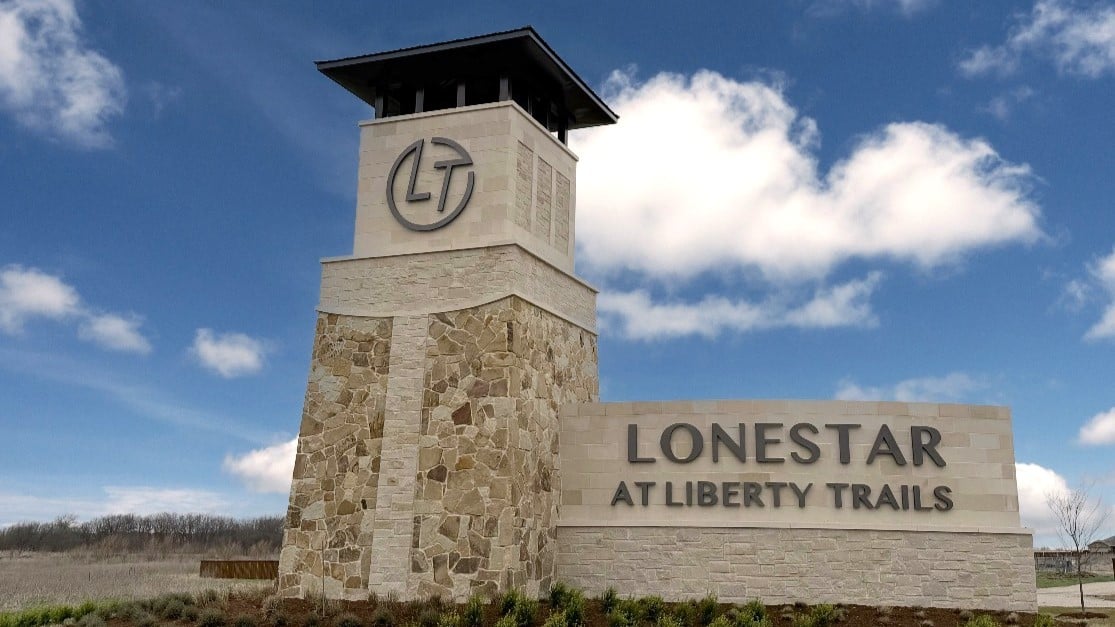
Are you looking at Lonestar at Liberty Trails in Justin and wondering if it's actually the right move for your family — or just the right price? That question alone tells you something important: you're approaching this the right way. A lot of first-time buyers get swept up in model home excitement and builder incentive deadlines before they've had a chance to sit down and actually understand what they're committing to. This guide is designed to slow that down.
There's a lot to like about Lonestar at Liberty Trails and the broader Liberty Trails master-planned community in Justin, TX. But there's also a lot to understand before you sign anything — from MUD taxes and HOA governance to builder contracts and the true cost of those design center upgrades. If you're a first-time buyer, some of these details will surprise you. That's not a criticism; it's just reality. Nobody explains this stuff upfront unless you ask the right questions.
This overview covers everything you need to make a calm, informed decision at your own pace. If at any point you want to talk through your specific situation, schedule a free consultation with TK Realty — we're here to help you understand the process, not push you through it.
It's Smart to Be Cautious About This Decision
Buying a home is the largest financial decision most people make. It's completely normal to feel overwhelmed by pricing, taxes, HOA fees, and all the moving parts. Taking time to understand each piece before committing is exactly the right approach — and it's what separates buyers who feel confident from those who feel regret.
Key Takeaways: What First-Time Buyers Need to Know
- Lonestar at Liberty Trails is a master-planned community in Justin, TX, priced from approximately $300,000 to $550,000+, designed for first-time and move-up buyers.
- Justin sits roughly 30–40 minutes from Fort Worth and 15–20 minutes from Denton, with strong access to the Alliance corridor employment hub.
- The true monthly cost of ownership on a $350,000 home can reach $3,255–$3,905+ when you factor in taxes, HOA, MUD fees, insurance, and utilities.
- MUD (Municipal Utility District) taxes are separate from regular property taxes and can add $50–$150+/month — verify the specific rate before committing.
- You are not required to use the builder's preferred lender; always compare at least 2–3 Loan Estimates before deciding.
- Independent pre-drywall and final walkthrough inspections are essential — they cost $400–$800 total and can save you far more.
- The builder's sales agent represents the builder, not you. Hiring your own Realtor costs you nothing and gives you an advocate in the process.
- Denton ISD serves this community; verify your specific zoned elementary, middle, and high school before making a final decision.
What Is Lonestar at Liberty Trails, and Why Are First-Time Buyers Looking Here?
Liberty Trails is a master-planned community in Justin, TX — a small but rapidly growing city in Denton County, situated near the intersection of Highway 156 and US-287/81. The community is designed around the kind of lifestyle that appeals to young families and first-time buyers: newer construction, organized amenities, and a neighborhood feel that older, more established suburbs don't always offer at this price point.
Lonestar at Liberty Trails is one of the builder-specific sections within the larger Liberty Trails development. Like most master-planned communities in the DFW area, Liberty Trails includes shared amenities — pools, playgrounds, splash pads, walking trails, and open green spaces — all managed by a master HOA. The homes are newer construction, which means you're generally getting modern layouts, energy-efficient systems, and builder warranties that older resale homes don't provide.
The location works well for a specific kind of buyer. If you're working in the Alliance corridor — the logistics, manufacturing, and corporate hub that stretches along I-35W north of Fort Worth — you're looking at a commute of roughly 10–15 minutes. Fort Worth proper is about 30–40 minutes depending on traffic, and Denton is closer, typically 15–20 minutes. That's a reasonable trade-off for the price point you're getting compared to closer-in suburbs like Roanoke, Trophy Club, or Northlake.
Justin itself has been growing at roughly 5–10% annually in recent years, driven by affordable land, newer housing stock, and proximity to those employment centers. The city's population is estimated at 4,000–4,500, which means it still has a small-town feel while benefiting from the infrastructure improvements that come with rapid growth. For first-time buyers who want more house for their money without moving to a truly rural area, Justin hits a reasonable middle ground.
If you're still in the research phase and want to understand what the broader Justin, TX real estate market looks like before narrowing your focus to a single community, that's worth doing. Comparing a few communities gives you context that makes the final decision much easier.
Justin, TX Market Context: Is This the Right Time and Place?
Before you fall in love with a floor plan, it helps to understand the market you're buying into. Justin has experienced significant appreciation over the 2020–2022 period, followed by stabilization in 2023–2025. In 2026, pricing is steady with moderate growth expected — which is actually a reasonable environment for a first-time buyer. The frantic bidding wars of the early 2020s have cooled, and builders are offering more incentives than they were during the peak years.
The median household income in Justin is estimated at $75,000–$90,000, with a homeownership rate of approximately 70–75%. That demographic profile — stable, family-oriented, moderate income — is consistent with what you'll find at communities like Lonestar at Liberty Trails. You're not buying into a speculative investor market; you're buying into a neighborhood where most people are long-term residents.
The area is served by Denton ISD, which is a significant draw for families. School district quality is one of the primary factors that supports long-term property values in suburban markets like this one. That said, the specific campus assignments for Lonestar at Liberty Trails matter — Denton ISD is a large district with variation between campuses. For personalized guidance on school district ratings and campus information for your specific address, a consultation can help you understand how school zoning should factor into your decision.
Growth and Demand Drivers
The demand for housing in Justin and the surrounding northwest Denton County area is driven by a few converging factors. Infrastructure improvements along Highway 156 and US-287 have made commutes more manageable, which expands the pool of buyers who consider Justin viable. The Alliance corridor continues to expand — logistics warehouses, manufacturing facilities, and corporate campuses are actively adding jobs, and employees working there are looking for affordable housing within a reasonable drive. Justin fits that profile well.
Denton ISD's reputation also pulls families who want quality public education without the premium pricing of closer-in suburbs. When you combine reasonable commutes, newer housing stock, and a reputable school district, you get strong, sustained demand — which is good news for long-term property values.
Seasonal Patterns and Buyer Competition
If you're planning your timeline, it's worth knowing that buyer competition in DFW new construction peaks during spring (March–May) and early fall (September–October). Those are the periods when the most buyers are actively shopping, which means more competition for popular homesites and floor plans.
Conversely, late summer, the fall holiday season, and winter months often see builders offering their strongest incentives — rate buydowns, closing cost credits, and other concessions to move inventory. New phase releases can create a sense of urgency, but patience often yields better terms. There's no rush if the numbers don't work for you yet. That's a principle worth holding onto throughout this process.
Pricing Breakdown: What You'll Actually Pay at Lonestar at Liberty Trails
Let's slow this down and look at the numbers. Base pricing at Lonestar at Liberty Trails in 2026 generally falls into three tiers:
- Entry-level floor plans: $300,000–$380,000 (approximately 1,400–1,800 sq ft, 3 beds/2 baths)
- Mid-range plans: $380,000–$450,000 (approximately 1,800–2,400 sq ft, 3–4 beds/2–3 baths)
- Premium plans: $450,000–$550,000+ (approximately 2,400–3,000+ sq ft, 4+ beds/3+ baths)
Those base prices are a starting point, not the finish line. The final purchase price is shaped by several additional factors that first-time buyers often don't fully account for when they're initially budgeting.
Lot premiums add $5,000–$30,000+ for desirable locations — greenbelt views, corner lots, cul-de-sac positions, or walk-out configurations all command a premium. Structural upgrades — adding a bay window, extending the covered patio, adding a media room or home office — are separate from the base price and can add significantly to your total. And then there's the design center.
The Hidden Costs First-Time Buyers Miss
The Hidden Costs That Surprise First-Time Buyers
Many first-time buyers focus only on the base home price and forget about HOA fees, MUD taxes, property taxes, insurance, and inspections. These can add $500–$1,000+ to your monthly costs. Calculate your true total cost of ownership before committing to any floor plan or homesite.
Beyond the purchase price itself, here are the costs that catch first-time buyers off guard:
- HOA fees: Estimated $50–$90/month for master community amenities and maintenance
- MUD/PID taxes: If applicable, these are additional property taxes separate from your regular tax bill, funding water, sewer, and drainage infrastructure. They can add $50–$150+/month. Verify the specific rate before signing anything.
- Title fees: Lender's title insurance, owner's title insurance (strongly recommended), and closing costs — these may be bundled if you use the builder's preferred title company
- Homeowner's insurance: DFW rates can be higher due to weather risks; shop around for competitive quotes rather than accepting the first number you're given
- New construction inspections: Pre-drywall and final walkthrough inspections are recommended and typically cost $400–$800 total — money well spent
- Landscaping: New construction often comes with minimal landscaping at closing; budget for post-purchase improvements
For a deeper look at how to figure out how much house you can actually afford as a Texas first-time buyer, that resource walks through the full affordability calculation in plain language.
Total Monthly Cost of Ownership (Example: $350,000 Home)
Here's what a realistic monthly cost picture looks like on a $350,000 home at Lonestar at Liberty Trails, assuming a 30-year fixed mortgage at 7% with 5% down:
Estimated Monthly Total: $3,255 – $3,905+
Before discretionary spending — this is your housing cost baseline
- Principal & Interest: ~$2,000–$2,300/month
- Property Taxes: ~$730/month (at 2.5% effective rate on $350,000)
- Homeowner's Insurance: ~$150–$200/month
- HOA Fees: ~$75/month
- MUD/PID Taxes (if applicable): $50–$150+/month
- Utilities & Maintenance: ~$250–$400/month
That's a meaningful number, and it's important to look at it clearly before you fall in love with a floor plan. This needs to make sense for your budget — not just feel manageable in the moment.
If calculating your true monthly costs feels overwhelming, that's exactly what a consultation is designed to clarify. We'll walk through your specific numbers — taxes, HOA, MUD, and mortgage — so you know exactly what you're committing to.
Schedule a Free ConsultationFinancing Your Home: Builder Incentives vs. Independent Lenders
Pro Tip: Shop Lenders Before You Shop Homes
Getting pre-approved with 2–3 lenders — including the builder's preferred lender — before seriously shopping gives you clarity on your budget and real negotiating power. Pre-approval is not a commitment. You can still shop around for the best rate at closing. The knowledge you gain from comparing Loan Estimates is worth far more than the hour it takes to apply.
One of the most consequential decisions you'll make in this process isn't which floor plan to choose — it's how you finance the home. Builders at communities like Lonestar at Liberty Trails typically have a preferred lender, and they offer real incentives to use them: rate buydowns, closing cost credits of $5,000–$15,000+, and a streamlined process that keeps everything under one roof.
Those incentives are worth evaluating seriously. But they don't automatically mean the builder's lender is your best option. Using the builder's preferred lender maximizes the incentive package, but it may not offer the best long-term rate, the most flexible loan products, or the most competitive terms across the life of your mortgage. Independent lenders give you more choice in loan products and terms, but you may leave some builder incentives on the table.
The right answer depends on your specific situation — and the only way to know is to compare. Get a Loan Estimate from the builder's preferred lender and at least one or two independent lenders. Compare the total picture: rate, term, fees, and the value of any incentives. For more context on navigating this decision, our guide on mortgage brokers vs. lenders for DFW homebuyers breaks down the differences in plain terms.
You are not required to use the builder's lender. Anyone who tells you otherwise is not being straight with you.
Rate Buydowns and Closing Cost Credits Explained
Builder incentives in 2026 commonly include rate buydowns and closing cost credits. Here's what those actually mean:
A 2-1 buydown temporarily reduces your interest rate for the first two years — typically 2% lower in year one, 1% lower in year two, then back to your note rate in year three. This lowers your initial monthly payments, which can be helpful if you expect your income to grow. A 1-0 buydown does the same for one year only.
Closing cost credits reduce your out-of-pocket cash at closing. They're valuable — but they may be factored into the final home price. Always calculate the true value of the incentive against any price adjustment or rate difference. Understanding the difference between pre-qualification and pre-approval is also important before you start comparing lender offers — pre-approval carries real weight; pre-qualification is just an estimate.
Property Taxes, HOA Fees, and MUD Taxes: What You Need to Know
What's the Difference Between Property Taxes, HOA Fees, and MUD Taxes?
Property taxes fund schools and county services. HOA fees pay for community amenities and maintenance. MUD taxes fund water, sewer, and drainage infrastructure. All three are separate charges that add to your monthly housing costs. Verify each one for your specific property — they can vary significantly even within the same community.
Property taxes in Denton County carry an effective rate of approximately 2.2%–2.8%, depending on the specific ISD millage rate and whether your property falls within a MUD or PID district. On a $350,000 home at a 2.5% effective rate, that's $8,750 per year — or roughly $730 per month added to your housing costs. That number alone is significant, and it's one that first-time buyers from lower-tax states often underestimate dramatically.
For context, Denton County's effective rates are generally higher than Tarrant County (~1.9%) and Collin County (~2.0%), largely because of rapid growth funding needs and school district costs. It's not a reason to avoid the area, but it's a number you need to build into your budget from day one.
How to Verify MUD Taxes and Rates
MUD (Municipal Utility District) taxes are separate from your regular property tax bill and fund the water, sewer, and drainage infrastructure in newer developments. They're common in master-planned communities throughout north Texas, and Lonestar at Liberty Trails may be subject to them. Here's how to verify:
- Contact the Denton County Appraisal District (CAD) directly with the property address to confirm MUD status and tax rate
- Ask the builder's sales agent for the specific MUD tax rate and estimated annual amount — they're required to disclose this
- Request a Preliminary Title Report, which may disclose MUD obligations and other encumbrances
- Factor MUD taxes into your affordability calculation — they can add $50–$150+/month to your housing costs
For help understanding your total monthly housing costs and verifying the exact tax burden for a specific property, a consultation can walk you through the numbers before you commit.
5-Year Tax Impact and Planning
Property taxes don't stay static. As home values appreciate and Denton CAD updates appraisals, your tax bill will increase. On a $350,000 home today, you might reasonably expect taxes to rise from approximately $8,750/year to $9,500–$10,000+/year over the next five years — a conservative estimate of 2–4% annual growth.
The homestead exemption can provide some relief once you've established the property as your primary residence. Verify your eligibility with Denton CAD after closing and file promptly — it reduces the taxable value of your home and caps annual appraisal increases at 10% per year for homesteaded properties. That cap matters in a growing market.
HOA Fees and Governance
HOA fees at Liberty Trails are estimated at $50–$90/month and cover community amenities, common area maintenance, and management. That's a reasonable range for a master-planned community with a pool, trails, and green spaces. But the fee itself isn't the only thing to understand — the governance structure matters too.
During the initial development phase, the HOA is controlled by the developer. As the community fills in and reaches a certain percentage of sold homes, control transitions to a homeowner-elected board. That transition can bring changes in management, fee structures, and enforcement of community rules. Texas Property Code Chapter 209 requires notice and voting thresholds for fee increases, but it's still important to request the HOA budget, reserve fund status, and any projected fee increases before you close.
Getting the exact MUD tax rate and HOA fee projections for your specific property is crucial — and it's the kind of detail that's easy to overlook in the excitement of choosing a home. We can help you verify these numbers before you sign anything.
Schedule a Free ConsultationSchools, Amenities, and Community: What Makes Liberty Trails Attractive?
The non-financial factors matter too — and for families with children, they often matter most. Lonestar at Liberty Trails is zoned to Denton ISD, a district that generally receives solid ratings from the Texas Education Agency. But "Denton ISD" covers a large geographic area with multiple campuses at each level, and individual campus performance varies. The district-level reputation doesn't automatically tell you what you need to know about your specific zoned schools.
Before you commit to a homesite, verify the exact elementary, middle, and high school assignments for that address using the Denton ISD boundary map tool on the district website. Then check the TEA School Report Cards for each of those campuses — look at academic performance, graduation rates, and accountability ratings. If you have children in specific grade levels, visit the schools in person if possible. Talk to current residents. The school experience your children will have is too important to leave to assumptions.
For families weighing evaluating schools and community fit as part of their home search, a consultation can help you understand how school zoning and community rules align with your family's priorities.
Verifying School Assignments and Performance
- Visit the Denton ISD website and use the school boundary map tool to confirm your zoned schools for the specific address you're considering
- Check TEA School Report Cards at tea.texas.gov for academic performance, graduation rates, and accountability ratings for each zoned campus
- Visit the schools in person if possible; attend open houses or schedule tours before closing
- Talk to current residents in the community about their school experiences — firsthand accounts are often more revealing than ratings alone
Understanding HOA Rules and Governance
The CC&Rs (Covenants, Conditions, and Restrictions) govern what you can and can't do with your property. These rules cover things like exterior paint colors, landscaping standards, vehicle parking, holiday decorations, signage, and in some cases, rental restrictions. They're not suggestions — they're enforceable rules, and violations can result in fines.
Before closing, request a copy of the CC&Rs, HOA bylaws, and current budget. Read them. If something in the rules conflicts with how you plan to live in the home — parking an RV, running a home-based business, renting the property in the future — that's important to know before you're legally bound. Ask about reserve fund status and any planned special assessments beyond the regular monthly dues.
The Builder and Your Warranty: What's Covered and What Isn't
New construction comes with warranties that resale homes don't offer — and that's a genuine advantage. Texas new home builders typically provide a 10-year structural warranty covering major defects in the home's structure: foundation, framing, load-bearing walls, and similar elements. But the specific coverage varies by builder and contract, and the warranty document itself is what matters — not the sales pitch.
Cosmetic issues — minor paint imperfections, small drywall cracks, trim gaps — are generally not covered after the initial warranty period. Structural issues are. The distinction matters, and you need to understand it before your final walkthrough so you know what to document and what to push back on.
You have the right to hire independent inspectors at key stages of construction. Reputable builders welcome this — it protects both parties. If a builder restricts your access to independent inspectors, that's a red flag worth taking seriously. For guidance on protecting yourself during new construction inspections, working with someone who understands the process can help you catch issues before they become your problem.
Pre-Drywall and Final Walkthrough Inspections
There are two critical inspection windows in new construction:
Pre-drywall inspection happens approximately 3–4 weeks into construction, before the walls are closed. This is your one chance to visually verify the framing, electrical wiring, plumbing rough-in, and HVAC installation. Once the drywall goes up, these systems are hidden. Hire a professional home inspector with new construction experience — the cost is typically $400–$500 and is absolutely worth it.
Final walkthrough inspection occurs 2–3 days before closing. This is your last opportunity to verify that all work is complete, that any previously identified defects have been corrected, and that the home matches what you contracted for. Take photos and video. Document everything in writing. Request a formal punch list of any remaining items and get a timeline for completion before you sign closing documents.
Builder Contract Red Flags
Before you sign a builder contract, review it carefully — ideally with your own Realtor or legal counsel. Watch for these warning signs:
- Vague completion timelines or excessive extension clauses that give the builder unlimited time to finish
- Restrictions on your right to hire independent inspectors at any stage
- Clauses that waive implied warranties or significantly limit builder liability for defects
- Excessive builder control over closing timeline or lender selection
- Unclear change order pricing or processes — upgrades should have written pricing before you commit
Understanding the differences between new construction and existing homes for first-time buyers can also help you weigh whether new construction is the right path for your situation — or whether a resale home might offer better value at this stage.
Top Builders and Communities in Justin, TX: Compared and Reviewed
Justin has multiple active new construction communities, and comparing your options before committing to one is one of the smartest things you can do as a first-time buyer. Research suggests that buyers who visit 3–6 communities and spend 1–3 months in the research phase make more confident decisions and experience fewer regrets. Here's an honest look at the communities currently active in Justin.
For a broader overview of new home communities in Justin, TX — including builders, prices, and what to expect — that guide covers the market comprehensively and is worth reading before you narrow your focus.
Lonestar at Liberty Trails Featured Community
- Builder: Verify the specific builder name directly from the community website — builder assignments in master-planned communities can change
- Price Range: $300,000–$550,000+ depending on floor plan, lot, and design center selections
- Floor Plans: 3–4 bedrooms, 2–3 bathrooms, approximately 1,400–3,000+ sq ft
- Lot Sizes: Typically 0.15–0.25 acres in a master-planned setting
- Amenities: Pool, playground, splash pad, walking trails, green spaces — HOA-managed
- School District: Denton ISD (verify specific campus assignments for your address)
- HOA Fees: Estimated $50–$90/month
- Warranty: 10-year structural warranty (verify specifics with builder)
- Notable Differentiators: Master-planned community with strong amenities, proximity to Alliance corridor employment, Denton ISD reputation, entry-to-mid-level pricing designed for first-time and move-up buyers
- Address for TK Realty: 311 S Oak St, Roanoke, TX 76262
Paloma Ranch (Justin, TX)
- Builders: Multiple builders active, including D.R. Horton, Beazer Homes, and others — more builder choice than single-builder communities
- Price Range: $280,000–$500,000+ depending on builder and floor plan
- Floor Plans: Varied offerings from multiple builders; 3–4 bedrooms typical
- Lot Sizes: Typically 0.15–0.30 acres
- Amenities: Community pool, parks, trails, HOA-managed
- School District: Denton ISD or Northwest ISD — verify zoning for your specific address
- HOA Fees: $40–$80/month (varies by builder section)
- Warranty: Varies by builder (typically 10-year structural)
- Notable Differentiators: More builder choice than single-builder communities; established reputation with an active resale market; competitive entry-level pricing; research the specific builder's reputation before committing
Cambridge Glade (Justin, TX)
- Builder: Verify the specific builder directly from the community website
- Price Range: $320,000–$480,000+ depending on floor plan
- Floor Plans: 3–4 bedrooms, 2–3 bathrooms, approximately 1,500–2,800 sq ft
- Lot Sizes: Typically 0.15–0.25 acres
- School District: Denton ISD or Northwest ISD — verify zoning
- HOA Fees: $60–$85/month
- Warranty: 10-year structural warranty (verify with builder)
- Notable Differentiators: Positioned in a similar price range to Lonestar; research the specific builder's customer service reputation and design center pricing before comparing incentive packages
Landmark at Liberty Trails (Justin, TX)
- Builder: Verify the specific builder directly — Landmark shares the Liberty Trails master-planned community with Lonestar, meaning shared amenities but potentially different builder, floor plans, and pricing
- Price Range: $300,000–$520,000+ depending on floor plan and lot
- Floor Plans: 3–4 bedrooms, 2–3 bathrooms, approximately 1,400–3,000+ sq ft
- Lot Sizes: Typically 0.15–0.30 acres
- Amenities: Shared Liberty Trails master-planned amenities (same pool, trails, and green spaces as Lonestar)
- School District: Denton ISD (verify specific campus assignments)
- HOA Fees: $50–$90/month
- Warranty: 10-year structural warranty (verify with builder)
- Notable Differentiators: Shares the Liberty Trails amenity package with Lonestar; comparing the two sections directly — floor plan options, included features, lot availability, and builder incentives — is worth doing before committing to either
When comparing builders, check their reputation on the BBB, Google Reviews, and local real estate forums. For help comparing builder reputations and customer reviews in the Justin market, a consultation can give you context that's hard to find on your own.
First-Time Buyer Mistakes to Avoid at Lonestar at Liberty Trails
Most of the mistakes first-time buyers make in new construction aren't about choosing the wrong floor plan. They're about moving too fast, trusting the wrong people, and not fully understanding what they're signing. Here are the ones that come up most often — and how to avoid them.
The Design Center Can Blow Your Budget
Design centers are high-pressure environments designed to upsell upgrades. Upgrades can add $20,000–$80,000+ to your final price. Get all pricing in writing before committing, and remember: you can always upgrade later, but you can't downgrade without losing money. Walk in with a budget cap and stick to it.
The Design Center Trap
The design center visit is one of the most exciting parts of buying a new construction home — and one of the most financially dangerous. You're shown beautiful samples, helpful design consultants walk you through your options, and everything looks better than the base package. That's by design.
Upgrades add up faster than most buyers expect. Kitchen upgrades alone — countertops, cabinets, appliances, backsplash — can easily add $15,000–$30,000. Flooring throughout the home can add $10,000–$20,000+. Smart home features, lighting packages, bathroom upgrades, extended patios — each one feels reasonable in isolation. Together, they can push your final price $40,000–$80,000 above the base.
Walk into the design center with a written budget cap and a list of your priorities. Focus on upgrades that impact daily living — the kitchen and primary bathroom are where you'll feel the difference most. Cosmetic choices like accent walls and decorative tile can be changed later. Structural choices — floor plan modifications, window additions, room extensions — cannot be easily undone after closing.
Understanding Your Role vs. the Builder's Sales Agent
This is one of the most important things to understand in the entire new construction process: the builder's sales agent works for the builder. They're professionals, and they're not necessarily trying to take advantage of you — but their job is to sell homes at the best price and on the builder's timeline. They do not owe you fiduciary duties.
A Realtor you hire represents your interests. They owe you loyalty, disclosure, and confidentiality. They can review the contract before you sign it, recommend independent inspectors, negotiate terms and incentives on your behalf, and advise you on whether a particular deal actually makes sense for your situation. And here's the part most buyers don't know: hiring your own Realtor typically costs you nothing. The builder pays the buyer's agent commission. You get an advocate in the process at no additional cost.
If you're considering working with a buyer's agent for your home purchase, understanding what that relationship looks like — and what protections it provides — is worth a conversation before you visit any sales offices.
"The builder's sales agent represents the builder's interests, not yours — they want to maximize the sale price and close quickly. A Realtor you hire represents YOUR interests and owes you fiduciary duties. Having your own Realtor costs you nothing but provides invaluable advocacy."
Additional mistakes to avoid:
- Not getting pre-approved before seriously shopping: Pre-approval clarifies your real budget and strengthens your position when you're ready to make an offer
- Skipping independent inspections: The pre-drywall and final walkthrough inspections are your only chances to catch defects before they become your problem
- Not reading the contract: Builder contracts include addenda, change order terms, and delay clauses that matter — read every page and ask questions about anything unclear
- Underestimating total costs: Use the monthly cost breakdown in this guide to calculate your true housing costs, not just the mortgage payment
- Rushing due to fear of missing out: Patience leads to better decisions. If something doesn't feel right, slow down and get advice before proceeding
- Not verifying school assignments and HOA rules: These impact your long-term satisfaction and should be confirmed before you commit
For a broader look at how to buy a house in Texas as a first-time buyer, that step-by-step guide covers the full process from pre-approval through closing.
Having someone in your corner who understands new construction contracts and builder practices can save you thousands in mistakes. That's what we're here for — not to rush you forward, but to make sure you move forward clearly.
Schedule a Free ConsultationYour Rights as a Buyer: Texas Real Estate Laws and Protections
Texas law provides real protections for homebuyers — but only if you know they exist. Here's what you need to understand before you enter any new construction transaction.
Licensed real estate agents in Texas must disclose their agency relationship and fiduciary duties to you in writing. As of 2026, written buyer representation agreements are standard practice, clarifying the terms, duties, and compensation structure of the agent-buyer relationship. This is a direct benefit to consumers — it removes ambiguity about who the agent is working for.
You have the right to hire your own Realtor to represent your interests. You are not required to work with the builder's sales agent, and doing so without your own representation means navigating a complex transaction without an advocate. Texas Property Code Chapter 430 implies certain warranties for new homes, though builder contracts typically specify their own limited warranty terms — which is why reading the warranty document (not just the sales brochure) matters.
The Texas Deceptive Trade Practices Act (DTPA) allows you to sue builders or agents for false, misleading, or deceptive acts. This is meaningful consumer protection, and it applies to the new construction context. If a builder misrepresents completion dates, included features, or costs, you have legal recourse.
For help understanding your legal rights as a homebuyer in Texas, a consultation can walk you through the specific protections that apply to your situation.
Verifying Your Agent's License and Credentials
Before working with any agent — buyer's agent, builder's sales agent, or anyone else — verify their license status with the Texas Real Estate Commission:
- Go to www.trec.texas.gov and click "Verify License" under Consumer Information
- Enter the agent's name or license number to pull up their record
- Review license status, expiration date, and any disciplinary history — this is public information
- Confirm the agent's broker affiliation and ask about E&O (Errors & Omissions) insurance coverage
- Ask for references from recent clients who purchased new construction in the DFW area
Filing a Complaint if Something Goes Wrong
If you encounter fraud, misrepresentation, negligence, or unlicensed activity, TREC complaints can be filed online at trec.texas.gov. The Texas DTPA allows you to sue for deceptive practices and recover damages. Builder warranty disputes typically require formal notice procedures outlined in your contract — follow that process carefully and document everything in writing. If disputes escalate, consult an attorney before taking further action.
Timeline and Next Steps: How to Move Forward Thoughtfully
One of the most valuable things you can do as a first-time buyer is understand what the process actually looks like before you're in the middle of it. New construction timelines are different from resale purchases — there are more stages, more decisions, and more opportunities for things to go sideways if you're not prepared. Here's a realistic roadmap.
Total timeline from offer to closing on new construction is typically 12–16 weeks, though it can be longer depending on where the home is in the construction process when you contract. If you're buying a spec home (already under construction or complete), the timeline is shorter. If you're selecting a homesite and floor plan from scratch, it's longer.
-
Weeks 1–2: Pre-Approval and Initial Research
Get pre-approved with at least 2–3 lenders (builder-preferred and independent). Research communities and builders. Visit Lonestar at Liberty Trails and 2–3 competing communities to establish context.
-
Weeks 2–4: Narrow Your Options
Identify your top 2–3 communities and floor plans. Verify school assignments, HOA fees, and MUD taxes for specific addresses. Hire a Realtor to represent your interests before visiting any sales offices.
-
Weeks 4–6: Make an Offer and Negotiate
Make an offer on your chosen homesite and floor plan. Negotiate terms, incentives, closing timeline, and any included upgrades. Review the contract carefully before signing.
-
Weeks 6–8: Finalize Financing and Pre-Drywall Inspection
Finalize your financing choice. Schedule and complete the pre-drywall inspection with an independent inspector. Review all loan documents and closing cost estimates.
-
Weeks 8–12: Monitor Construction and Final Inspection
Monitor construction progress. Schedule the final walkthrough inspection 2–3 days before closing. Verify all defects from the pre-drywall inspection have been corrected.
-
Closing Day
Review the Closing Disclosure carefully (you should receive it at least 3 business days before closing). Conduct the final walkthrough. Sign closing documents. Receive your keys.
Having expert guidance through the buying process makes each of these stages smoother and less stressful. A Realtor who understands new construction in Justin and Denton County can help you navigate the contract, coordinate inspections, and advocate for your interests at every step.
Pre-Approval: Your First Step
Pre-approval is the foundation of everything else. It tells you your real budget — not a rough estimate, but an actual number based on your income, debt, and credit profile. It also signals to builders that you're a serious buyer, which matters when negotiating incentives and terms.
Gather your documents before you start: recent pay stubs, two years of tax returns, two to three months of bank statements, and employment verification. Apply with at least two lenders — the builder's preferred lender and at least one independent option. Compare the Loan Estimates side by side, looking at rate, fees, and the total cost of the loan over time, not just the monthly payment.
Hiring a Realtor to Represent You
Interview two or three Realtors before choosing one. Ask specifically about their experience with new construction purchases in Justin and Denton County. Ask how they handle design center visits, contract reviews, and inspection coordination. And ask directly: will they slow the process down if something doesn't feel right? That answer tells you a lot about whether they're the right fit.
If you're also thinking about whether your current housing situation — renting vs. buying — actually makes financial sense right now, the rent vs. buy analysis for Texas homebuyers is worth reading before you commit to a timeline.
Frequently Asked Questions About Lonestar at Liberty Trails
Homes in Lonestar at Liberty Trails may be subject to Municipal Utility District (MUD) taxes, which are entirely separate from your regular property tax bill. MUD taxes fund the water, sewer, and drainage infrastructure that serves newer developments — and they're common throughout master-planned communities in north Texas. The exact rate varies by MUD district but can add $50–$150+/month to your housing costs. You must verify the specific MUD tax rate with the builder or the Denton County Appraisal District before signing anything, as this number directly affects your true monthly payment and your overall affordability calculation.
You're not required to use the builder's preferred lender, and it's worth evaluating both options carefully. Builder-preferred lenders often offer real incentives — closing cost credits of $5,000–$15,000+, rate buydowns, and a streamlined process — that can make them genuinely competitive. However, independent lenders may offer better long-term rates, more flexible loan products, or terms that better fit your financial situation. The right approach is to get a Loan Estimate from the builder's preferred lender and at least one or two independent lenders, then compare the total cost picture — not just the monthly payment. Weigh the value of the incentive against any rate or fee differences over the life of the loan before making a final decision.
Yes — and it's one of the most important things you can do to protect yourself in a new construction purchase. Most reputable builders allow independent inspections at two key stages: the pre-drywall inspection (when framing, electrical, plumbing, and HVAC are visible before walls are closed) and the final walkthrough inspection before closing. These inspections typically cost $400–$800 total and can identify issues that are far more expensive to fix after closing. Clarify the builder's policy on inspection timing and access in your purchase contract before signing, and hire an inspector with specific experience in new construction — not just resale homes.
Builder contracts typically include delay clauses that allow extensions for circumstances beyond the builder's control — material shortages, weather events, labor disruptions, and similar factors. These clauses can give the builder significant flexibility to extend the completion timeline without penalty. Some contracts include termination rights for the buyer if delays exceed a specified period, but this varies considerably by builder and contract. Before you sign, review the contract's specific language on completion dates, delay provisions, and termination rights carefully — ideally with your own Realtor or legal counsel present. Understanding what you can and can't do if the timeline slips is important information to have before you're locked in.
Lonestar at Liberty Trails operates under a master HOA with monthly dues estimated at $50–$90/month, covering community amenities, common area maintenance, and management. The CC&Rs (Covenants, Conditions, and Restrictions) govern what you can do with your property — exterior modifications, parking, landscaping, signage, and other factors — and are legally enforceable. HOA fees can increase over time, particularly during the transition from developer control to a homeowner-elected board, as funding needs become clearer and reserve funds are established. Texas Property Code Chapter 209 requires notice and specific voting thresholds for fee increases, but it's still important to request the HOA budget, reserve fund status, and any projected increases before closing so you understand the full financial picture.
Homes in Lonestar at Liberty Trails are zoned to Denton ISD, a generally well-regarded school district in north Texas. However, Denton ISD is a large district, and the specific elementary, middle, and high school campuses assigned to your address matter more than the district-level reputation. Use the Denton ISD boundary map tool on the district website to confirm your exact campus assignments for the specific homesite you're considering. Then check the Texas Education Agency School Report Cards at tea.texas.gov for each of those campuses — look at academic performance, accountability ratings, and graduation rates. Individual campus quality can vary within the same district, so verifying your specific assignments before committing is essential, especially if school quality is a primary factor in your decision.
Ready to Move Forward with Confidence?
Buying your first home at Lonestar at Liberty Trails — or anywhere in the Justin area — doesn't have to feel overwhelming. The process is straightforward when it's explained clearly and handled at your pace. Whether you have questions about MUD taxes, builder contracts, school zoning, or how to compare your financing options, we're here to walk through it with you — no pressure, no rush, just honest guidance.
Schedule a free consultation with TK Realty and let's make sure this decision feels as clear and confident as it should.
Schedule a Free ConsultationCheck out this article next