
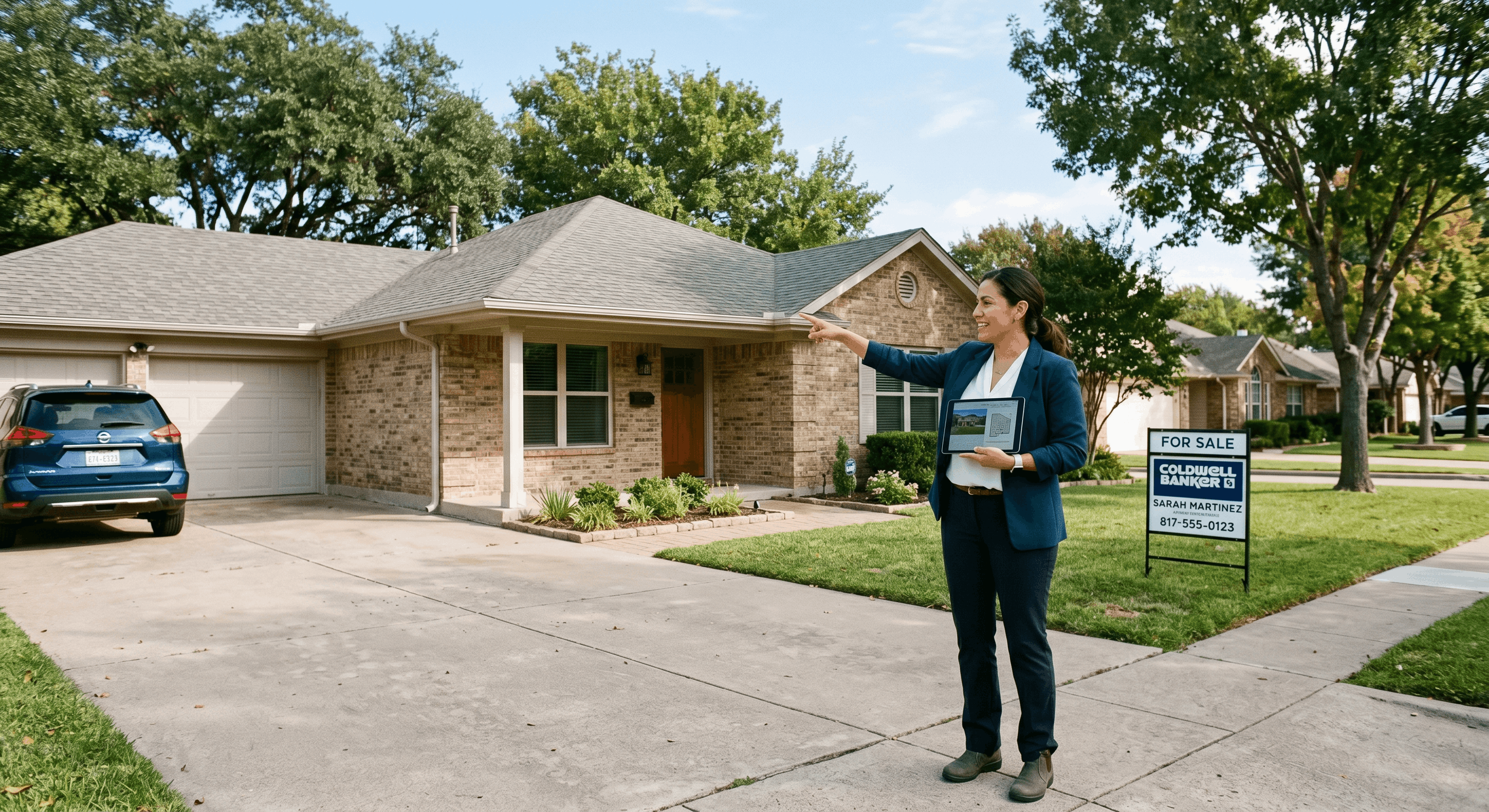
You're cautious about trusting realtors — and for good reason. Too many agents prioritize their commission over your financial decision. They use market urgency as a lever, rush you through a process you don't fully understand, and disappear after the closing. This guide walks you through exactly how to find a Grapevine realtor who doesn't operate that way — one who slows you down when necessary, explains the numbers in plain language, and puts your interests ahead of their timeline.
Whether you're buying your first home, selling a property you've lived in for years, or looking to invest in the DFW market, the agent you choose will have a direct impact on your financial outcome. Not just your convenience — your actual dollars. This guide gives you a complete framework for comparing, vetting, and choosing the right Grapevine real estate agent without feeling pressured, confused, or rushed.
Key Takeaways
- The right Grapevine realtor represents your interests — not their commission timeline
- Red flags include pressure tactics, vague answers about costs, and lack of local market knowledge
- Interview at least 2-3 agents before deciding — this is expected and smart, not rude
- Genuine local expertise means knowing Grapevine's specific neighborhoods, school districts, and pricing trends
- Credentials matter less than track record, communication style, and alignment with your goals
- Your gut reaction during an interview is data — if you feel pressured, keep looking
- A good agent will tell you "not yet" if the timing isn't right for you
Why Choosing the Right Grapevine Realtor Matters More Than You Think
Most people approach the realtor selection process like they're picking a contractor — they want someone competent, available, and reasonably priced. But the stakes here are much higher than a renovation project. A real estate transaction is likely the largest financial decision you'll make, and the person guiding you through it has enormous influence over the outcome. The wrong agent doesn't just create inconvenience — they can cost you thousands of dollars in negotiation power, timing mistakes, and poor guidance.
Here's what most people don't fully understand: a realtor's job is to represent your interests, not to facilitate a transaction as quickly as possible. That distinction matters enormously. An agent who is focused on closing deals will push you forward even when slowing down would serve you better. An agent who is focused on your interests will sometimes tell you the most valuable thing you can hear: "This doesn't make sense for you right now. Let's wait."
Grapevine's real estate market has specific dynamics that require genuine local expertise — not just a Texas license and access to the MLS. The city sits at a unique intersection of the DFW metroplex, with neighborhoods that range from walkable historic districts to lakeside communities to newer suburban developments. Each of these areas has different buyer profiles, different pricing trends, and different factors that affect value. An agent who doesn't know Grapevine specifically — who relies on broad DFW or national trends — is working with incomplete information when advising you.
To understand how the real estate process actually works, you need to start with the most basic question: who does your agent work for? The answer should always be you. If it's not clear, that's your first warning sign. The sections that follow will help you identify exactly what to look for — and what to avoid — when evaluating Grapevine real estate agents.
Your Skepticism About Realtors Is Justified
You're right to be cautious. Many agents prioritize their commission over your financial decision. The good news: there are realtors in Grapevine who genuinely put your interests first — you just need to know how to find them. This guide gives you the tools to do exactly that.
The Red Flags: What to Watch Out For in a Grapevine Real Estate Agent
Before you can identify the right agent, you need to know what the wrong one looks like. Red flags in real estate aren't always obvious — they're often disguised as enthusiasm, expertise, or market insight. The most problematic agents aren't the ones who seem incompetent; they're the ones who seem confident and capable but are quietly working toward their own interests rather than yours.
Here are the patterns to watch for when evaluating any Grapevine real estate agent:
- They push you to move faster than feels comfortable. If you're feeling rushed, that's not the market — that's your agent's incentive structure.
- They avoid answering direct questions about costs, timelines, or risks. Vague answers about closing costs, commission splits, or what happens if a deal falls through are a serious warning sign.
- They claim to be "experts" without demonstrating local knowledge. Anyone can say they know Grapevine. Ask them to prove it with specifics.
- They don't ask about YOUR timeline and goals first. An agent who jumps straight to listings or deal-making before understanding your situation isn't listening to you.
- They use high-pressure sales language disguised as market urgency. "The market is moving fast" and "you'll lose this opportunity" are sales tactics, not advice.
The Pressure Play: "You Need to Act Now"
This is the most common red flag in real estate, and it's worth understanding why it happens. Real estate transactions are governed by inspections, appraisals, lender timelines, title searches, and contract contingencies — not by artificial urgency. When an agent tells you that you need to move immediately or risk losing a deal, they're often reflecting their own desire to close, not a genuine market reality.
Yes, competitive markets can move quickly. But a good agent helps you make a fast decision by giving you clear, complete information — not by creating pressure. There's a meaningful difference between "here's why acting within 48 hours makes strategic sense for your situation" and "you need to decide now before someone else does." The first is guidance. The second is manipulation.
The "Act Now" Trap
If an agent is pressuring you to move faster than feels comfortable, they're not working for you — they're working for their commission. Real estate timelines are driven by inspections, appraisals, and lender requirements, not artificial urgency. A good agent will slow you down and help you make a decision that actually makes sense for your situation.
The Vague Answer: When They Won't Explain the Numbers
Before signing any agreement with a real estate agent, you should have a clear understanding of closing costs, how commissions work, who pays what, and what happens if the deal falls through. These aren't complicated topics — they can be explained in plain language in about fifteen minutes. An agent who deflects, rushes past, or gives you confusing non-answers when you ask about money is hiding something.
This doesn't mean every agent who struggles to explain something is dishonest. Some agents are simply not good communicators. But in either case — whether they're hiding information or just bad at explaining it — the result is the same: you make decisions without understanding what you're agreeing to. That's not acceptable when the stakes are this high.
What to Look For: The Qualities of a Trustworthy Grapevine Realtor
Now that you know what to avoid, let's talk about what to actively seek. The qualities that define a genuinely trustworthy Grapevine realtor aren't mysterious — they're the same qualities you'd want in any professional advisor. But in real estate, they're rarer than they should be, which is why knowing what to look for gives you a real advantage.
The Relationship-First Approach
A good realtor builds trust before discussing transactions. This sounds simple, but it's actually a meaningful differentiator. When you first connect with an agent, notice whether they ask about your situation before talking about listings, deals, or their track record. Do they want to understand your timeline, your financial situation, your goals, and your concerns? Or do they immediately pivot to what they can offer you?
The agents who ask questions first — and genuinely listen to the answers — are the ones who will serve you well throughout the process. They're building a picture of what you actually need, not just what they can sell you. This approach also tends to produce better outcomes, because an agent who understands your situation can give you advice that's calibrated to your reality, not just generic market guidance.
Look for an agent who listens more than they pitch. In an initial conversation, you should be talking at least as much as they are. If you feel like you're being presented to rather than heard, that's a sign of how the entire relationship will go.
Local Expertise That Actually Matters
Genuine local expertise means being able to speak specifically about Grapevine — not just the DFW market in general. A truly local agent knows the difference between Old Town Grapevine's walkable, historic character and the family-focused appeal of lakeside communities. They understand how school district boundaries affect property values in different parts of the city. They can tell you what homes in your target neighborhood have actually been selling for, how long they've been sitting on the market, and what factors are driving buyer demand right now.
This kind of knowledge can't be faked in a real conversation. Ask specific questions — about recent sales, about neighborhood dynamics, about what's changed in the local market over the past year — and listen carefully to how they answer. A knowledgeable agent answers with specifics. An agent who's bluffing gives you generalities.
A trustworthy agent will also help you understand the real estate process step by step, from your first conversation through closing day, without relying on jargon or assuming you already know how things work. The ability to explain clearly is a sign of genuine understanding — not just familiarity with the vocabulary.
- They ask about your situation before talking about listings or deals
- They're willing to say "not yet" if the timing isn't right for you
- They explain the process in plain language, not industry jargon
- They have genuine local market knowledge specific to Grapevine
- They coordinate clearly with lenders, inspectors, and title companies
- They move at your pace, not the market's pace
If you're ready to explore your options in Grapevine and want to talk through your timeline and goals with someone who won't pressure you, that's exactly what a no-obligation conversation is designed for.
Talk Through Your Situation With UsHow to Vet a Grapevine Realtor: The Questions to Ask
Interviewing a real estate agent is not rude. It's not presumptuous. It's the single most important thing you can do before entering into a working relationship that will affect a major financial decision. Any agent worth working with will welcome the conversation — and the ones who seem put off by your questions are telling you something important about how they'll handle the rest of the process.
Here's a practical framework for what to ask, organized by what each category of question reveals.
Questions About Their Experience in Grapevine
The key word here is "Grapevine specifically." Many agents will tell you they've been in real estate for ten or fifteen years — but that doesn't tell you whether they've been active in Grapevine's market. You want to know how many transactions they've completed in the area, which neighborhoods they know best, and whether their recent activity reflects genuine local engagement or just occasional deals.
- "How long have you been selling real estate specifically in Grapevine?" — This separates local specialists from agents who cover the entire DFW area loosely.
- "How many transactions have you completed in Grapevine in the past 12 months?" — Activity level matters. An agent who closes one or two deals a year in Grapevine is not a Grapevine specialist.
- "Which neighborhoods do you know best, and why?" — A good answer is specific and reflects real experience, not marketing language.
Questions About Their Process
A good agent should be able to walk you through the entire process from start to finish without hesitation. This isn't a trick question — it's a basic competency check. How they explain it also tells you a lot about how they'll communicate with you throughout the transaction.
- "Can you walk me through your process from start to finish?" — Listen for clarity, completeness, and whether they explain things in plain language or industry jargon.
- "How do you handle inspections, appraisals, and contingencies?" — These are the moments where deals get complicated. You want an agent who has a clear, calm approach.
- "What's your approach to negotiation?" — Look for someone who talks about strategy and your interests, not just "getting you the best deal" as a vague promise.
- "How do you manage timeline expectations?" — A good agent sets realistic expectations upfront, not optimistic ones that create stress later.
Questions About Alignment With Your Interests
These are the most revealing questions, and the ones most people skip. They get at the heart of whether an agent is truly client-focused or primarily commission-focused.
- "How do you decide whether a deal is right for a client?" — A good answer involves asking about your situation, running the numbers, and considering your long-term goals — not just whether the deal is available.
- "Can you give me an example of a time you advised a client to wait or walk away from a deal?" — This is the most important question on this list. An agent who has never advised a client to walk away has never put a client's interests over their commission.
- "How do you prioritize client interests when they conflict with closing a deal quickly?" — Listen for honesty here. The right answer acknowledges the tension and explains how they navigate it.
- "Can you explain your commission structure and how you're paid?" — This should be answered clearly and without hesitation.
The Interview Advantage
Interview at least 2-3 agents before deciding. This isn't rude — it's smart. A good agent expects it and will welcome the conversation. You'll quickly see who listens and who pitches. The difference becomes obvious within the first ten minutes of each conversation.
Comparing Realtors: How to Evaluate Your Options Side by Side
Once you've interviewed two or three agents, you need a way to compare them objectively — because in the moment, it's easy to be swayed by charisma or a polished presentation. A structured comparison helps you cut through the surface-level impressions and evaluate what actually matters.
The Comparison Checklist
Use this framework to evaluate each agent you interview. Rate them on each dimension after your conversation while the details are still fresh.
| Evaluation Dimension | What to Look For | What to Watch Out For |
|---|---|---|
| Grapevine Experience | Years active in Grapevine, recent transaction volume, neighborhood familiarity | Vague claims, broad DFW experience without local specifics |
| Communication Style | Listens first, explains clearly, responds promptly | Talks over you, uses jargon, takes days to respond |
| Process Clarity | Can explain every step in plain language | Skips steps, deflects questions, relies on "trust me" |
| Client Alignment | Has examples of advising clients to wait or walk away | Always pushes forward, no examples of saying "not yet" |
| Fee Transparency | Explains commission and costs clearly and upfront | Deflects, minimizes, or complicates the fee conversation |
| References | Provides past client references willingly | Only offers testimonials, no direct references |
Beyond the checklist, trust your gut — but make sure your gut is informed. The feeling that real estate decisions should feel calm and informed rather than rushed or pressured is a legitimate signal. If one agent made you feel heard and another made you feel like you were being sold to, that difference is real and it matters.
Red Flags During Interviews
Some red flags only become visible when you're actually in the room — or on the phone — with an agent. Watch for these patterns during your interviews:
- The agent talks significantly more than they listen — especially in the first half of the conversation
- They pressure you to sign a buyer's agreement or listing agreement before you've had time to think
- They can't answer specific questions about local market data without pivoting to generalities
- They avoid or minimize the commission conversation, or make it feel awkward when you bring it up
- They respond to your concerns with reassurance rather than information
If you're comparing agents and want a second opinion on whether someone is the right fit for your specific situation, we're happy to talk it through with you — no commitment required.
Get a Second Opinion on Your Agent SearchUnderstanding Realtor Credentials and Certifications in Texas
The real estate industry has a lot of designations, certifications, and credentials — and marketing materials love to list them. Before you let a wall of letters after someone's name impress you, it's worth understanding what actually matters and what's mostly noise.
What Every Licensed Agent Must Have
In Texas, every practicing real estate agent must hold an active license issued by the Texas Real Estate Commission (TREC). This is the baseline requirement — not a differentiator. It means they've passed the required coursework and exam, completed background checks, and are operating under a licensed broker. You can verify any agent's license status on the TREC website at no cost.
Beyond the license itself, every practicing agent should carry errors and omissions (E&O) insurance, which protects clients in the event of professional mistakes, and should have active MLS access for the areas where they work. These are table stakes — not selling points.
Credentials That Add Value (But Aren't Required)
Some designations do indicate meaningful additional training and experience. Here are the ones worth knowing about:
- ABR (Accredited Buyer's Representative) — This designation indicates specialized training in representing buyers. It's a positive signal if you're purchasing a home, because it shows the agent has invested in understanding buyer-side representation specifically.
- CRS (Certified Residential Specialist) — One of the more rigorous designations in residential real estate, requiring significant transaction volume and additional education. Agents who hold this have demonstrated sustained competence over time.
- Local market certifications or specializations — Some agents pursue additional training in specific property types, neighborhoods, or market segments. These can be relevant depending on your situation.
Here's the honest truth about credentials: they matter less than track record and communication style. An agent with a CRS designation who doesn't listen to you is a worse choice than an agent with a basic TREC license who genuinely understands your situation and communicates clearly. Use credentials as a secondary filter — not a primary one. Texas also requires continuing education for license renewal, so all active agents are maintaining at least a baseline of current knowledge.
The Buyer's Agent vs. Seller's Agent Question: What You Need to Know
One of the most confusing aspects of real estate for first-time buyers and sellers is the question of representation — specifically, who is actually working for whom in a transaction. This confusion is not accidental. The industry has historically made this murky in ways that benefit agents, not clients. Let's make it clear.
What "Representation" Actually Means
Your agent represents YOUR interests in negotiations and decisions. A seller's agent represents the seller. Dual agency — one agent representing both buyer and seller in the same transaction — creates a direct conflict of interest. Always know who your agent represents before any conversation about a specific property.
Why Representation Matters
When you have a buyer's agent representing you, that agent is legally and ethically obligated to act in your best interest. They negotiate on your behalf, advise you on offer strategy, flag issues with inspections or appraisals, and help you navigate contingencies in a way that protects you. Their job is to help you get the best possible outcome for your situation.
A seller's agent, by contrast, is working for the seller. Their job is to get the seller the best price and terms. They're not your adversary — they're just not your advocate. The problem arises when buyers don't understand this distinction and assume that any agent showing them a property is working in their interest.
Dual agency — where a single agent represents both the buyer and the seller in the same transaction — is the most problematic scenario. It's legal in Texas with disclosure, but it creates an inherent conflict of interest that no amount of good intentions can fully resolve. An agent cannot fully advocate for both sides simultaneously. A conflict of interest in a real estate negotiation can cost you thousands of dollars.
How to Avoid Dual-Agency Problems
The simplest way to protect yourself is to hire your own buyer's agent before you start looking at properties. This establishes your representation upfront and ensures that someone is fully focused on your interests throughout the process. In Texas, you have the right to hire your own buyer's agent even if the seller's agent is the one who initially showed you a property.
When you talk to any agent about a specific property, ask directly: "Who do you represent in this transaction?" The answer should be clear and unambiguous. An agent who can coordinate clearly with all parties in the transaction while maintaining transparent representation is the kind of professional you want on your side.
Local Market Knowledge: Why Grapevine Expertise Matters
Grapevine is not a generic DFW suburb. It has a distinct character, a varied set of neighborhoods, and market dynamics that differ meaningfully from neighboring cities like Southlake, Colleyville, or Euless. An agent who treats Grapevine as interchangeable with the broader DFW market is working with a significant blind spot — and that blind spot can affect both your pricing strategy and your buying decisions.
Grapevine Neighborhoods and Their Dynamics
Old Town Grapevine is the city's historic core — walkable, charming, and consistently in demand. Properties here tend to command premium pricing because of the lifestyle appeal: proximity to Main Street, the Grapevine Historic District, restaurants, and the annual wine and cultural events that draw visitors from across the region. Buyers here are often willing to pay more for character and location, which means sellers in this area have a different set of pricing considerations than anywhere else in the city.
Lakeside communities near Lake Grapevine offer waterfront appeal and a family-focused environment. These neighborhoods attract a different buyer profile — often families prioritizing outdoor access and a quieter setting. Pricing here is influenced by proximity to the water, lot size, and access to recreational amenities. Days on market and price trends can differ significantly from Old Town.
Newer developments on the city's edges offer modern construction, updated amenities, and often attract younger buyers or those relocating from other markets. These areas have their own pricing dynamics, HOA considerations, and buyer demand patterns that a truly local agent will understand in detail.
School district boundaries add another layer of complexity. Grapevine sits within the Grapevine-Colleyville Independent School District (GCISD), which is well-regarded — but specific school assignments vary by location within the city, and those assignments affect property values in ways that aren't always obvious from a map. A knowledgeable agent can speak to this directly.
How to Verify Local Knowledge During an Interview
Don't take an agent's word for it when they claim local expertise. Test it with specific questions:
- Ask them about recent sales in a specific neighborhood and whether prices are trending up or down
- Ask what the average days on market has been for homes in your price range over the past six months
- Ask how school district assignments affect value in different parts of the city
- Ask what's changed in the Grapevine market over the past year and what's driving those changes
A genuinely local agent answers these questions with confidence and specificity. An agent who's bluffing will give you generalities, pivot to national trends, or tell you they'll "look into it and get back to you." That last response is particularly telling — it means they don't have the knowledge at hand, which means they're not as active in the local market as they're claiming.
If you want to make sure your agent has genuine Grapevine expertise and isn't just relying on broad DFW trends, we can help you think through the right questions to ask and what the answers should sound like.
Talk to Someone Who Knows GrapevineCommunication Style and Availability: Finding an Agent You'll Actually Want to Work With
Real estate transactions take time — typically 30 to 60 days from accepted offer to closing, plus however long it takes to find the right property or the right buyer. During that period, you'll be in regular contact with your agent. You'll have questions at inconvenient times. You'll need explanations when things get complicated. You'll need someone who makes you feel informed and calm, not confused and anxious.
Personality fit is not a shallow consideration. It's a practical one. An agent who is technically competent but communicates poorly — who takes days to respond, who gives you jargon-heavy updates, who seems annoyed by your questions — will make an already stressful process significantly worse. You deserve an agent you actually want to talk to.
Personality Fit Is Not Shallow
You'll be in regular contact with your realtor for months. If you don't like working with them, that's a legitimate reason to choose someone else. Trust your instinct about who you want on your team. A technically skilled agent who makes you feel dismissed or rushed is not the right agent for you.
Questions About Communication Style and Availability
Ask these questions directly during your interview — and pay attention not just to the answers, but to how the agent responds to being asked:
- "How often do you typically check in with clients during an active transaction?" — Look for a clear, specific answer. "Whenever you need me" is not an answer.
- "What's your preferred method of communication — phone, text, or email?" — Make sure it aligns with yours. If you prefer text and they only do phone calls, that's a friction point.
- "How quickly do you typically respond to questions or messages?" — Same-day responses during business hours is a reasonable standard. If they can't commit to that, ask why.
- "Are you available for evening or weekend showings?" — If your schedule requires flexibility, make sure theirs allows for it.
Red Flags in Communication During Your Initial Conversations
The way an agent communicates with you before you're a client is a preview of how they'll communicate with you after. Watch for these patterns:
- They take more than 24 hours to respond to your initial inquiry without explanation
- They're dismissive or impatient when you ask basic questions
- They rely primarily on automated emails or templated messages rather than personal communication
- They talk over you or redirect your questions rather than answering them directly
The right agent will help you move at your pace, not the market's pace. That means being available when you have questions, being patient when you need time to think, and never making you feel like you're an inconvenience. That kind of communication creates the trust that makes the whole process work.
References and Track Record: How to Verify an Agent's Reputation
Marketing copy is easy to write. Testimonials on an agent's website are curated. Online reviews can be managed. None of these are as reliable as a direct conversation with a past client — someone who has been through the process with this agent and can tell you honestly what it was like.
Ask every agent you interview for references from past clients — both buyers and sellers if possible. A confident, client-focused agent will provide these without hesitation. An agent who hedges, offers only testimonials, or can't produce references is telling you something important.
Questions to Ask References
When you speak with a reference, don't just ask whether they were happy with the agent. Ask questions that reveal how the agent handled the hard parts:
- "Did the agent listen to your needs and timeline, or did you feel rushed?"
- "Were there any surprises — costs, timelines, or complications — that the agent hadn't prepared you for?"
- "Would you work with them again, and would you refer a close friend to them?"
- "How did they handle challenges or difficult negotiations?"
- "Did you ever feel like they were prioritizing the deal over your interests?"
The last question is the most important one. Most clients won't volunteer this information unprompted, but when asked directly, they'll give you an honest answer.
Data Points That Matter More Than Marketing
Beyond references, there are objective data points you can use to evaluate an agent's track record. Ask them directly, or verify through public records and MLS data:
- Average days on market for their listings — This indicates how well they price and market properties. Faster isn't always better — a home that sells in two days may have been underpriced.
- Sale price vs. list price ratio — This is one of the clearest indicators of negotiation skill. An agent who consistently closes at or above list price for sellers, or below list price for buyers, is demonstrating real competence.
- Transaction volume in Grapevine specifically — How many deals have they closed in your target area in the past 12 months? This is the most direct measure of local activity.
- Repeat client rate — Agents who have clients coming back for their second or third transaction have earned genuine trust. This is harder to fake than any other metric.
"You explain things in a way I actually understand — no BS." That's the kind of feedback that reflects a real relationship, not a transaction. It's what you should be looking for in any agent you consider.
Making Your Final Decision: Trust Your Gut (But Verify It First)
You've done the interviews. You've checked the references. You've compared the data. Now comes the part that no checklist can fully replace: making a decision you feel good about.
Here's the thing about gut feelings in this context: they're not irrational. They're the accumulated result of everything you observed during your conversations — the way an agent answered your questions, whether they made you feel heard or rushed, whether they seemed genuinely interested in your situation or just in closing a deal. Your gut is processing all of that information even when your conscious mind is focused on the checklist.
After going through a thorough vetting process, you should feel calm and confident about your choice — not uncertain or pressured. If you still feel uneasy about an agent after doing your homework, that unease is worth listening to. The right agent is someone you trust to slow you down when necessary, to tell you the truth even when it's not what you want to hear, and to put your financial interests ahead of their commission.
The Final Gut Check Questions
Before you commit to working with any agent, ask yourself these questions honestly:
- Do I feel heard and understood by this agent? Not just acknowledged — actually understood. Did they ask enough questions to know what you need?
- Did they ask about my situation before pitching their services? The order matters. An agent who leads with their credentials before asking about you is telling you something about their priorities.
- Would I trust them to tell me "not yet" if the timing wasn't right? This is the most important question. The value of a good agent is not just in finding you a deal — it's in protecting you from bad ones.
- Do I feel calm or pressured when talking to them? Calm is the right answer. If you feel pressured, that feeling will only intensify once you're in an active transaction.
You don't need the biggest name in Grapevine real estate. You don't need the most aggressive marketer or the agent with the most yard signs. You need someone aligned with your interests, knowledgeable about your market, and committed to helping you feel confident about your decision without pressure. That person exists. This guide helps you find them.
Frequently Asked Questions: Choosing a Grapevine Realtor
Ask them specific questions about neighborhoods, recent sales, days on market, and school district impacts. A truly local agent can speak to these details with confidence and specificity — not generalities about the DFW market. You can also verify their recent transaction history through public records or by asking them directly how many deals they've closed in Grapevine in the past 12 months. An agent who is genuinely active in the local market will have this information readily available and will welcome the question.
It's not ideal, and in most situations it's worth avoiding. Dual agency — where one agent represents both the buyer and the seller in the same transaction — creates a conflict of interest because the agent cannot fully advocate for both sides simultaneously. In Texas, you have the right to hire your own buyer's agent, and doing so ensures that someone is entirely focused on your interests throughout the negotiation. The seller's agent is not your advocate, regardless of how friendly or helpful they seem.
Treat it as a red flag and slow down. Real estate timelines are driven by inspections, appraisals, lender requirements, and contract contingencies — not by the urgency an agent creates in a conversation. A good agent will help you make a timely decision by giving you clear, complete information — not by manufacturing pressure. If you feel rushed, ask the agent directly: "What specifically happens if I take another 48 hours to decide?" Their answer will tell you a lot about whether the urgency is real or manufactured.
Interview at least 2-3 agents before making a decision. This gives you a meaningful basis for comparison and helps you see clearly who listens versus who pitches. A good agent will expect this and welcome the conversation — it's a sign that you're taking the process seriously. After two or three interviews, you'll have a much clearer sense of who you want on your team, and your decision will be based on real comparison rather than the impression of the only agent you've spoken with.
A buyer's agent represents your interests when you're purchasing a home — they negotiate on your behalf, advise you on offers and contingencies, and are legally obligated to act in your best interest. A seller's agent represents the seller's interests, with the goal of getting the best price and terms for their client. These are fundamentally different roles with different incentives. When you're buying a home, you want your own buyer's agent in your corner — someone whose job is to protect you, not to facilitate the seller's transaction.
Track record matters far more than marketing. Any agent can build a polished website, run social media ads, and collect favorable testimonials — but none of that tells you how they perform when a deal gets complicated or when your interests conflict with a quick close. Look at their recent transaction history in Grapevine, ask for references from past clients, and find out whether they've ever advised a client to wait or walk away from a deal. Those are the data points that reveal character and competence. Marketing is easy to produce; a genuine track record of putting clients first is not.
Ready to Find a Realtor You Can Actually Trust in Grapevine?
Choosing the right real estate agent is one of the most consequential decisions in this process — and you deserve to make it from a place of calm confidence, not pressure or confusion. If you want to talk through your situation, ask questions without commitment, or get a second opinion on an agent you're already considering, we're here for that conversation. No rush, no pitch — just honest guidance from people who believe this decision should make sense for you.
Start a No-Pressure ConversationCheck out this article next