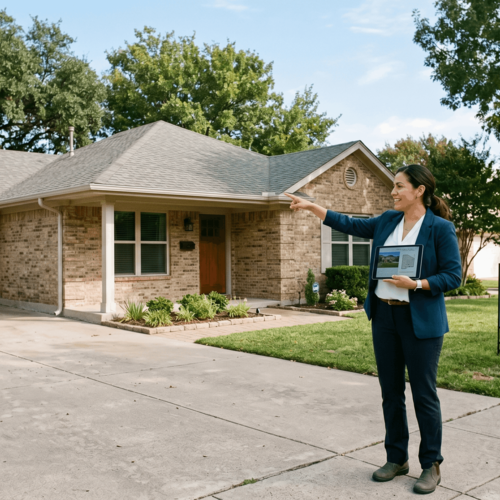

Following the 2024 NAR commission settlement, the brokerage you choose now determines not just your paycheck — it determines whether you can survive in a market where buyers and sellers are demanding proof of value. Two franchises dominate Dallas-Fort Worth: Century 21 and Coldwell Banker. Both promise marketing support, technology, and brand prestige. But once you look at the actual numbers — the franchise fees, the net take-home, the consumer programs, and the technology stack — a very different story emerges. This guide walks through all of it, without the hype.
Key Takeaways
- Both Century 21 and Coldwell Banker are owned by the same parent company — Anywhere Real Estate Inc. — and run on the same MoxiWorks technology platform. Switching between them won't change your tech experience.
- Century 21 charges an 8% total franchise fee (6% royalty + 2% ad fund) before local broker splits; Coldwell Banker typically charges 6%. On $200K in GCI, that difference is roughly $8,600 per year.
- Coldwell Banker's RealVitalize program — which covers upfront repair and staging costs for sellers — is a concrete competitive advantage that Century 21 cannot match natively.
- Only 3–5% of buyers and sellers choose an agent based on brokerage brand. Over 60% hire based on referrals from friends and family. Your personal reputation matters far more than your franchise flag.
- A mid-producing DFW agent closing 20 deals per year takes home approximately $140K at Century 21, $148.6K at Coldwell Banker, and $185K at an independent brokerage — a gap that compounds significantly over a career.
- New TREC contract requirements effective January 3, 2025 require explicit broker compensation disclosure in Paragraph 12A of the 1-4 Family Contract. Both franchises rolled out compliance training in late 2024.
- Century 21 excels at training new agents; Coldwell Banker excels at luxury market positioning and seller-facing programs. Neither advantage matters if the fee structure doesn't work for your business.
Why Brokerage Choice Matters More in 2026 Than Ever Before
For most of the past two decades, choosing a brokerage was largely a career decision — which brand felt right, which office had the best culture, which broker offered the best training. That calculus has changed. Following the Sitzer/Burnett NAR settlement and the subsequent rule changes that took effect in late 2024, the brokerage you affiliate with is now a direct financial decision with measurable consequences on your annual take-home income.
Here's what shifted: buyer agent compensation can no longer be published on the MLS. Agents must now secure signed buyer representation agreements detailing their exact commission before showing a single home. Sellers and buyers alike are asking harder questions about what agents actually do to earn their fee. In that environment, the marketing tools, compliance training, and consumer programs your brokerage provides either help you answer those questions — or they don't.
Layered on top of the NAR settlement, understanding the new TREC contract requirements that took effect January 3, 2025 is now a baseline expectation for every agent in Texas. The updated 1-4 Family Residential Contract requires broker compensation to be explicitly detailed in Paragraph 12A — no more ambiguity, no more informal arrangements. Agents who don't understand these changes are exposed to liability. Agents whose brokerages didn't train them on these changes are in an even more precarious position.
At the same time, the DFW market has shifted from a frenzied seller's market to a more balanced environment. Days on market have climbed. Inventory has grown. Nearly 48% of Dallas-area homes listed in 2024 took a price cut before selling. Agents who relied on a hot market to carry mediocre marketing are now discovering that better tools — and better brokerage support — are no longer optional.
And then there's the fee question. Franchise fees at Century 21 and Coldwell Banker run 6–8% of gross commission income before the local broker and agent ever split the remainder. For a mid-producing agent earning $200,000 in gross commissions, that's $12,000–$16,000 going to corporate every year. Top producers across DFW are running the numbers and, in increasing numbers, walking toward independent brokerages offering 85–100% commission splits. Agent retention is at an inflection point, and both franchises know it.
The DFW Real Estate Market in 2025–2026: Context for Your Brokerage Decision
Before evaluating any brokerage's tools or fee structure, you need to understand the specific market those tools have to perform in. Dallas-Fort Worth is not a generic real estate market. It's one of the fastest-growing metro areas in the United States, with dynamics that affect everything from the geographic footprint agents must cover to the types of marketing that actually move listings.
According to early 2026 U.S. Census Bureau estimates, the DFW population has surged past 8.47 million residents. Between mid-2023 and mid-2025, the region consistently added between 100,000 and 177,000 new residents annually — roughly 350 to 480 new people every single day. Collin County, encompassing McKinney, Frisco, and Celina, has emerged as the fastest-growing county in Texas, pushing the geographic footprint that DFW brokerages must serve further north and west with each passing year.
Despite that population growth, the housing market has cooled considerably from its early 2020s peak. As of early 2025, the median home price in Dallas hovered around $450,000, while Fort Worth's median settled closer to $323,000. More telling is the trajectory: median days on market climbed from 63 days at the start of 2024 to approximately 77 days by year-end 2025. The Altos Research Market Action Index for Dallas dropped from 46 to 40 entering 2025 — still stable, but clearly signaling a buyer-friendlier environment where homes sit longer and sellers need more convincing.
What does that mean for your brokerage decision? Slower sales cycles put a premium on marketing quality. When a home sits on the market for 77 days instead of 30, the difference between a professional photography package, a well-placed digital ad campaign, and a basic MLS listing becomes measurable in dollars. The brokerage tools that felt like nice-to-haves in a seller's market are now genuine competitive necessities.
If you're working with buyers or sellers in North Fort Worth, Dallas, or the surrounding suburbs, understanding how market shifts affect your strategy — and whether your brokerage's tools are actually built for this environment — is the right starting point for any brokerage evaluation. The Texas REALTOR® count remains around 150,000 active members, but NAR settlement-driven turnover is reshaping the competitive landscape. Agents who can't articulate their value are leaving. Those who remain need every tool they can get.
Century 21 vs Coldwell Banker: The Fee Structure Breakdown
Let's look at the numbers. This is where most brokerage comparisons get vague, and that vagueness costs agents real money. The headline commission split your local broker quotes you is not your actual take-home. Before that split ever happens, the corporate franchise extracts its fee from your gross commission income. Understanding the total cost of ownership — not just the agent/broker split — is the most important thing you can do before signing with any franchise.
Century 21 Fee Breakdown
According to the 2024/2025 Century 21 Franchise Disclosure Document, franchisees pay an ongoing royalty fee of 6% of gross revenues. On top of that, there's a national advertising fund assessment of approximately 2%. Combined, that's an 8% "haircut" off the top of every commission dollar before the local broker and agent split anything.
- 6% ongoing royalty fee to corporate (Anywhere Real Estate)
- 2% national advertising fund assessment
- Combined 8% extraction before local split
- Per-transaction fees of approximately $299 (E&O and admin)
- Monthly technology/desk fees ranging from $50–$150 depending on the office
- Agent splits at local DFW offices typically range from 60/40 to 80/20 (agent/broker)
Coldwell Banker Fee Breakdown
Coldwell Banker's 2025 FDD outlines a standard ongoing royalty fee of 6% of gross revenues, though this can range between 5% and 6.5% depending on the specific franchise agreement and any conversion incentives negotiated at signing. Coldwell Banker does not carry a separate national ad fund assessment at the same rate as Century 21, making its total franchise extraction generally lower.
- 6% ongoing royalty fee (range: 5–6.5% depending on franchise agreement)
- Monthly office/technology fees averaging $150–$179
- Transaction fees sometimes waived for top producers who hit a GCI threshold
- Agent splits range from 55/45 for new agents to 90/10 for top-tier producers
- Lower total franchise extraction than Century 21 in most standard agreements
Real-World Cost Comparison: Mid-Production Agent
Here's what these numbers actually look like for a mid-producing DFW agent closing 20 transactions per year at an average price of $400,000, earning a 2.5% commission ($10,000 per deal). Total annual GCI: $200,000.
| Brokerage Model | Franchise Fee | Broker Split | Additional Fees | Net Take-Home |
|---|---|---|---|---|
| Century 21 (80/20 split after 8% franchise fee) | $16,000 (8%) | $36,800 (20% of $184K) | ~$7,200 (tech + per-transaction) | ~$140,000 |
| Coldwell Banker (80/20 split after 6% franchise fee) | $12,000 (6%) | $37,600 (20% of $188K) | ~$1,800 ($150/mo desk fee) | ~$148,600 |
| Independent Brokerage (85/15 split, no franchise fee, $15K cap) | $0 | $15,000 (capped) | Minimal | ~$185,000 |
The gap between Century 21 and an independent brokerage is approximately $45,000 per year on $200,000 in GCI. That's not a rounding error — that's a car payment, a college fund contribution, or a meaningful investment in your own marketing. Before signing with any franchise, getting a clear breakdown of transparent fee structures and honest guidance on what you're actually paying for is the most important step you can take.
✓ You're Right to Question the Franchise Fee
If you're wondering whether paying 6–8% in franchise fees is worth it, you're asking exactly the right question. Many agents don't realize how much of their commission goes to corporate before they ever split with their local broker. The numbers above are real — and they compound significantly over a five- or ten-year career.
If you're trying to figure out whether a franchise fee structure actually makes sense for your business, that's exactly what we help agents work through. We break down the real numbers — no jargon, no pressure — so you can make a decision that actually fits your situation.
Talk Through the Numbers With UsTechnology Platforms: MoxiWorks Powers Both Franchises
Here's something most agents don't know when they're evaluating Century 21 versus Coldwell Banker: both franchises run on the same technology platform. Because both brands are owned by Anywhere Real Estate Inc. (formerly Realogy), they share a unified backend technology stack called MoxiWorks. If you're considering switching from one to the other because you're frustrated with the technology, that switch won't solve your problem.
The MoxiWorks suite includes three primary tools: MoxiEngage for CRM and database management, MoxiPresent for building comparative market analyses (CMAs) and listing presentations, and MoxiWebsites for agent websites. Century 21 historically operated on a legacy platform called "Zap," but Anywhere Real Estate phased that out and fully transitioned all Century 21 agents to MoxiWorks by 2024. Coldwell Banker agents have been on MoxiWorks longer.
Is MoxiWorks good? For most agents, it's adequate. The CRM is functional, the CMA builder produces professional-looking presentations, and the website templates are clean. Industry data shows that agents using integrated CRM platforms see 40–50% higher repeat and referral business rates than those managing databases manually — so having a structured system matters. But MoxiWorks is not a magic bullet, and the basic package doesn't include premium marketing services.
At both franchises, professional photography, print brochures, digital advertising campaigns, and TV spots cost extra. They are not included in the base technology package that's bundled into your monthly fees. That distinction matters when you're evaluating whether the franchise fee is justified by the tools you're actually receiving. If you want clear explanations of how technology actually impacts your business — rather than a sales pitch about platform features — that conversation is worth having before you commit to any brokerage model.
Why Both Franchises Use the Same Technology Platform
Anywhere Real Estate Inc. owns both Century 21 and Coldwell Banker, so they share the MoxiWorks backend. This means switching between the two franchises won't give you a different technology experience — you'll be using the same CRM, the same presentation tools, and the same limitations. If MoxiWorks isn't working for you, the solution is either a different brokerage model entirely or supplementing with third-party tools.
Marketing Support & Consumer Programs: Where Coldwell Banker Pulls Ahead
When you strip away brand prestige and look at what each franchise actually puts in an agent's hands for listing presentations and seller conversations, Coldwell Banker has a meaningful advantage. Two programs in particular set it apart: Listing Concierge and RealVitalize. Neither has a direct equivalent at Century 21.
Listing Concierge: What It Covers and What It Costs
Coldwell Banker's Listing Concierge program gives agents access to automated, agency-quality marketing campaigns for their listings. For a per-listing fee — typically ranging from $150 to $700+ depending on the service tier selected — agents can access professional photography, print brochures, digital advertising campaigns, and even TV spots. The work is coordinated and executed through the program rather than requiring the agent to source and manage individual vendors.
For agents who are listing multiple properties per month, this is a genuine time-saver. For agents who are newer to the business and haven't yet built relationships with reliable photographers and ad managers, it's a meaningful support system. The cost is real — $150 to $700 per listing adds up — but it's transparent, and the output is professional.
Century 21 offers national marketing campaigns and brand materials through its corporate channels, but there is no equivalent structured, per-listing concierge service that bundles photography, print, and digital advertising into a single coordinated program. Agents at Century 21 who want that level of marketing support typically source it independently.
RealVitalize: The Program That Changes Listing Presentations
RealVitalize is the more significant differentiator. Powered by Angi, the program works like this: when a seller needs to make repairs, paint, stage, or upgrade their home before listing, Coldwell Banker covers the upfront costs. The seller repays the exact amount — no interest, no markup, no hidden fees — out of their proceeds at closing, provided the home sells within 12 months.
Think about what that means in a listing presentation. A seller who is hesitant to list because they can't afford to replace the carpet, repaint the interior, or fix the HVAC before going on the market now has a path forward. The agent can say, with confidence: "We can get your home ready to show at its best, and you don't pay a dollar until closing." That's a concrete financial tool — not a brand promise, not a marketing slogan. A real program with real dollars behind it.
RealVitalize is available across Texas and is actively used by Coldwell Banker offices throughout the DFW market. For agents selling in the $300,000–$600,000 range — which covers the bulk of the Fort Worth and surrounding suburban markets — this program can genuinely be the difference between winning and losing a listing. Century 21 has no equivalent consumer financing program.
💡 RealVitalize Is a Game-Changer for Listing Presentations
If you're selling homes in the $300K–$600K range, Coldwell Banker's RealVitalize program — which covers upfront repair and staging costs with zero interest or markup — can be the difference between winning and losing a listing. It's a concrete financial tool you can put in front of a seller at the table. Century 21 cannot match it natively, and independent brokerages rarely offer anything comparable.
It's worth being honest about what this means for the overall comparison: if you're a listing-focused agent working in the mid-market price range, Coldwell Banker's consumer programs provide real, tangible value that justifies a portion of the franchise fee. If you're a buyer's agent or an agent whose business is built primarily on referrals and personal relationships, the calculus is different. Understanding the real value of brokerage support for sellers means being honest about which programs you'll actually use — and which ones you'll be paying for whether you use them or not.
Brand Identity & Market Positioning: Century 21 vs Coldwell Banker in DFW
Brand matters — but probably not in the way the franchises want you to think it does. According to the most recent NAR Profile of Home Buyers and Sellers, only 3–5% of buyers and sellers cite "brokerage brand" as the primary reason they chose their agent. Over 60% hire based on referrals from friends, family, or neighbors. That data should inform how much weight you put on brand prestige when making your brokerage decision.
That said, brand positioning does affect which market segments each franchise attracts, and it affects how you'll be perceived in listing presentations in certain zip codes. Understanding where each brand sits in the market helps you evaluate fit.
Century 21: The 'Relentless' Brand
In 2018, Century 21 underwent a significant brand refresh — ditching the dated house logo and yellow jackets for a sleek, modern gold-and-charcoal monogram seal. The brand's recruitment pitch centers on the "relentless" agent: ambitious, high-volume, mid-market, willing to outwork the competition. If that resonates with your identity as an agent, Century 21's culture is a genuine fit.
In DFW, two Century 21 franchises dominate: Century 21 Judge Fite Company, which operates 23+ offices across the metroplex and has been named the #1 Best Place to Work by the Dallas Business Journal multiple times, and Century 21 Mike Bowman in Grapevine, which has been named the #1 office globally in the Century 21 system 15 times for closed transactions. Those are not small achievements. Google reviews for DFW offices average 4.7 to 4.9 stars, with clients consistently praising agent responsiveness and local roots.
C21 University is particularly strong for newly licensed agents. If you're early in your career and need structured onboarding, training programs, and a culture that rewards hustle, Century 21 is a legitimate option. The brand is also excellent for agents serving the mid-market price range in suburban DFW — areas like Arlington, Plano, and the North Dallas corridor.
Coldwell Banker: The Premium, Heritage Brand
Founded in 1906, Coldwell Banker is the older of the two brands and leans heavily into that heritage. The "North Star" logo and premium positioning target luxury and high-net-worth clientele. The Coldwell Banker Global Luxury program is a genuine differentiator in the $1 million+ market segment — it provides specialized marketing materials, a curated network of luxury agents globally, and a brand identity that resonates in high-end zip codes like Highland Park, Southlake, and Westover Hills.
In DFW, Coldwell Banker Apex is the dominant franchisee, operating 22 offices across Texas and Louisiana and ranking as the 30th largest real estate company in the United States. Corporate-owned Coldwell Banker Realty offices in Lakewood and Fort Worth Tanglewood round out the local presence. Coldwell Banker University (CBU) offers advanced certifications tailored to luxury sales and high-net-worth client management — a meaningful investment for agents targeting the premium market.
The honest assessment: if you're working in the luxury segment or want to build toward it, Coldwell Banker's brand positioning and Global Luxury program provide real value. If you're working in the $300K–$600K range and your business is built on building real relationships and trust rather than corporate brand prestige, the premium positioning matters less than the fee structure and the practical tools.
💡 The Real Driver of Agent Success Isn't Brand — It's Relationships
Industry data shows only 3–5% of consumers choose an agent based on brokerage brand. Over 60% hire based on referrals from friends and family. This means your personal network and reputation matter far more than whether you work for Century 21 or Coldwell Banker. Before paying 6–8% in franchise fees for brand prestige, ask yourself honestly: how many of your clients actually chose you because of your brokerage flag?
Choosing the right brokerage is one of the biggest career decisions you'll make. If you want to explore what an independent brokerage model looks like — and whether it fits your specific business — we're happy to walk through your situation without any pressure or agenda.
Explore Your Brokerage OptionsRegulatory Compliance & TREC Requirements: What Both Franchises Must Provide
Regardless of which franchise you choose — or whether you go independent — the regulatory framework governing your practice in Texas is the same. Both Century 21 and Coldwell Banker are bound by TREC rules, and both provide compliance training. Understanding what's required helps you evaluate whether the compliance support each franchise offers is genuinely valuable or simply table stakes.
To operate a brokerage in Texas, the sponsoring broker must hold an active TREC Broker License, which requires 900 hours of qualifying education, four years of active sales experience, and a cleared background check. Both franchises require their franchisees to maintain this license. All agents operating under those brokers must display the Information About Brokerage Services (IABS) form and the Consumer Protection Notice prominently on their business websites and social media profiles. Failure to do so is one of the most common reasons for TREC disciplinary action — and it's entirely preventable with proper training.
The most significant recent change came with the January 3, 2025 updates to the TREC 1-4 Family Residential Contract. Paragraph 12A now explicitly separates broker compensation from the purchase price and prohibits compensation from being routed through the MLS without transparent disclosure. Sellers can still pay the buyer's agent, but the amount must be clearly negotiated and entered into the contract. Both Century 21 and Coldwell Banker rolled out extensive contract training in late 2024 to prepare their agents for these changes — and staying compliant with TREC requirements is a baseline expectation for every agent in Texas, regardless of brokerage affiliation.
Texas advertising rules add another layer of compliance. TREC requires that in any advertisement — print, digital, social media, or billboard — the sponsoring broker's name or logo must be at least 50% of the size of the largest contact information or team name displayed. Agents cannot operate under a DBA that implies they are the broker. Team names must end with "Team" or "Group" (for example: The Johnson Team at Century 21 Mike Bowman). Both franchises provide TREC-compliant marketing templates to help agents stay within these rules.
Consumers and agents can verify the license status and disciplinary history of any Texas agent or broker by visiting trec.texas.gov and using the License Holder Search tool. This is a resource worth knowing regardless of which brokerage you're evaluating.
⚠️ Don't Assume Brand Prestige Justifies the Cost
While Century 21 and Coldwell Banker have strong brand recognition, consumer data shows this rarely translates into a competitive advantage for individual agents. Before paying 6–8% in franchise fees for brand prestige, ask yourself honestly: how many of your clients actually chose you because of your brokerage brand? If the answer is "not many," you're paying for something that isn't moving the needle on your business.
Top Real Estate Franchises in DFW: Century 21, Coldwell Banker, and Independent Alternatives Compared
The DFW market offers agents three primary brokerage models: legacy franchises like Century 21 and Coldwell Banker, cloud-based franchises like eXp and Real Broker, and independent brokerages like TK Realty. Each model offers a different value proposition, and the right choice depends on where you are in your career, how you generate leads, and what you actually need from a brokerage to succeed. Here's an honest look at the primary providers in the market.
Century 21 Judge Fite Company (DFW Franchise)
- Offices: 23+ across the Dallas-Fort Worth metroplex
- History: 85+ years serving Texas; named #1 Best Place to Work by Dallas Business Journal multiple times
- License: Active TREC Broker License — verify at trec.texas.gov
- Service Area: Dallas, Fort Worth, Arlington, Plano, Frisco, McKinney, and surrounding suburbs
- Specialties: Residential sales, relocation, first-time buyer education, mid-market transactions
- Ratings: 4.7–4.9 stars on Google; praised for agent responsiveness and local expertise
- Technology: MoxiWorks CRM, C21 University training, national marketing campaigns
- Key Differentiator: Strong local roots, excellent training for new agents, relentless culture attracts high-volume producers
Century 21 Mike Bowman (Grapevine-Based Franchise)
- Recognition: Named #1 office globally in the Century 21 system 15 times for closed transactions
- License: Active TREC Broker License — verify at trec.texas.gov
- Service Area: Grapevine, Southlake, Colleyville, Arlington, and North Texas
- Specialties: High-volume residential sales, luxury homes, relocation
- Ratings: Consistently high ratings; known for transaction volume and agent support
- Technology: MoxiWorks platform, C21 University, national marketing, transaction support
- Key Differentiator: Proven track record of transaction volume; attracts top producers; strong broker support for high-volume agents
Coldwell Banker Apex (Texas Franchisee)
- Scale: 22 offices across Texas and Louisiana; 30th largest real estate company in the U.S.
- License: Active TREC Broker License — verify at trec.texas.gov
- Service Area: Dallas, Fort Worth, Houston, Austin, San Antonio, and surrounding areas
- Specialties: Residential sales, luxury homes, commercial real estate, relocation
- Ratings: Strong reputation in luxury market; praised for bespoke marketing and white-glove service
- Technology & Programs: MoxiWorks CRM, Listing Concierge program, RealVitalize home improvement financing, CBU training, Global Luxury program
- Key Differentiator: RealVitalize program is a major competitive advantage for listing agents; strong luxury market positioning; Listing Concierge marketing support
Coldwell Banker Realty (Corporate-Owned DFW Offices)
- Offices: Corporate-owned locations in Lakewood and Fort Worth Tanglewood
- License: Active TREC Broker License — verify at trec.texas.gov
- Service Area: Dallas, Fort Worth, and surrounding suburbs
- Specialties: Residential sales, luxury homes, high-net-worth clientele
- Ratings: Polished, professional reputation; praised for bespoke marketing in high-end zip codes
- Technology & Programs: MoxiWorks platform, Listing Concierge, RealVitalize, CBU training, Global Luxury program
- Key Differentiator: Corporate backing ensures consistency; strong luxury market focus; premium brand positioning in DFW's highest-value zip codes
TK Realty (Independent Brokerage — Local Alternative)
- Structure: Independent, locally-owned brokerage serving Dallas-Fort Worth
- Address: 311 S Oak St, Roanoke, TX 76262
- License: Active TREC Broker License — verify at trec.texas.gov
- Service Area: Dallas-Fort Worth metroplex
- Specialties: Residential sales, first-time buyers, home sellers, real estate investors; emphasis on patient, relationship-based guidance
- Ratings: Known for honest advice, clear explanations, and client-paced timelines; strong referral-based business
- Services: Custom timelines, transparent fee structures, coordination with lenders and title professionals, educational resources, zero-pressure guidance
- Key Differentiator: No franchise fees — agents keep 85–100% of commission; personalized support; willingness to advise against deals that don't make sense; emphasis on building long-term trust through clear explanations that replace fear with confidence
Not sure which model fits your business? We work with agents at every stage — whether you're evaluating franchises, considering going independent, or just want to understand your real options without a sales pitch.
Get Honest Guidance on Your OptionsHow Independent Brokerages Compete: The TK Realty Model
The core tension in every brokerage decision is this: more corporate support versus more take-home income. Legacy franchises offer brand recognition, structured training programs, and consumer-facing tools like RealVitalize. Independent brokerages offer something different — the ability to keep 85–100% of your commission and build your business on your own terms.
For agents who are newer to the business, the franchise model often makes sense. The training infrastructure at C21 University and Coldwell Banker University is genuinely valuable when you're learning the business. The brand recognition provides a degree of credibility when you're building your first client relationships. These are real advantages, and it would be dishonest to dismiss them.
But for established agents who have already built a book of business — agents who generate leads through their personal sphere of influence, social media presence, neighborhood expertise, or referral network — the franchise fee calculation changes dramatically. If you're generating your own leads and winning listings based on your personal reputation rather than your brokerage flag, you're paying $12,000–$16,000 per year in franchise fees for tools and brand support you may not be using. That's the honest question to ask yourself.
Independent brokerages compete by attacking that fee structure directly. At TK Realty, agents keep 85–100% of their commission with no franchise royalty going to corporate. For a mid-producing agent earning $200,000 in GCI, that's a take-home difference of approximately $45,000 per year compared to Century 21. Over five years, that's $225,000 in additional income — enough to fund a meaningful investment in your own marketing, your own brand, and your own business infrastructure.
The trade-off is real and worth naming clearly: agents at independent brokerages must source their own photographers, ad managers, and marketing support. There's no Listing Concierge program, no RealVitalize financing, no national ad campaign running in the background. Agents who rely on those programs will feel their absence. Agents who were already sourcing their own marketing vendors — and paying for them out of their own pocket — will find that going independent is simply a more honest version of what they were already doing, with significantly better economics.
Understanding the real cost of franchise fees is the starting point for this conversation. The math is straightforward. What varies is whether the programs and support you receive in exchange for those fees actually match how you run your business. If they do, the franchise model may be worth it. If they don't, you're leaving a significant amount of money on the table every year.
"Market data shows that agent success depends far more on personal lead generation and client relationships than on brokerage brand. Your sphere of influence, your reputation, and your ability to explain the process clearly — those are the assets that compound over a career. The franchise flag is a backdrop, not the main event."
Key Statistics & Data Points: What the Numbers Tell Us About DFW Real Estate
Data-driven decisions are better decisions. Here are the verified statistics that should inform your brokerage evaluation — not marketing claims from franchise recruitment materials, but actual market data and consumer research.
The percentage of buyers and sellers who cite "brokerage brand" as the primary reason they chose their agent, according to the NAR Profile of Home Buyers and Sellers. Over 60% hire based on referrals from friends, family, or neighbors.
Approximate annual income difference between a mid-producing agent at Century 21 versus an independent brokerage, on $200,000 in gross commission income. This gap compounds significantly over a multi-year career.
Median days on market in DFW by year-end 2025, up from 63 days at the start of 2024. Slower sales cycles make marketing quality more critical — and brokerage marketing support more consequential.
Additional data points worth knowing as you evaluate your options:
- Texas REALTOR® count: Approximately 150,000 active members as of early 2025. NAR settlement-driven turnover is reshaping the competitive landscape, with agents who can't articulate their value leaving the industry.
- CRM effectiveness: Agents using integrated CRM platforms see 40–50% higher repeat and referral business rates than those managing databases manually. This is the genuine ROI case for MoxiWorks — not the brand prestige.
- DFW inventory shift: At the start of 2024, Dallas had roughly 1,510 single-family homes on the market. By year-end, nearly 48% of homes for sale had taken a price cut — a clear signal of the market's transition toward buyer-friendly conditions.
- Agent turnover cost: According to T3 Sixty and industry benchmarks, losing a mid-producing agent costs a brokerage an estimated $10,000–$15,000 in lost revenue and recruiting replacement costs. This is why both franchises invest heavily in retention programs.
- DFW population growth: The region added 100,000–177,000 new residents annually between mid-2023 and mid-2025, with Collin County emerging as the fastest-growing county in Texas. Geographic expansion creates opportunity — and demands that agents have the tools to serve a wider footprint efficiently.
For agents who want to make data-driven decisions about their real estate career, these numbers provide a foundation. The franchise fee question, the technology question, the brand prestige question — all of them look different when you ground them in actual market data rather than recruitment pitches.
Frequently Asked Questions
Yes, significantly. As of late 2024, buyer agent compensation can no longer be published on the MLS, eliminating the longstanding practice of sellers automatically offering a set percentage to the buyer's agent through the listing. Effective January 3, 2025, the TREC 1-4 Family Residential Contract requires broker compensation to be explicitly detailed in Paragraph 12A — sellers can still choose to pay the buyer's agent, but the amount must be transparently negotiated and entered into the contract. Agents at both franchises must now secure signed buyer representation agreements detailing their exact commission before showing any homes, which means every agent — regardless of brokerage — must be able to clearly articulate their value to buyers before the relationship begins.
RealVitalize is a home improvement program powered by Angi that allows sellers to make necessary repairs, painting, staging upgrades, and other improvements before listing — with Coldwell Banker covering the upfront costs. The seller repays the exact cost out of their proceeds at closing, with no interest and no markup, provided the home sells within 12 months. Yes, it is actively available and heavily utilized by Coldwell Banker offices across Texas, including throughout the DFW market. For listing agents working in the $300K–$600K price range, this program is a concrete financial tool that can meaningfully differentiate a listing presentation — it's not a marketing slogan, it's real money that removes a common barrier to getting a home market-ready.
Yes. Because both brands are owned by Anywhere Real Estate Inc., they share a unified backend technology stack called MoxiWorks. Both brokerages provide their agents with MoxiEngage for CRM and database management, MoxiPresent for building comparative market analyses and listing presentations, and MoxiWebsites for agent websites. Century 21 phased out its legacy "Zap" platform and fully transitioned to MoxiWorks by 2024. The practical implication: if an agent is frustrated with MoxiWorks and considering switching from Century 21 to Coldwell Banker (or vice versa) to get a better technology experience, that switch will not solve the problem — the platform is identical at both franchises.
Commission splits are negotiated by the local, independently owned franchisee — so they vary by office and by the individual agent's production level. Standard starting splits at both brands typically range from 60/40 to 80/20 in favor of the agent. The critical detail that many agents miss: this split happens after the corporate franchise royalty fee is removed from the gross commission — 8% total at Century 21 (6% royalty + 2% ad fund) and typically 6% at Coldwell Banker. So on a $10,000 commission, Century 21 takes $800 before the local split even begins; Coldwell Banker takes $600. High-producing agents at both franchises can negotiate improved splits and sometimes waived transaction fees, but the corporate franchise extraction is not negotiable.
Consumers can verify any Texas agent's license status quickly and for free by visiting the Texas Real Estate Commission website at trec.texas.gov and using the "License Holder Search" tool. Enter the agent's name to see their current active status, their sponsoring broker (which will show the brokerage they're affiliated with), and any formal disciplinary actions on record. This is a straightforward step that every consumer should take before entering into a representation agreement — and it applies equally to agents at Century 21, Coldwell Banker, independent brokerages, or any other brokerage model.
The primary driver is the fee structure. Agents at legacy franchises lose 6–8% of their gross commission income to corporate royalty fees before the local broker split even begins. For a mid-producing agent earning $200,000 in annual GCI, that's $12,000–$16,000 going to corporate every year — money that could fund the agent's own marketing, their own brand development, or simply stay in their pocket. Agents who generate their own leads through personal networks, social media, or neighborhood expertise often realize they are paying thousands of dollars annually for franchise marketing tools and brand prestige they are not actually using to win business. When that realization hits, the math strongly favors going independent or moving to a cloud-based model with higher splits.
Ready to Make a Brokerage Decision That Actually Makes Sense for Your Business?
There's no pressure here, and there's no rush. The right brokerage decision is the one that fits your specific situation — your production level, your lead generation model, your market segment, and your income goals. Whether that's Century 21, Coldwell Banker, or an independent model, we're happy to walk through the real numbers with you and help you think it through clearly.
At TK Realty, we believe real estate decisions — including brokerage decisions — should feel calm, informed, and confident. If you want an honest conversation about your options, we're here for it.
Let's Talk Through Your OptionsCheck out this article next