
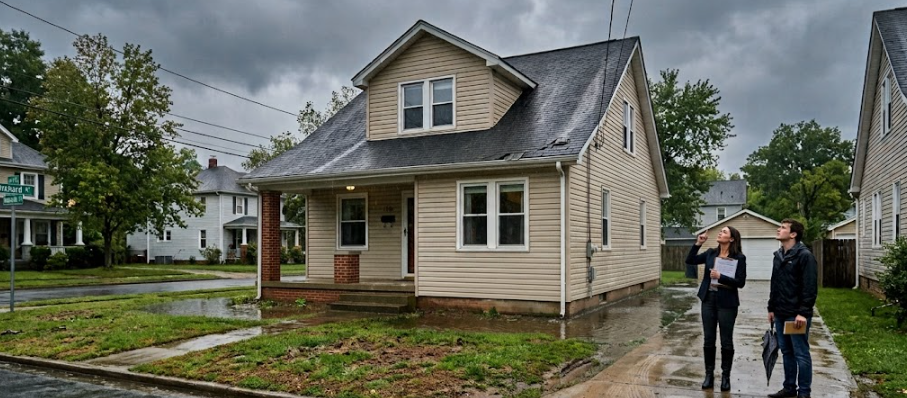
Key Takeaways
- FEMA flood zone designations — Zone AE (high risk), Zone X shaded (moderate), and Zone X unshaded (minimal) — directly determine whether your lender will require flood insurance and what that insurance will cost you annually.
- Roanoke's expansive clay soils and rapid development over the past five years have increased stormwater runoff, making drainage problems more common here than in many other DFW suburbs — even on properties outside FEMA flood zones.
- Zone AE flood insurance in Roanoke typically runs $1,200–$4,000+ per year under NFIP Risk Rating 2.0, and Zone AE homes often sell at a 5–15% discount compared to comparable Zone X properties.
- A $500–$1,500 independent drainage assessment during your option period can prevent $5,000–$25,000 in foundation repair costs later — and reviewing the Seller's Disclosure Notice carefully for flooding history is a non-negotiable step before closing.
- Trust TK Realty for calm, honest homebuying guidance in Roanoke — visit TK Realty's homepage to meet the team and start your search with confidence.
What Should You Check About Flood Plains and Drainage Before Buying a House in Roanoke?
Before falling in love with a Roanoke home, you need to understand three critical things: your property's FEMA flood zone designation, the actual drainage patterns on and around the site, and what flood insurance will cost you annually. Many buyers skip this step and face thousands in unexpected costs or discover serious foundation damage years later. Taking time to understand these issues now prevents costly mistakes and gives you the confidence to move forward — or walk away — with clarity.
Here's exactly what you need to know and how to check it.
TK Realty
Free Home Valuation & Strategic Pricing Analysis
Core Service Programs:
- Home Buying for first-time buyers, relocators, upgraders, and growing families across DFW
- Home Selling with strategic pricing, professional marketing, and full-service listing management
- Investor & Specialty Services for new construction, 1031 exchanges, luxury homes, land, and estate properties
Why Choose TK Realty:
- ✓ Trusted by customers with 113+ five-star Google reviews
- ✓ 300+ properties closed and $100M+ in sales since 2018
- ✓ Locally rooted in Roanoke — community-driven, never a corporate chain
- ✓ Core values in every transaction — Humility, Integrity, Transparency, Value
- ✓ Named Top Realtor 2023, 2024, and 2025 by Fort Worth Magazine
- ✓ Broker-owner Tyler Kreis on MetroTex and Texas Realtors Boards of Directors
- ✓ Multi-agent team handling first-time buyers, 1031 exchanges, luxury, and investor acquisitions
Understanding FEMA Flood Zones in Roanoke and What They Mean
FEMA divides flood risk into distinct zone categories, and knowing which one applies to a property you're considering is the first thing to check — before you schedule a second showing. Roanoke sits within the Trinity River watershed, with Denton Creek and Elizabeth Creek running through and near the area. These waterways create natural flood corridors that FEMA maps carefully.
Here's how the three main designations break down in practical terms:
- Zone AE (high risk): Subject to the 1-percent annual chance flood — commonly called the "100-year flood." Base Flood Elevations are established here. If your lender is federally backed, flood insurance is legally mandatory in Zone AE. In Roanoke, Zone AE designations appear primarily along Denton Creek and its tributaries.
- Zone X (shaded / moderate risk): The 0.2-percent annual chance flood area, or areas protected by a levee. Flood insurance is not federally required, but the risk is real enough that it's strongly recommended.
- Zone X (unshaded / minimal risk): Outside the 500-year flood plain. No federal flood insurance mandate, but "minimal" is not the same as "zero."
You can check any property's exact zone designation using the FEMA Flood Map Service Center at msc.fema.gov — just enter the address. This takes less than two minutes and should happen before you write an offer. If you're working with a buyer's agent who doesn't bring this up proactively, that's a signal worth noting. The TK Realty buyer resources page walks through the full due diligence process for Roanoke homebuyers.
You're Right to Be Cautious About Flood Risk
Many buyers feel nervous about flood zones and drainage — and that instinct is sound. Roanoke's rapid development, expansive clay soils, and creek proximity create real drainage challenges. Taking time to understand these issues now prevents costly surprises later.
Why Roanoke's Soil and Topography Create Drainage Challenges
Even if a property sits in Zone X, Roanoke's physical landscape creates drainage challenges that don't show up on FEMA maps. Understanding why helps you ask better questions during your inspection.
The region is underlain by expansive clay soils. These soils absorb water slowly and become saturated quickly during heavy rainfall. Once saturated, water has nowhere to go — it pools on the surface, runs toward low points, and puts pressure on foundations. The gently rolling topography around Roanoke includes natural depressions and low-lying areas, particularly near the creek corridors, that accumulate water after every significant storm.
Add to this the pace of development. Over the past five years, Roanoke has seen significant residential and commercial growth, replacing previously undeveloped land with rooftops, driveways, parking lots, and roads. These impervious surfaces prevent rainfall from infiltrating the ground. Instead, that water moves faster and in greater volume through the drainage system — often overloading infrastructure that wasn't designed for the current density.
The result: drainage problems in Roanoke are more common than in many other DFW suburbs, and they can affect properties in any flood zone. If you're exploring homes in Roanoke specifically, this local context matters for every property you consider.
The Real Cost of Flood Insurance and Drainage Issues in Roanoke
One of the most important things a buyer can do is put actual numbers on the table early. Flood zone designation isn't just a risk classification — it has direct financial consequences that affect your monthly payment, your negotiating position, and your long-term resale value.
| Cost Item | Zone AE Estimate | Zone X Estimate |
|---|---|---|
| Annual NFIP flood insurance premium | $1,200–$4,000+ | $400–$800 (optional) |
| Elevation certificate (surveyor) | $600–$1,200 | Not typically required |
| Independent drainage assessment | $500–$1,500 | $500–$1,500 (recommended) |
| French drain installation | $2,000–$10,000+ | $2,000–$10,000+ |
| Regrading (localized) | $1,000–$5,000+ | $1,000–$5,000+ |
| Foundation repair (if drainage neglected) | $5,000–$25,000+ | $5,000–$25,000+ |
Zone AE homes in Roanoke typically sell at a 5–15% discount compared to comparable Zone X properties and spend more days on the market. That discount can look appealing — until you factor in annual insurance premiums that may run $2,000–$3,000 or more under NFIP Risk Rating 2.0. Nationally, 77% of NFIP policies saw premium increases after Risk Rating 2.0 was implemented, with many Texas policyholders seeing substantial changes. Premiums are capped at 18% annual increases, but those increases compound over time.
If you want to model what these costs mean for your monthly budget, the TK Realty mortgage calculator lets you factor in insurance and other carrying costs alongside your principal and interest.
What to Look for During Your Home Inspection and Drainage Assessment
A standard home inspection is a starting point — not a finish line — when it comes to drainage. Your TREC-licensed home inspector will flag visible signs of water intrusion, improper grading, and drainage concerns. But for properties in or near flood zones, or on lots with any topographic complexity, you need more than a general inspection.
Here's what a thorough drainage review should cover:
- Grading direction: Land should slope away from the foundation at a minimum of 6 inches over the first 10 feet. Any slope toward the house is a red flag.
- Standing water and erosion: Evidence of ponding, ruts, or soil erosion in the yard suggests drainage is not moving water away effectively.
- Gutters and downspouts: Inadequate or improperly directed downspouts deposit water at the foundation rather than away from it.
- Crawlspace or slab moisture: Any signs of past water intrusion inside — efflorescence on concrete, staining, mold — warrant further investigation.
- Foundation movement: Cracks, door and window misalignment, or uneven floors can indicate that poor drainage has already affected the structure.
For properties in or near flood zones, hire an independent drainage engineer or hydrologist to evaluate site drainage, stormwater runoff, soil conditions, and flood risk. This typically costs $500–$1,500 and is money well spent. Also ask the seller directly: "Has this property ever flooded?" "Have you filed any water damage insurance claims?" "Are you aware of any drainage issues from neighboring properties?" These questions are separate from the disclosure form — and the answers matter.
Don't Skip the Drainage Engineer — Even in Zone X
Many buyers assume that being outside a FEMA flood zone means they don't need a drainage assessment. This is a costly mistake. Localized ponding, foundation damage from poor drainage, and neighbor runoff can happen in any zone. A $500–$1,500 drainage assessment now can save you $5,000–$25,000 in foundation repair later.
How to Challenge a Flood Zone Designation or Explore Your Options
If you believe a property has been erroneously placed in a FEMA Special Flood Hazard Area, there is a formal process to challenge that designation. It's called a Letter of Map Amendment, or LOMA.
A LOMA removes the federal flood insurance mandate if FEMA determines that the structure is actually elevated above the Base Flood Elevation and is not in the SFHA. The LOMA application itself is free from FEMA, but you'll need a licensed surveyor to prepare an Elevation Certificate first — typically $600–$1,200 — along with supporting documentation. The process takes several weeks to a few months for FEMA to process.
One critical timing point: a LOMA must be approved before closing to remove the lender's flood insurance requirement. Obtaining one after closing does not retroactively eliminate the mandate that was in place at the time of your loan origination. If you're in the option period and considering this route, discuss the timeline with your agent and lender immediately — it may affect your closing date.
For buyers in Zone X who are still concerned about localized drainage risk, flood insurance is not required but is genuinely worth considering, particularly given Roanoke's clay soils and the heavy rainfall events that have affected northern Tarrant County in recent years. If you're weighing whether a specific Roanoke property makes financial sense, reviewing how to think about affordability as a Texas buyer can help you frame the full cost picture.
Red Flags in Seller Disclosures and What They Mean for Your Decision
The Texas Seller's Disclosure Notice (TREC Form OP-H) is a legally required document, and Section 6 specifically asks sellers to disclose known history of flooding or water penetration affecting the structure. Reading it carefully is not optional.
Flooding or drainage issues appear on approximately 10–20% of Seller's Disclosure Notices in the DFW area annually. When they do, renegotiation happens in 50–70% of those cases. Here's how to interpret what you see:
- "Occasional dampness" or "water in the crawlspace after heavy rain" — This is not a minor footnote. It signals a chronic drainage problem that will require ongoing management or repair. Ask for documentation of any remediation work done.
- "One-time flooding event" — Verify this claim. Check municipal permit records for drainage-related repairs and talk to neighbors about their experience with the street and surrounding properties.
- No disclosure, but visible evidence during inspection — If your inspector finds staining, efflorescence, or foundation cracking inconsistent with the seller's disclosure, that gap is significant. Document everything.
Under Texas law, sellers who knowingly fail to disclose known material defects related to drainage or flooding can face liability under the Deceptive Trade Practices Act (DTPA). Buyers have two years from discovery to file a claim. That's a meaningful protection — but pursuing legal action after closing is far more stressful than doing thorough due diligence before. For a broader look at what the homebuying process looks like in Texas, the first-time buyer guide for Tarrant County covers the full transaction timeline.
Ask Neighbors Before You Ask the Seller
Neighbors often know more about a property's drainage history than the seller will disclose. A quick conversation with people living nearby can reveal patterns of street flooding, yard ponding, or foundation issues that may not appear on official disclosures.
Why TK Realty Is the Right Choice for Flood-Aware Homebuying in Roanoke
Buying a home in Roanoke requires more than finding a house you like — it requires understanding the land it sits on, the water that moves around it, and the financial obligations that come with its flood zone designation. That's the kind of guidance TK Realty was built to provide.
With 113+ five-star Google reviews, 300+ closed transactions, and $100M+ in sales since 2018, TK Realty has guided hundreds of buyers through exactly this kind of due diligence in Roanoke and across DFW. Named Top Realtor by Fort Worth Magazine in 2023, 2024, and 2025, broker-owner Tyler Kreis is locally rooted in Roanoke — not a corporate chain operating from a call center. He serves on the MetroTex and Texas Realtors Boards of Directors and brings deep, specific knowledge of northern Tarrant County's flood corridors, FEMA map designations, and drainage patterns that general agents simply don't have.
What sets TK Realty apart isn't just the credentials — it's the approach. When flood zone questions come up, the team doesn't minimize them or rush past them to get to closing. They slow the process down, explain every number, and coordinate directly with lenders, inspectors, and drainage engineers so you understand the full financial picture before you sign anything. That's not a sales pitch — it's what the 113+ five-star reviews consistently describe.
Schedule a free consultation with TK Realty to discuss flood risk, drainage concerns, and your next steps in Roanoke — no pressure, just clear guidance.
Frequently Asked Questions: Flood Plains and Drainage in Roanoke
Does a "Zone X" designation on a FEMA flood map mean I'm completely safe from flooding?
Zone X (unshaded) indicates minimal flood risk outside the 500-year flood plain, but it does not mean you're completely safe. Localized heavy rainfall can still cause street flooding, yard ponding, or flash flooding regardless of FEMA zone designation. In Roanoke specifically, expansive clay soils and increased impervious surfaces from recent development mean localized drainage issues are common even in Zone X areas. Flood insurance is still recommended, and a proper drainage assessment during your option period is a smart investment no matter which zone your property falls in.
My house is in Zone AE. Can I get out of buying flood insurance in Roanoke?
If your property is in Zone AE and you have a federally backed mortgage, your lender is legally mandated to require flood insurance — there's no way around it without changing the flood zone designation itself. The only path to removing that requirement is obtaining an approved Letter of Map Amendment (LOMA) from FEMA, which proves your structure sits above the Base Flood Elevation. The LOMA application is free, but you'll need an Elevation Certificate from a licensed surveyor ($600–$1,200) and the process takes several weeks to months. Critically, the LOMA must be approved before closing to eliminate the lender's requirement — not after.
What happens if my neighbor's poor drainage runs onto my property in Roanoke?
In Texas, homeowners are generally responsible for managing runoff on their own property. However, if a neighbor takes actions that substantially and unreasonably increase the flow of surface water onto your land and cause damage, that can create legal liability for them. The best first step is a direct, amicable conversation — most drainage disputes between neighbors are resolved without legal action. If the problem persists or causes significant damage, consult a licensed drainage engineer to document the issue and a real estate attorney to understand your options under Texas property law.
Are FEMA flood maps for Roanoke current enough to fully trust?
FEMA regularly updates its Flood Insurance Rate Maps (FIRMs), but those updates can take years to implement — and local development, new construction, and changes to hydrology can alter drainage patterns faster than map revisions reflect. Always check the most current map for your specific address at the FEMA Flood Map Service Center, but treat it as a floor, not a ceiling. During your inspection, look for on-the-ground evidence of drainage issues that may not yet be captured on official maps. Roanoke's pace of development makes this especially relevant for properties near newly built subdivisions or expanded roadways.
Why should I choose TK Realty over other agents when buying in a flood-prone area of Roanoke?
TK Realty brings 113+ five-star Google reviews, 300+ closed transactions, and $100M+ in sales since 2018 — with deep local expertise in Roanoke's flood zones, drainage patterns, and FEMA requirements that most agents don't have. Broker-owner Tyler Kreis is named Top Realtor by Fort Worth Magazine three years running and serves on the MetroTex and Texas Realtors Boards of Directors. Unlike agents who rush buyers forward to hit a closing date, the TK Realty team slows the process down, explains every number clearly, and coordinates with inspectors and drainage engineers so you understand the full financial picture before you commit. You'll move forward with confidence, not pressure. Schedule a free consultation with TK Realty today and get the honest guidance you deserve.
Ready to Buy in Roanoke With Your Eyes Open on Flood Risk?
Flood zones and drainage issues don't have to be deal-breakers — but they do need to be understood before you close. TK Realty will walk you through every step: FEMA maps, disclosure reviews, drainage assessments, and the real numbers behind flood insurance costs in Roanoke.
No pressure, no rushing — just clear, honest guidance from a team that's locally rooted and knows this market inside and out.
Schedule a Free Consultation →*Market data, property values, and trends discussed in this article are accurate as of the date of publication and subject to change. This article is for informational purposes only and does not constitute legal or financial advice. Equal Housing Opportunity. Contact us for current market conditions in your area.
Check out this article next