
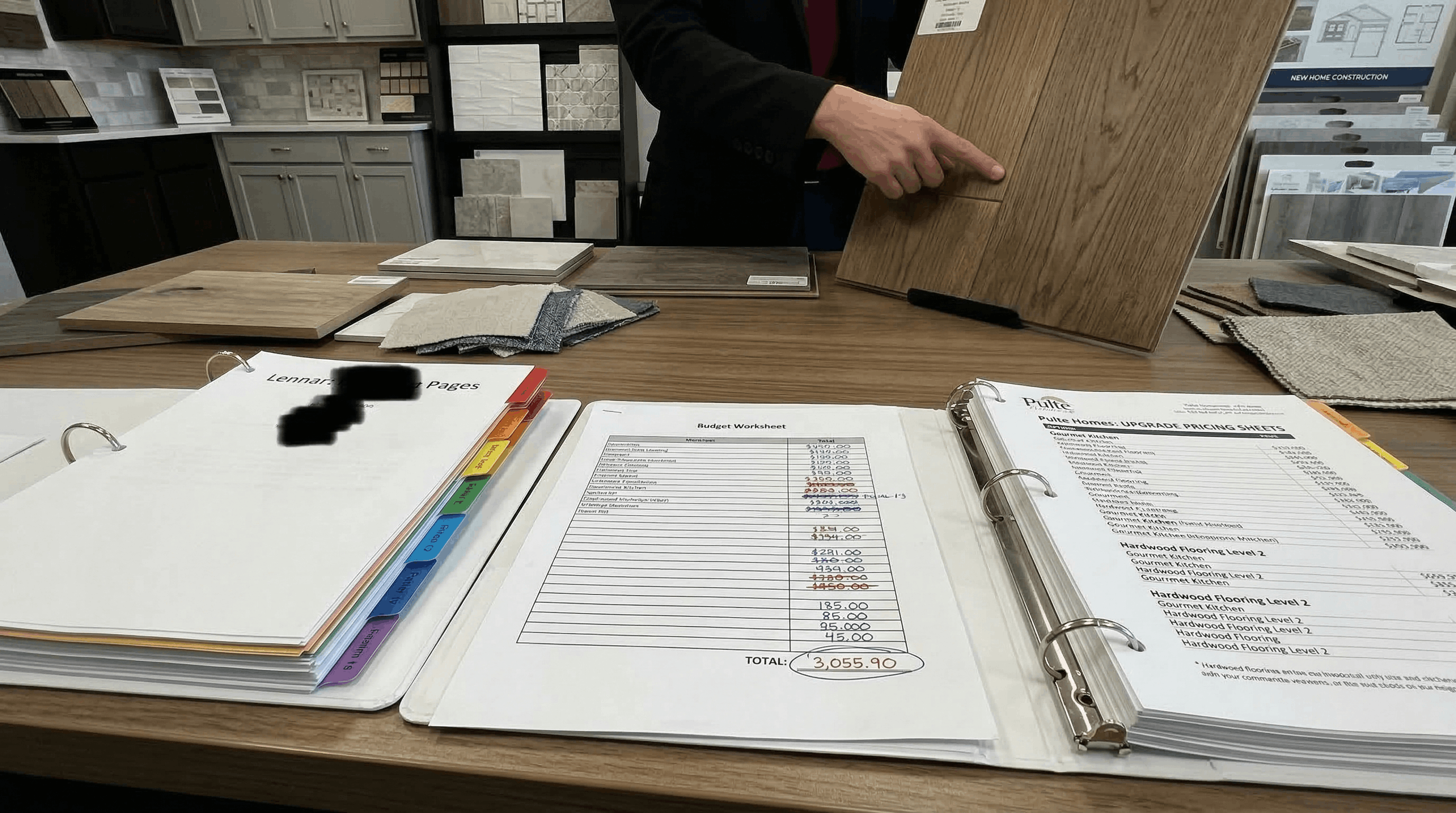
You've narrowed it down. After weeks of driving through neighborhoods, scrolling through floor plans, and comparing square footage calculators, you've landed on two names that keep coming up: Lennar and Pulte Group. Both are national powerhouses. Both build in the Dallas-Fort Worth area. Both have model homes that look stunning on a Saturday afternoon when the lighting is perfect and the sales agent is handing you a bottle of water.
But here's what nobody tells you before you walk through that model home door: the decision between these two builders isn't just about countertops and ceiling heights. It's about how they operate, what's included versus what costs extra, how they handle warranty issues after you close, and whether the community they're building in actually fits your life — not just your budget.
This comparison is designed to slow that decision down. Not to make it harder, but to make it clearer. Because when you're spending $350,000 to $600,000 or more on a new construction home in the DFW area, you deserve more than a brochure comparison. You deserve a real look at what each builder actually delivers — and where each one tends to fall short.
Key Takeaways: Lennar vs. Pulte Group
- Lennar's "Everything's Included" model means fewer surprises at the design center — but less flexibility to customize your home's features.
- Pulte's "Build Quality Experience" process offers more touchpoints and buyer involvement throughout construction, which appeals to detail-oriented buyers.
- Both builders have strong DFW presences, but their community locations, price points, and included features vary significantly by subdivision.
- Warranty terms matter more than most buyers realize — Lennar and Pulte both offer structural warranties, but their service responsiveness differs by market.
- Working with an independent buyer's agent (not the builder's sales rep) is one of the most important steps you can take before signing any new construction contract.
- Neither builder is universally "better" — the right choice depends on your priorities, timeline, and what trade-offs you're willing to make.
Understanding the Two Builders: Who Is Lennar and Who Is Pulte?
Before comparing features side by side, it helps to understand the philosophy behind each company — because that philosophy shapes everything from how their homes are priced to how they respond when something goes wrong after move-in.
Lennar: The "Everything's Included" Giant
Lennar is the largest homebuilder in the United States by revenue. Founded in 1954 in Miami, Florida, the company has grown into a national operation with communities in over 26 states. In the Dallas-Fort Worth market, Lennar is one of the most active builders, with communities spread across Frisco, McKinney, Celina, Forney, Mansfield, and dozens of other suburbs.
Lennar's defining business model is what they call "Everything's Included" — a pricing strategy where many features that other builders charge as upgrades (stainless steel appliances, quartz countertops, smart home technology, upgraded flooring) are bundled into the base price of the home. The idea is simple: what you see in the model is what you get, without a long list of add-on costs at the design center.
This approach has real appeal for buyers who hate surprises. You walk in, you see a price, you know roughly what you're getting. There's less of the "sticker shock" that happens when buyers realize the model home they fell in love with has $80,000 in upgrades that aren't included in the advertised price.
Lennar has also invested heavily in technology integration. Their Wi-Fi Certified Home Design and Amazon Alexa integration are standard in many communities, and they've pushed hard into their "NextGen" multigenerational home designs — homes with a private suite attached that functions almost like a separate living space, popular with families caring for aging parents or adult children.
Pulte Group: The Process-Driven Builder
Pulte Group is the third-largest homebuilder in the U.S. and operates under three distinct brand names: Pulte Homes (their primary brand), Centex (more affordable entry-level homes), and Del Webb (active adult communities for buyers 55+). In DFW, you'll primarily encounter Pulte Homes and Centex communities, with price points ranging from the upper $200s to well over $700,000 depending on the community.
What sets Pulte apart philosophically is their emphasis on what they call the "Build Quality Experience" — a structured process designed to keep buyers informed and involved throughout construction. This includes scheduled preview visits at key construction milestones, a formal pre-drywall orientation where buyers can walk through the framing and verify electrical and plumbing placements, and a detailed new home orientation before closing.
Pulte has also invested significantly in their design centers, where buyers have more flexibility to personalize their homes with a wide range of structural options and finish selections. This is both a strength and a potential pitfall — more options means more opportunity to create a home that truly reflects your taste, but it also means more decisions and, for some buyers, a higher final price than initially expected.
If you're feeling overwhelmed by these two options, that's completely normal.
Choosing between two national builders with thousands of homes, dozens of communities, and complex contract terms is genuinely complicated. The goal here isn't to make the decision for you — it's to give you the information you need to make it confidently, on your timeline, without pressure from a sales office.
Home Design, Floor Plans, and Customization Options
One of the first things buyers notice when comparing Lennar and Pulte is how differently each builder approaches the design and customization process. This isn't a minor detail — it directly affects how much the home feels like yours when you move in, and how much you end up spending beyond the base price.
Lennar's Design Approach: Streamlined, But Less Flexible
Lennar's "Everything's Included" model means their design centers are relatively straightforward. You're not choosing from a massive catalog of options — you're typically selecting from a curated set of packages or color palettes. Depending on the community and the stage of construction when you purchase, you may have limited ability to make structural changes at all.
This is a genuine trade-off. For buyers who feel overwhelmed by too many choices, Lennar's approach is a relief. You don't spend six hours at a design center agonizing over cabinet hardware. But for buyers who have a specific vision — a kitchen island in a particular configuration, a bedroom converted to a study, a specific tile pattern — Lennar's model can feel restrictive.
Lennar's floor plan library is extensive, and they do offer multiple elevations (exterior design variations) in most communities. Their "NextGen" designs deserve special mention for DFW buyers with multigenerational households — these plans include a connected but private suite with its own entrance, living area, kitchenette, bedroom, and bathroom. In a market where many families are supporting aging parents or housing adult children, this is a genuinely useful option that few other builders offer at scale.
Pulte's Design Approach: More Options, More Decisions
Pulte's design experience is more involved. Their design centers offer a broader range of structural options — things like adding a bedroom, converting a dining room to a study, extending a covered patio, or adding a media room. These structural choices are made early in the process, before construction begins, and they can meaningfully change both the livability and the cost of the home.
Pulte's finish selections are also more expansive. Buyers choose from a wider range of flooring, cabinetry, countertops, plumbing fixtures, and lighting options. This is where Pulte's process can catch buyers off guard — what starts as a $450,000 base price can climb significantly once you've worked through the design center. It's not uncommon for buyers to add $40,000 to $80,000 or more in upgrades, depending on the community and their preferences.
The upside is a home that feels more personalized. The downside is that buyers need to go in with a clear budget ceiling and the discipline to stick to it.
Explainer: Structural Options vs. Design Selections
Structural options are changes to the physical layout of the home — adding rooms, moving walls, extending spaces. These must be selected before construction begins and cannot be changed later. Design selections are finish choices — flooring, countertops, paint, fixtures. These are made at the design center and affect the look and feel of the home but not its structure. Both builders offer some version of each, but Pulte generally offers more structural flexibility.
Construction Quality and Build Process: What Buyers Actually Experience
This is where the conversation gets real. Marketing materials from any builder will tell you about their commitment to quality. What matters is what buyers actually experience during and after construction — and what the data and reviews say about each builder's track record.
Lennar's Build Process
Lennar builds at scale, and that scale is both a strength and a vulnerability. Their supply chain relationships and standardized processes mean they can build efficiently and keep costs competitive. But some buyers report that the speed of construction — particularly during high-demand periods — can come at the expense of attention to detail.
Lennar has faced criticism in various markets for warranty service responsiveness. Common complaints in online reviews include difficulty getting warranty issues addressed promptly after closing, inconsistent communication from customer care teams, and punch-list items that weren't completed before move-in. It's worth noting that these experiences vary significantly by community and by the specific construction team — some Lennar buyers report excellent experiences, while others describe significant frustration.
Lennar does offer a standard warranty package: a one-year workmanship warranty, a two-year systems warranty (covering mechanical, electrical, and plumbing), and a 10-year structural warranty. They also use third-party inspectors in some markets, though buyers are always encouraged to hire their own independent inspector regardless.
Pulte's Build Quality Experience
Pulte's "Build Quality Experience" is their most significant differentiator from a process standpoint. The structured milestone visits — including the pre-drywall orientation — give buyers a level of visibility into their home's construction that most builders don't offer. This transparency has two effects: it catches problems earlier (before they're covered by drywall), and it gives buyers greater confidence in the finished product.
Pulte's warranty terms are similar to Lennar's: one year on workmanship, two years on systems, and 10 years on structural defects. Their customer care process post-closing tends to receive slightly better reviews in the DFW market, though experiences still vary by community and team.
One consistent Pulte strength noted in buyer reviews is communication during construction. The scheduled milestone visits mean buyers aren't left wondering what's happening with their home for weeks at a time. For buyers who are anxious about the new construction process — and many are — this structured communication can significantly reduce stress.
⚠️ Warning: Never Skip the Independent Home Inspection
Both Lennar and Pulte conduct their own quality checks during construction, but these are not a substitute for an independent third-party inspection. New construction homes have defects — it's not a question of if, but how many and how significant. Hire a licensed inspector for the pre-drywall phase and again before closing. This is one of the most important steps you can take to protect your investment, regardless of which builder you choose.
Comparing builders is one piece of the puzzle — but understanding how new construction contracts actually work (and what to watch out for) is just as important before you sign anything.
Talk to a TK Realty Agent Before You SignPricing, Included Features, and What You Actually Get
Price comparisons between builders are tricky because the advertised base price rarely tells the full story. Understanding what's included — and what isn't — is essential to making an apples-to-apples comparison.
How Lennar Prices Its Homes
Lennar's "Everything's Included" pricing is designed to reduce the gap between the advertised price and the final price. In most Lennar communities, the base price includes features like:
- Stainless steel kitchen appliances (refrigerator, range, microwave, dishwasher)
- Quartz or granite countertops in the kitchen
- Upgraded flooring (tile or wood-look LVP in main living areas)
- Smart home technology package (video doorbell, smart thermostat, keyless entry)
- Upgraded cabinetry
- Blinds and window coverings in some communities
In the DFW market, Lennar communities typically start in the mid-$300s for entry-level plans and can extend well past $600,000 for larger homes in premium communities. The "Everything's Included" model means buyers often spend less at the design center than they would with other builders, though there are still options to add structural features or premium finish upgrades.
Lennar also frequently offers buyer incentives — closing cost assistance, rate buydowns, or design center credits — particularly when using their in-house mortgage company, Lennar Mortgage. These incentives can be genuinely valuable, but buyers should always compare the offered rate and terms against outside lenders to make sure they're getting a competitive deal overall.
How Pulte Prices Its Homes
Pulte's base prices are often slightly lower than Lennar's for comparable square footage, but the design center is where the real cost conversation happens. Pulte's base homes include standard features, but the finishes in the model home are typically not included in the base price — they're upgrades.
This creates a dynamic where buyers need to budget carefully. A Pulte home with a base price of $420,000 might realistically cost $480,000 to $500,000 once buyers select the finishes they actually want. This isn't deceptive — it's simply how the model works — but it catches buyers off guard when they haven't been warned.
Pulte also offers financing through Pulte Mortgage and frequently ties incentives to using their in-house lender. The same advice applies: compare rates and terms against outside lenders before committing. Builder incentives are real, but they sometimes come with a higher interest rate that costs more over the life of the loan than the upfront credit saves.
Real Scenario: The Design Center Budget Trap
A DFW couple falls in love with a Pulte model home priced at $435,000. They budget $450,000 to allow for a few upgrades. At the design center, they select upgraded flooring, quartz countertops, a gourmet kitchen package, extended covered patio, and a media room conversion. Their final price: $521,000. They're over budget by $71,000 — and now facing a larger mortgage than they planned for.
This scenario plays out regularly with both Pulte and other builders who use the design center model. The solution isn't to avoid upgrades — it's to set a firm design center budget before you walk in, and stick to it. Prioritize the upgrades that are hardest to add later (structural changes, flooring) over the ones you can update yourself over time (light fixtures, hardware).
Community Locations in Dallas-Fort Worth: Where Each Builder Is Building
Location matters as much as the home itself. The community you choose determines your commute, your school district, your neighbors, and the long-term appreciation potential of your investment. Both Lennar and Pulte have significant presences in DFW, but they're not building in identical locations.
Where Lennar Is Building in DFW
Lennar has an extensive footprint across the DFW metroplex. Active communities (as of recent years) include locations in Frisco, Celina, McKinney, Anna, Forney, Mansfield, Midlothian, Royse City, and many other suburbs. They're particularly active in the fast-growing northern and eastern corridors of the metroplex.
Lennar tends to build in master-planned communities where they may be one of several builders, as well as in communities where they're the sole builder. In master-planned communities, you'll have more variety in home styles and price points across the neighborhood, which can be a positive for long-term resale value.
Where Pulte Is Building in DFW
Pulte (including their Centex brand for more affordable options) is also widely distributed across DFW. Active communities have included locations in Prosper, Aubrey, Denton, Forney, Rockwall, Burleson, and other suburbs. Pulte's Centex brand tends to target the more affordable end of the new construction market, while Pulte Homes communities are positioned in the mid-to-upper price range.
One consideration for DFW buyers: school districts vary significantly by community, and both Lennar and Pulte build in a range of districts. Always verify the specific school district for a community before making a decision — don't assume that a community's general location corresponds to a particular district. Boundaries can be complex, and they matter for both your children's education and your home's resale value.
"The house is just the beginning. The community, the commute, the school district, the HOA fees, the proximity to the things that matter to your family — these are what you actually live with every day. Take the time to drive the neighborhood at different times of day before you commit."
Not sure which DFW communities actually fit your commute, school district needs, and lifestyle? A local agent who knows the area can help you compare locations before you fall in love with a floor plan.
Get Local Guidance on DFW New Construction CommunitiesWarranty Programs and Post-Closing Support: The Part Nobody Talks About Enough
Here's the uncomfortable truth about new construction homes: they almost always have issues. Not necessarily major structural problems, but the kind of settling, shrinking, and adjustment that happens in the first year of a new home's life. Nail pops, minor cracks in drywall, doors that don't latch perfectly, HVAC calibration issues — these are normal, and they're why warranty programs exist.
What matters is how each builder responds when you submit a warranty claim. This is where buyer reviews become particularly valuable, because marketing materials from both companies make their warranty programs sound excellent. The reality on the ground is more nuanced.
Lennar's Warranty Program
Lennar's warranty structure is standard for the industry: one year on workmanship and materials, two years on mechanical systems (HVAC, plumbing, electrical), and 10 years on structural defects. They have a dedicated customer care team and an online portal for submitting warranty requests.
Buyer reviews of Lennar's warranty service in DFW are mixed. Some buyers report responsive service and issues resolved quickly. Others describe a pattern of delayed responses, difficulty reaching the right person, and warranty items that were closed without being fully resolved. The experience appears to vary significantly by community and by the specific customer care representative assigned to your case.
One consistent piece of advice from experienced Lennar buyers: document everything in writing. Submit warranty requests through the official portal rather than verbally, keep records of all communications, and follow up in writing if you don't receive a response within the promised timeframe.
Pulte's Warranty Program
Pulte's warranty terms are similar: one year workmanship, two years systems, 10 years structural. Their customer care process is structured similarly, with an online portal and dedicated customer care representatives.
Pulte's warranty reviews in DFW tend to be slightly more positive than Lennar's, though this is a generalization and individual experiences vary widely. The structured "Build Quality Experience" during construction — with its milestone visits and pre-drywall orientation — appears to result in fewer post-closing warranty issues for some buyers, simply because problems are caught earlier in the process.
Both builders use third-party warranty administrators for their structural warranty coverage. Understanding who actually backs the 10-year structural warranty — and what it covers — is worth asking about before you sign a contract.
⚠️ What Your Builder's Warranty Doesn't Cover
Builder warranties cover defects in construction — they don't cover normal wear and tear, cosmetic issues that develop over time, or problems caused by the homeowner's own modifications. They also typically don't cover appliances (those are covered by manufacturer warranties) or issues caused by improper maintenance. Read the warranty document carefully before closing, and ask your agent to help you understand what's actually covered.
Buyer Reviews and Real Experiences: What Homeowners Are Actually Saying
Beyond the marketing materials and the sales presentations, what do buyers who have actually lived in Lennar and Pulte homes say about their experience? The picture is more nuanced than either builder's promotional materials would suggest.
What Lennar Buyers Commonly Report
Positive themes in Lennar buyer reviews consistently include: appreciation for the "Everything's Included" value, satisfaction with the smart home technology features, and positive comments about the overall aesthetic of the homes. Buyers who prioritized value and a streamlined purchasing process often express high satisfaction.
Negative themes include: frustration with warranty service responsiveness, reports of quality control issues discovered after move-in (particularly around finish work and exterior details), and dissatisfaction with limited customization options. Some buyers also report feeling like they were on a conveyor belt during the sales process — moved quickly from contract to closing without enough time to ask questions.
The consistent advice from experienced Lennar buyers: slow the process down yourself, ask every question you have before signing, hire an independent inspector, and document warranty issues meticulously.
What Pulte Buyers Commonly Report
Positive themes in Pulte buyer reviews include: appreciation for the structured build process and milestone visits, satisfaction with the level of customization available, and generally positive comments about communication during construction. Buyers who are detail-oriented and want to be involved in the building process tend to rate Pulte highly.
Negative themes include: design center costs that exceeded initial budgets, occasional construction delays, and some reports of quality inconsistencies between communities. A subset of buyers also report that the design center process felt overwhelming or that they were upsold on upgrades they didn't really need.
The consistent advice from experienced Pulte buyers: set a firm design center budget before you go in, prioritize structural upgrades over cosmetic ones, and take full advantage of the milestone visits to catch any issues early.
Together, they account for a significant share of new home sales in the Dallas-Fort Worth market — which means there's a strong resale market for homes from both builders, and plenty of real buyer experiences to learn from before you commit.
Side-by-Side Comparison: Lennar vs. Pulte at a Glance
Sometimes the clearest way to see the differences is to put them side by side. This table summarizes the key factors buyers typically consider when comparing these two builders in the DFW market.
| Factor | Lennar | Pulte Group |
|---|---|---|
| Pricing Model | "Everything's Included" — more features in base price | Lower base price, more design center upgrades available |
| Customization | Limited — curated packages, less structural flexibility | More options — broader structural and finish selections |
| Build Process Transparency | Standard — periodic updates, online portal | Structured milestone visits, pre-drywall orientation |
| Smart Home Features | Strong — included in most communities | Available as upgrades in most communities |
| Multigenerational Options | Excellent — NextGen suite designs widely available | Limited — some communities offer related options |
| Warranty Terms | 1/2/10 year standard structure | 1/2/10 year standard structure |
| Warranty Service Reviews | Mixed — varies by community and team | Slightly more positive — varies by community |
| DFW Community Locations | Extensive — northern and eastern suburbs | Extensive — spread across multiple corridors |
| In-House Financing | Lennar Mortgage — incentives available | Pulte Mortgage — incentives available |
| Best For | Buyers who want value, simplicity, and tech features | Buyers who want customization and process involvement |
The Role of an Independent Buyer's Agent in New Construction
This section might be the most important one in this entire article — and it's the one that builder sales offices are least likely to bring up.
When you walk into a Lennar or Pulte sales office, the person sitting across from you works for the builder. They are paid by the builder. Their job is to sell you a home in that community. They are not your advocate — they are the seller's representative. This isn't a criticism of individual sales agents, many of whom are genuinely helpful and knowledgeable. It's simply the reality of the relationship.
An independent buyer's agent — one who represents you, not the builder — serves a completely different function. They can:
- Review the builder's purchase contract before you sign and flag terms that may not be in your favor
- Help you compare multiple communities and builders objectively, without a stake in which one you choose
- Negotiate on your behalf for upgrades, closing cost assistance, or other concessions
- Accompany you to milestone visits and help you know what to look for
- Connect you with an independent inspector who has no relationship with the builder
- Advise you on whether the community and the price make sense for your long-term financial goals
Here's the part that surprises many buyers: in most cases, the builder pays the buyer's agent commission. Using an independent buyer's agent doesn't cost you more — it just means you have someone in your corner who is working for you, not for the builder's sales quota.
New construction contracts are long, detailed, and heavily weighted in the builder's favor. They include arbitration clauses, warranty limitations, change order policies, and closing date flexibility provisions that can significantly affect your rights as a buyer. Having someone who has read these contracts before — and knows what's negotiable — is genuinely valuable.
"The builder's sales agent is not your agent. They're a nice person doing their job — which is selling you a home in their community. Your agent's job is to make sure the home, the price, and the terms actually make sense for you. Those are two very different jobs."
If you're touring Lennar or Pulte communities in DFW, having an independent agent review the contract before you sign can save you from terms you didn't know were negotiable.
Have a TK Realty Agent Review Your New Construction OptionsHow to Decide: Questions to Ask Before You Choose
Rather than telling you which builder is "better" — because the honest answer is that it depends entirely on your situation — here are the questions that will help you make the right decision for your family.
- What matters more to you: value certainty or customization? If you want to know exactly what you're getting for the price without a long design center process, Lennar's model may suit you better. If you want to personalize your home and are comfortable with a more open-ended final price, Pulte's approach may be more satisfying.
- How involved do you want to be during construction? If you want structured visibility into what's happening with your home as it's being built, Pulte's milestone visit process is a genuine differentiator. If you're comfortable with periodic updates and trust the builder's process, Lennar's approach may feel sufficient.
- Do you have multigenerational household needs? If you're looking for a home that can accommodate aging parents or adult children with some degree of privacy, Lennar's NextGen designs are worth a serious look. This is a niche Lennar has invested in more heavily than most builders.
- What's your realistic total budget — including design center upgrades? If you're buying from Pulte, add 10-20% to the base price as a realistic estimate of what you'll spend at the design center if you want the home to look like the model. If that pushes you over your comfortable budget, factor that in.
- What school district do you need, and which communities are actually in it? Both builders have communities in multiple school districts across DFW. Verify the specific district before you fall in love with a floor plan.
- Have you toured multiple communities from each builder — not just one? The quality and character of Lennar and Pulte communities varies significantly. A Lennar community in Celina may feel very different from one in Forney. Don't judge either builder by a single community.
Frequently Asked Questions: Lennar vs. Pulte in DFW
For first-time buyers who want a simpler, more predictable purchasing experience, Lennar's "Everything's Included" model often feels less overwhelming — you know what you're getting without navigating a complex design center process. Pulte can be a great fit for first-time buyers who are detail-oriented and want to be involved in the build, but the design center budget can be a challenge if you're working with tight financing. Regardless of which builder you choose, first-time buyers especially benefit from having an independent buyer's agent who can explain the contract, flag potential issues, and help you avoid costly mistakes.
Builder prices on new construction are generally less negotiable than resale home prices, but that doesn't mean there's nothing to negotiate. Both Lennar and Pulte regularly offer incentives — closing cost assistance, rate buydowns, design center credits, or lot premiums waived — particularly at the end of a quarter when sales teams are working toward targets. What's often more negotiable than the base price is what you get for that price: upgrades, closing cost contributions, and financing incentives. An experienced buyer's agent who works regularly with builders can help you understand what's actually on the table in a given community at a given time.
Build times vary based on the community, the floor plan, and current construction demand. In recent years, DFW new construction timelines have ranged from approximately 6 to 14 months from contract to closing, with some variation outside that range depending on supply chain conditions and the builder's current backlog. Lennar's standardized building process tends to be efficient, while Pulte's more involved process with milestone visits can sometimes add time. Both builders also offer quick move-in homes — partially or fully completed homes that are available on a much shorter timeline — which can be a good option for buyers with a specific move date in mind.
Builder incentives tied to using their in-house lender can be genuinely valuable — closing cost credits of $5,000 to $15,000 or more are not uncommon. However, these incentives sometimes come with a higher interest rate, which can cost more over the life of the loan than the upfront credit saves. The right approach is to get a quote from the builder's lender and compare it to quotes from two or three outside lenders on the same day. Look at the total cost — rate, points, fees, and the value of any incentives — before deciding. Your buyer's agent can help you evaluate the comparison objectively.
The pre-drywall phase is one of the most important inspection opportunities in new construction, because once the drywall goes up, many potential issues become invisible. Key things to look for include: proper insulation placement and coverage, correct electrical outlet and switch placement, plumbing rough-in locations (especially for future needs like a water softener loop or outdoor spigots), HVAC duct routing and sizing, and any structural framing concerns. Hiring a licensed independent inspector for this phase — not just relying on the builder's own quality checks — is strongly recommended. Pulte's "Build Quality Experience" includes a formal pre-drywall orientation, but Lennar buyers should proactively request access to their home at this stage as well.
Both Lennar and Pulte are nationally recognized builders with strong brand recognition, which generally supports resale value compared to smaller or less established builders. In the DFW market specifically, new construction homes in well-located communities with good school districts and strong HOA management have historically appreciated well. That said, resale value is driven more by location, school district, community quality, and overall market conditions than by the builder's brand name. A Lennar or Pulte home in a desirable DFW community with good schools will likely hold its value well; the same home in a less desirable location with weaker fundamentals will face the same headwinds as any other home there.
Choosing Between Lennar and Pulte? Let's Look at the Numbers Together.
You've done the research. You're thinking carefully — and that's exactly the right approach when you're making a decision this significant. Whether you're leaning toward Lennar's streamlined value or Pulte's customization options, having someone in your corner who knows DFW new construction — and who works for you, not the builder — makes the whole process clearer and calmer. There's no pressure, no rush, and no agenda except helping you make the decision that's right for your family.
Connect with a TK Realty Agent — No Pressure, Just ClarityCheck out this article next