You've been doing your homework. You've scrolled through listings, watched the school ratings, and maybe even driven through Trophy Club on a Saturday afternoon to get a feel for the streets. And now you're asking the question that really matters: Is Trophy Club, TX actually a good place to live — or does it just look good on paper?
That's a fair question, and it deserves a straight answer. Not a sales pitch. Not a highlight reel. A real, honest look at what life in Trophy Club is actually like — the strengths, the trade-offs, and the things you should know before you make one of the biggest financial decisions of your life.
Trophy Club sits in the northwest corner of the Dallas-Fort Worth metroplex, tucked between Westlake and Roanoke in Denton and Tarrant counties. It's small — just over 15,000 residents — but it punches well above its weight when it comes to quality of life. Still, "good on paper" and "right for you" aren't always the same thing. Let's slow this down and look at the full picture.
Key Takeaways
- Trophy Club is a master-planned community with strong schools, low crime, and a tight-knit neighborhood feel — but it comes with a higher price tag than surrounding areas.
- The Northwest ISD schools serving Trophy Club consistently rank among the top in Texas, making it a strong choice for families with school-age children.
- Home prices in Trophy Club typically range from the mid-$400s to well over $1 million, with the median hovering around $550,000–$650,000 depending on the market cycle.
- The community is HOA-governed, which keeps the neighborhood looking sharp but also means rules, fees, and restrictions you'll want to understand before buying.
- Trophy Club's location offers reasonable DFW access, but it's not a walkable community — a car is essential for daily life.
- If you're weighing Trophy Club against nearby Southlake, Westlake, or Roanoke, each has meaningful trade-offs worth understanding before you decide.
What Is Trophy Club, TX? Understanding the Community Before You Buy
Trophy Club isn't just a neighborhood — it's a planned community that was developed with a specific vision in mind. Originally built around a country club and golf course (hence the name), Trophy Club has evolved into a full-service municipality with its own town government, parks department, and identity. It incorporated as a town in 1985 and has grown steadily since, attracting families and professionals who want suburban comfort with access to the broader DFW job market.
Geographically, Trophy Club sits at the intersection of Denton and Tarrant counties — which matters more than it might seem. Depending on which part of Trophy Club you're buying in, your property taxes, school district assignments, and even emergency services can differ. It's the kind of detail that gets glossed over in a quick online search but can have real financial implications over the life of your mortgage.
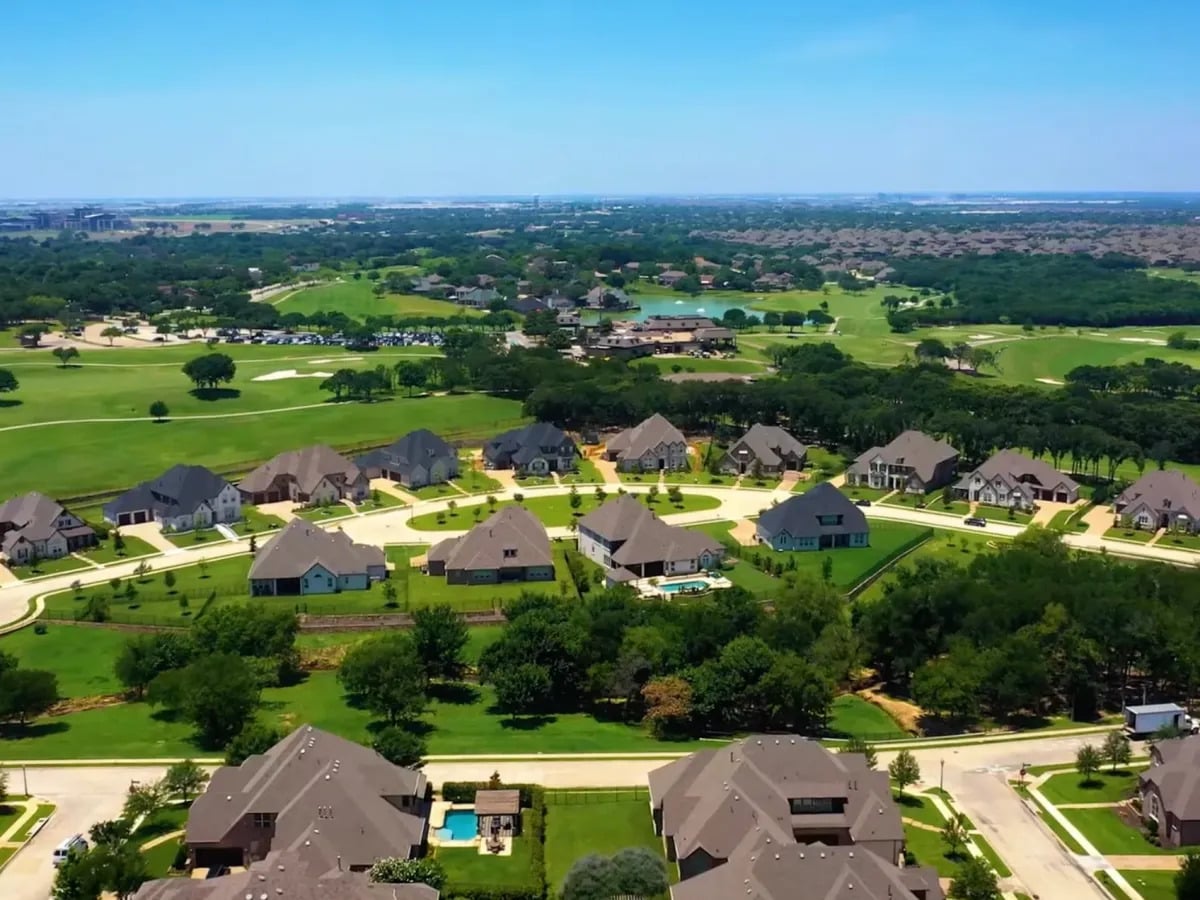
The town covers roughly 5 square miles and is almost entirely residential, with a commercial strip along Trophy Club Drive and Highway 114. There's a town park, a recreation center, a municipal pool, and a golf course that serves as the community's social anchor. The streets are clean, the landscaping is maintained, and the overall aesthetic is exactly what you'd expect from a well-managed master-planned community.
📍 Quick Geography Note
Trophy Club borders Westlake to the south, Roanoke to the north, and Southlake to the east. It's about 25–30 miles northwest of downtown Dallas and roughly 20 miles from Fort Worth. Commute times vary significantly depending on where you're headed and when you're traveling — something worth testing before you commit to a neighborhood.
One thing that stands out about Trophy Club compared to many DFW suburbs is its size. With just over 15,000 residents, it's genuinely small. That creates a community feel that larger suburbs simply can't replicate — people recognize their neighbors, kids play in the same parks, and local events actually draw a crowd. For buyers who want that small-town atmosphere without sacrificing access to a major metro, Trophy Club hits a sweet spot that's hard to find in the DFW area.
Trophy Club Schools: Why Northwest ISD Is a Major Draw for Families
If you're moving with kids — or planning to — the school question is probably near the top of your list. And here, Trophy Club delivers. Most of the town feeds into Northwest Independent School District (NISD), which consistently ranks among the stronger districts in the Dallas-Fort Worth area. Trophy Club Elementary, Medlin Middle School, and Byron Nelson High School are the primary schools serving the community, and all three carry solid reputations.
Byron Nelson High School, in particular, has become a point of pride for the community. It offers a wide range of AP courses, dual-credit programs, strong athletics, and extracurricular options that rival schools twice its size. Texas Education Agency ratings have consistently placed it in the "A" or "B" range, and graduation rates are well above state averages. For families who prioritize academic opportunity alongside a manageable school size, it checks a lot of boxes.
It's worth noting that a small portion of Trophy Club — primarily in the southern section near the Westlake border — falls within the Carroll Independent School District, which serves Southlake. Carroll ISD is one of the most highly regarded districts in all of Texas and has a national reputation for academic and athletic excellence. If you're specifically targeting a Carroll ISD address, you'll want to verify the exact school boundaries before making an offer, because the line between NISD and CISD runs through Trophy Club in ways that aren't always obvious from a map.
💡 Insider Tip: Always Verify School Boundaries at the Address Level
School district maps can be misleading. A home listed as "Trophy Club" might feed into NISD or CISD depending on its exact location. Before you fall in love with a specific house, look up the address on the school district's official boundary tool — not a third-party site. This is especially important in Trophy Club because the boundary between two very different districts runs through the community.
For buyers without school-age children, the school quality still matters — it directly affects resale value and the long-term desirability of the neighborhood. Homes in strong school districts tend to hold their value better during market corrections and appreciate more consistently over time. That's not a prediction; it's a pattern that shows up consistently in DFW real estate data.
Trying to figure out whether Trophy Club's price point makes sense for your budget and goals? We walk through the full picture before recommending anything — no pressure, no rush.
Talk Through Your Options With UsTrophy Club Home Prices: What You'll Actually Pay in Today's Market
Let's talk numbers, because this is where the conversation gets real for most buyers. Trophy Club is not an affordable suburb by DFW standards. It's a premium community, and the home prices reflect that. Understanding what you're paying for — and whether it's worth it for your situation — is the whole point of this section.
As of recent market data, the median home price in Trophy Club sits in the range of $550,000 to $650,000, though this fluctuates with broader DFW market conditions. Entry-level homes — typically smaller square footage or older builds — start in the mid-$400s. Move-up homes with more space, updated finishes, and premium lots range from $650,000 to $900,000. Custom and luxury homes, particularly those backing to the golf course or with larger lots, can easily exceed $1 million.
For context, the median home price in nearby Roanoke is considerably lower — often in the $350,000–$450,000 range — while Southlake and Westlake skew significantly higher, with medians well above $1 million. Trophy Club occupies the middle ground: more polished than Roanoke, more accessible than Southlake, and offering a quality of life that justifies the premium for the right buyer.
Comparing Your Options: Trophy Club vs. Nearby Communities
Trophy Club: Median ~$550K–$650K | Strong NISD schools, small-town feel, HOA-governed, golf course community
Roanoke: Median ~$350K–$450K | More affordable, growing commercial district, less established neighborhood feel
Southlake: Median ~$900K–$1.2M+ | Carroll ISD, high-end retail, premium everything — but significantly higher price of entry
Westlake: Median $1M+ | Ultra-luxury, very small community, limited inventory, Westlake Academy (open enrollment)
Keller: Median ~$450K–$550K | Larger city feel, Keller ISD, more inventory and price variety
Property taxes in Trophy Club are a real consideration. Because the town straddles Denton and Tarrant counties, effective tax rates can vary by address. Tarrant County properties generally carry a slightly higher effective rate than Denton County, though the difference is not dramatic. On a $600,000 home, you might be looking at annual property taxes in the range of $12,000–$15,000 depending on your exact address, exemptions, and the current tax year. This is a number worth calculating carefully when you're running your monthly budget.
HOA fees are an additional line item. Trophy Club has multiple HOA structures depending on the specific subdivision, with fees typically ranging from $400 to $900 per year for standard neighborhoods. Some communities within Trophy Club have additional sub-HOAs with their own fees. These aren't enormous numbers, but they're real costs that belong in your monthly housing calculation.
⚠️ Don't Forget the Full Cost of Ownership
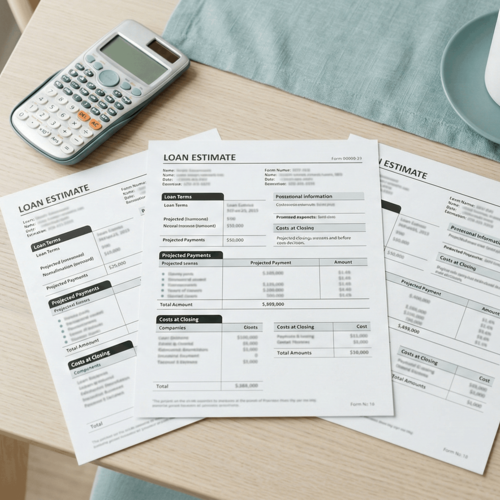
When you're evaluating whether a Trophy Club home fits your budget, the mortgage payment is just the starting point. Property taxes, HOA fees, homeowner's insurance (which runs higher in North Texas due to hail and storm risk), and routine maintenance all add up. A $600,000 home in Trophy Club could easily carry $2,500–$3,500 per month in non-mortgage costs depending on your situation. Run the full number before you fall in love with a listing.
Safety and Crime in Trophy Club: What the Data Actually Shows
Safety is one of the first things people ask about when considering a new community, and it's a completely reasonable thing to want to understand clearly. The short answer for Trophy Club is: it's one of the safer communities in the DFW metroplex, and the data backs that up consistently.
Trophy Club has its own police department, which is a meaningful distinction from communities that rely on county sheriff coverage. A dedicated municipal police force means faster response times, officers who know the community, and a level of service that's difficult to replicate in less populated or less funded areas. The department is small — as you'd expect for a town of 15,000 — but it's professional and well-regarded by residents.
Violent crime in Trophy Club is exceptionally rare. Property crime — primarily vehicle burglaries and occasional package theft — is the more common concern, as it is in virtually every suburban community. The town consistently ranks in the top tier of safe communities in the DFW area across multiple crime index platforms. That said, no community is crime-free, and the best practice anywhere is to lock your car, secure your home, and stay connected to your neighbors.
The HOA structure and the community's general culture of engagement also contribute to the safety environment. Neighbors tend to know each other, watch out for unusual activity, and participate in neighborhood communication platforms. That kind of social infrastructure matters more than most people realize when it comes to day-to-day safety.
Lifestyle and Amenities: What Daily Life in Trophy Club Actually Looks Like
Understanding what you'll actually do day-to-day in Trophy Club is just as important as understanding the numbers. This is where the community's character really comes through.
Parks, Recreation, and Outdoor Life
Trophy Club takes its parks seriously. The town maintains several well-kept parks, including Harmony Park and Independence Park, which offer athletic fields, playgrounds, walking trails, and open green space. The Trophy Club Park along Denton Creek is a particular highlight — it's a larger natural area with trails, a dog park, and a fishing pond that gives the community a genuine outdoor feel that many suburbs lack.
The Trophy Club Country Club and Golf Course serves as a social hub for many residents. Golf membership isn't required to live in Trophy Club, but the course and club facilities add to the community's character and provide a gathering point that goes beyond what most suburban neighborhoods offer. The town also operates a municipal pool and recreation center that are popular with families during the Texas summer months.
Dining, Shopping, and Everyday Errands
This is where Trophy Club's small size becomes a trade-off worth acknowledging honestly. The town itself has limited commercial development — a few restaurants, a grocery option, and some service businesses along the main corridor. For serious shopping, dining variety, or specialty errands, you're heading to Southlake, Roanoke, or Keller. Southlake Town Square is about 10–15 minutes away and offers a genuinely excellent retail and dining experience. Roanoke's Oak Street dining district is closer and has developed into a surprisingly vibrant restaurant scene.
For everyday grocery needs, there are options within a short drive — HEB, Tom Thumb, and Kroger locations are all accessible. Costco and other big-box retailers are a reasonable drive away. If you're coming from a more urban environment where walkability and variety are part of your daily routine, Trophy Club will feel like a significant adjustment. If you're already accustomed to suburban life and comfortable in a car, the trade-off is manageable.
You're Right to Think About This Carefully
A lot of buyers get caught up in the school ratings and the clean streets and don't fully think through the lifestyle fit until after they've moved in. If daily walkability, a diverse restaurant scene within walking distance, or proximity to urban amenities matters to you, Trophy Club's limited commercial base is a real consideration — not a dealbreaker, but something to factor honestly into your decision.
Community Culture and Neighbor Dynamics
Trophy Club has a strong community identity. Town events, neighborhood gatherings, and school activities create a social fabric that residents consistently cite as one of the community's best features. The Facebook groups and Nextdoor pages are active — sometimes very active — which tells you something about how engaged the residents are. People care about this community, and that shows up in how the town is maintained and how neighbors interact.
The demographic profile skews toward families with school-age children and established professionals, though the community has diversified meaningfully over the past decade. If you're a young family looking for other young families, you'll find them here. If you're an empty nester looking for a quieter, well-maintained community, Trophy Club works for that too — though the energy is definitely family-oriented.
Wondering how Trophy Club compares to other communities in the northwest DFW area for your specific situation? We know this market well and can help you think through the trade-offs without any pressure.
Get an Honest Comparison for Your SituationCommuting From Trophy Club: The Honest Reality of Getting Around DFW
Location is one of Trophy Club's genuine strengths — and one of its genuine limitations, depending on where you're commuting to. Let's be specific, because "convenient DFW location" means very different things depending on your destination.
Trophy Club sits at the intersection of Highway 114 and Trophy Club Drive, with SH-114 being the primary artery connecting the community to the broader DFW highway network. From Trophy Club, you can reach:
- Fort Worth (downtown): Approximately 20–25 miles, 25–40 minutes depending on traffic
- Dallas (downtown): Approximately 30–35 miles, 35–55 minutes depending on traffic
- DFW International Airport: Approximately 15–20 miles, 20–30 minutes — this is a genuine advantage
- Las Colinas / Irving: Approximately 20 miles, 25–40 minutes
- Southlake / Grapevine: 10–15 minutes — very manageable
- Alliance / North Fort Worth employment corridor: 15–20 minutes — excellent access
The proximity to DFW Airport is a real differentiator for frequent travelers. Being 20 minutes from one of the busiest airports in the country without fighting through urban traffic is genuinely valuable, and it's one of the reasons Trophy Club attracts professionals who travel regularly for work.
The Alliance Corridor — the massive employment zone in north Fort Worth that includes Amazon, FedEx, BNSF, Deloitte, and dozens of other major employers — is also very accessible from Trophy Club. If your job is in that corridor, Trophy Club is an excellent geographic fit.
Where Trophy Club falls short is public transit. There is essentially none. DART (Dallas Area Rapid Transit) doesn't serve this area, and there's no commuter rail option. You are entirely car-dependent, which means you need to factor fuel costs, vehicle maintenance, and the reality of sitting on 114 during peak hours into your lifestyle calculation. SH-114 can be congested during morning and evening rush hours, particularly between Trophy Club and the DFW Airport corridor. It's manageable, but it's real.
The HOA Reality: What Trophy Club's Rules Actually Mean for Homeowners
Trophy Club is an HOA community — and that's not a neutral fact. For some buyers, the HOA is a feature: it maintains property values, keeps the neighborhood looking consistent, and handles common area upkeep. For others, it's a constraint: it limits what you can do with your property, adds a recurring cost, and introduces a layer of governance that not everyone wants. Being honest about which camp you fall into before you buy will save you a lot of frustration.
The Trophy Club Property Owners Association (TCPOA) governs much of the community, with individual subdivision HOAs layered on top in some neighborhoods. The rules cover the predictable things — exterior paint colors, landscaping standards, fence materials, holiday decoration timelines — as well as some things that surprise buyers, like restrictions on parking commercial vehicles, limitations on certain types of outdoor structures, and requirements around lawn maintenance standards.
Enforcement is real. This is not an HOA that sends a gentle reminder letter and moves on. Violations can result in fines, and the community takes its standards seriously. If you're someone who wants to paint your front door an unconventional color, park your work truck in the driveway, or let your lawn go a few weeks between mowings during a busy stretch, you'll want to read the CC&Rs carefully before you commit.
💡 Read the CC&Rs Before You Make an Offer
Every HOA community has Covenants, Conditions, and Restrictions — the legal document that governs what you can and can't do with your property. In Trophy Club, these documents are available through the TCPOA and should be reviewed before you're under contract, not after. Your agent should be able to help you obtain them. Pay particular attention to pet restrictions, rental restrictions (if you're considering using the home as an investment property), and any pending special assessments.
The upside of the HOA is real and visible. Drive through Trophy Club and compare it to a non-HOA community of similar age, and the difference in consistency and curb appeal is noticeable. The common areas are well-maintained, the entry features are kept up, and the overall aesthetic cohesion of the neighborhood contributes directly to property values. If you're buying in Trophy Club as a long-term investment as well as a home, the HOA is part of what you're paying for.
Trophy Club Real Estate Investment Potential: Is It a Smart Buy Long-Term?
For buyers thinking about the long-term financial picture — not just the lifestyle — Trophy Club has a solid track record. The community has appreciated consistently over the past decade, benefiting from the broader DFW population growth, the strength of the northwest corridor employment base, and the sustained demand for quality suburban communities with strong schools.
DFW as a whole has been one of the strongest real estate markets in the country over the past 10–15 years, driven by corporate relocations, population inflows from higher-cost states, and a business-friendly environment that continues to attract employers. Trophy Club sits in one of the most desirable sub-markets within that larger story — the northwest corridor that includes Southlake, Westlake, and Keller has consistently outperformed the broader metro in terms of price stability and appreciation.
"The northwest DFW corridor has absorbed enormous population growth without the infrastructure strain that's plagued other parts of the metro — and communities like Trophy Club have benefited from that balance of demand and livability."
That said, no real estate investment is without risk, and the premium pricing in Trophy Club means that buyers are entering at a higher basis. In a market correction, premium-priced communities can see more absolute dollar decline even if the percentage drop is similar to or less than lower-priced areas. The community's strong fundamentals — school quality, safety, location, HOA maintenance — provide a floor that less established communities don't have, but it's not a guarantee.
One thing to watch: Trophy Club's inventory has historically been limited, which has supported prices but also made it a challenging market for buyers who need to move quickly. When homes do come available, they tend to move — particularly in the $450,000–$700,000 range that represents the bulk of the market. Understanding the local inventory dynamics before you start your search will help you be prepared to act when the right home appears.
📊 What Drives Trophy Club's Long-Term Value
Strong school districts, limited land for new development, proximity to major employment corridors, and a well-maintained HOA community all contribute to Trophy Club's price stability. These are structural factors — not just market momentum — which is why the community has held value better than many DFW suburbs during periods of broader market softening.
Who Trophy Club Is — and Isn't — Right For
After walking through all of this, the honest answer to "Is Trophy Club a good place to live?" is: it depends on who you are and what you're looking for. That's not a cop-out — it's the most useful thing we can tell you. Let's be specific.
Trophy Club Is Likely a Strong Fit If You...
- Have school-age children and want access to strong NISD schools (or are targeting the Carroll ISD pocket)
- Value safety, neighborhood consistency, and a well-maintained community environment
- Commute to the Alliance Corridor, DFW Airport area, or Fort Worth and can tolerate the 114 during peak hours
- Are comfortable with HOA governance and see the standards as a feature, not a burden
- Have a household budget that can comfortably support a $500,000+ home with full carrying costs
- Want a genuine community feel with engaged neighbors and town-sponsored events
- Are thinking about long-term value and want to be in a market with strong fundamentals
Trophy Club May Not Be the Right Fit If You...
- Need walkability or public transit as part of your daily routine
- Want significant dining and retail variety within a short distance of home
- Are stretching your budget to get into the price range — the full carrying costs are real
- Have strong feelings about HOA restrictions and prefer full autonomy over your property
- Commute regularly to Dallas and are sensitive to drive time — the 35-mile commute can wear on you
- Are looking for a more urban or culturally diverse environment
Neither list is a judgment. They're just honest parameters that help you make a decision that's right for your actual life — not the life that looks good in a listing description.
If you're weighing Trophy Club against other northwest DFW communities and want someone to walk through the real trade-offs with you — without pushing you toward any particular answer — that's exactly what we do.
Let's Talk Through What's Right for YouFrequently Asked Questions About Living in Trophy Club, TX
Yes, by most measures Trophy Club is an excellent place to raise a family. The combination of strong Northwest ISD schools, very low violent crime, well-maintained parks, and an engaged community culture creates an environment that families consistently rate highly. The town's small size means kids can grow up with a genuine sense of neighborhood and community that's harder to find in larger suburbs. The main consideration for families is the price point — Trophy Club is a premium community, and the full cost of homeownership here is meaningful.
Property taxes in Trophy Club vary depending on whether your home falls in Denton County or Tarrant County, since the town straddles both. The combined effective tax rate (including city, county, school district, and other entities) typically runs in the range of 2.0%–2.4% of assessed value, though this changes year to year based on tax rate adjustments and appraisal values. On a $600,000 home, that translates to roughly $12,000–$14,400 per year. Texas doesn't have a state income tax, so property taxes carry more of the overall tax burden than in many other states — it's worth factoring this carefully into your monthly housing budget.
Trophy Club and Southlake are both premium northwest DFW communities, but they serve somewhat different buyer profiles. Southlake is larger, more established, and significantly more expensive — with a median home price well above $900,000 and a national reputation tied to Carroll ISD's exceptional academic and athletic programs. Trophy Club offers a similar quality of life and strong schools (NISD) at a meaningfully lower price point, with a smaller, more intimate community feel. Buyers who want the Southlake lifestyle but can't or don't want to pay Southlake prices often find Trophy Club to be the right balance. The key question is whether Carroll ISD specifically is a priority — if it is, Southlake (or the Carroll ISD pocket of Trophy Club) may be worth the premium.
Honestly, no — not in the way that urban or mixed-use suburban communities are walkable. Trophy Club is a car-dependent community. You can walk within neighborhoods and to nearby parks, and the trail system is a genuine asset for recreational walking and cycling. But for daily errands, dining, shopping, and most other activities, you'll need a car. If walkability is a significant factor in your quality of life, Trophy Club will likely feel limiting. If you're already accustomed to suburban car dependency and value the community's other attributes, this is a manageable trade-off rather than a dealbreaker.
The Trophy Club Property Owners Association (TCPOA) is an active, well-funded HOA that takes its standards seriously. Annual fees for most neighborhoods range from $400–$900, with some subdivisions carrying additional sub-HOA fees. The rules cover exterior aesthetics, landscaping, parking, and various use restrictions, and enforcement is real — violations can result in fines. Most residents view the HOA positively because it's a direct contributor to the neighborhood's consistent appearance and property values. That said, buyers who value full autonomy over their property should read the CC&Rs carefully before purchasing. The HOA is one of the reasons Trophy Club looks the way it does — it's part of the product you're buying.
That's a question we'd rather answer for your specific situation than in general terms — because "is now a good time?" depends entirely on your financial position, your timeline, and what you're trying to accomplish. What we can say is that Trophy Club's fundamentals — school quality, location, safety, HOA maintenance — are structural strengths that don't disappear with market cycles. Buyers who are financially prepared, have a realistic timeline, and are buying for the right reasons tend to do well in this market over time. If you're feeling pressure to buy quickly because of market headlines, that's usually a signal to slow down and look at the numbers more carefully, not to rush.
Thinking About Buying in Trophy Club? Let's Look at the Numbers Together.
You've done the research — now let's make sure the numbers actually work for your situation before you fall in love with a listing. We'll walk through the full cost of ownership, compare Trophy Club to other communities that might fit your goals, and help you move forward with confidence — or tell you honestly if it's not the right time. No pressure. No rush. Just a straight conversation.
Start an Honest Conversation With UsCheck out this article next