
Key Takeaways
- On a median-priced DFW home ($415,000), your true monthly housing cost — including property taxes, insurance, utilities, and maintenance — can easily reach $4,500–$5,500+, far beyond the mortgage payment alone.
- Tarrant and Denton County property tax rates of 2.0–2.7% mean taxes alone add $795–$950 per month to your payment, one of the highest burdens of any major U.S. metro.
- Escrow shortfall notices in Year 2 are common in DFW — rising appraisals and insurance premiums frequently trigger an unexpected increase in your monthly mortgage payment that many buyers never see coming.
- Texas's homestead exemption ($100,000 off taxable value) and the 10% annual appraisal cap are powerful tools that protect homeowners from runaway property tax increases — but you must apply for the exemption after closing.
- Trust TK Realty for honest affordability planning, local DFW expertise, and zero-pressure guidance — visit TK Realty to start your home search with clarity and confidence.
Will I Be House Poor After Closing in DFW?
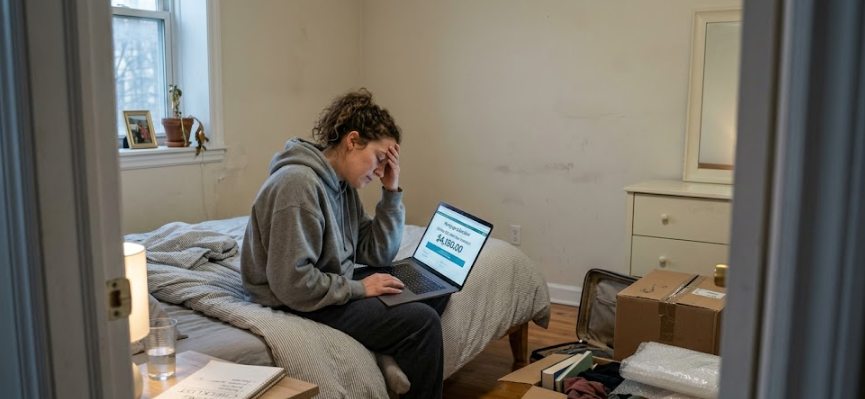
Being house poor after closing is a real risk in Dallas-Fort Worth, but it's entirely preventable with honest numbers and clear planning. The problem isn't homeownership itself — it's that most buyers underestimate the true monthly cost of owning a home in DFW, where property taxes, insurance, utilities, and maintenance can easily add $1,000+ to your mortgage payment. The good news: if you slow down, calculate every expense, and stress-test your budget before closing, you can confidently answer this question with a "no."
Let's walk through the real numbers, the hidden costs that surprise new DFW homeowners, and the specific steps you need to take to ensure your home purchase strengthens your financial future instead of straining it.
TK Realty
Free Home Valuation & Strategic Pricing Analysis
Core Service Programs:
- Home Buying for first-time buyers, relocators, upgraders, and growing families across DFW
- Home Selling with strategic pricing, professional marketing, and full-service listing management
- Investor & Specialty Services for new construction, 1031 exchanges, luxury homes, land, and estate properties
Why Choose TK Realty:
- ✓ Trusted by customers with 113+ five-star Google reviews
- ✓ 300+ properties closed and $100M+ in sales since 2018
- ✓ Locally rooted in Roanoke — community-driven, never a corporate chain
- ✓ Core values in every transaction — Humility, Integrity, Transparency, Value
- ✓ Named Top Realtor 2023, 2024, and 2025 by Fort Worth Magazine
- ✓ Broker-owner Tyler Kreis on MetroTex and Texas Realtors Boards of Directors
- ✓ Multi-agent team handling first-time buyers, 1031 exchanges, luxury, and investor acquisitions
Understanding DFW's Unique Housing Cost Landscape
Dallas-Fort Worth is one of the fastest-growing metros in the country, with a population projected to reach 8.1–8.2 million by 2026. That growth is fueled by corporate relocations, strong job creation in tech and finance, and a steady wave of in-migration from higher-cost states. All of that demand keeps home prices elevated — and it creates a specific affordability challenge that buyers moving here from other markets often don't see coming.
The DFW median household income sits around $85,000–$90,000. The median home price is approximately $415,000. That gap is manageable — but only if you understand what you're actually paying for. With a 10% down payment and a 30-year mortgage at today's rate of roughly 6.55%, your principal and interest payment alone on that $415,000 home is about $2,361 per month. That's before a single dollar of property taxes, insurance, or utilities.
Here's where DFW gets expensive in ways that catch buyers off guard: Tarrant and Denton County property tax rates range from 2.0% to 2.7% of appraised value — among the highest in the United States. Texas has no state income tax, which sounds like a win, but that revenue has to come from somewhere. It comes from your property tax bill. For a $415,000 home, that means roughly $795–$950 per month in property taxes alone, on top of your mortgage payment. If you're moving from a state with a 1.1% national average property tax rate, that difference is a genuine shock to the monthly budget.
Your Concern About House Poverty Is Valid
Feeling anxious about whether you can afford a home in DFW is completely normal — and it's actually a sign you're thinking carefully about your financial future. Over 30% of U.S. homeowners spend more than 30% of their income on housing, and DFW's high property taxes make this risk even more real. The fact that you're asking this question now, before closing, puts you ahead of most buyers.
The True Monthly Cost of Homeownership in DFW
The mortgage payment is just the beginning. To know whether you'll be house poor, you need to see the full picture. Here's what PITI — principal, interest, taxes, and insurance — actually looks like on a median $415,000 DFW home at current rates, broken down by down payment scenario, and what happens when you add the costs that lenders don't include in their calculations.
| Cost Component | 5% Down | 10% Down | 20% Down |
|---|---|---|---|
| Principal & Interest (6.55%) | $2,492/mo | $2,361/mo | $2,100/mo |
| Property Taxes (~2.3% effective) | $795/mo | $795/mo | $795/mo |
| Homeowner's Insurance | $270/mo | $270/mo | $270/mo |
| PMI (if applicable) | $246/mo | $187/mo | — |
| Total PITI | $3,803/mo | $3,613/mo | $3,165/mo |
| Utilities (seasonal avg.) | $400–$600/mo | $400–$600/mo | $400–$600/mo |
| Maintenance (1–2% annually) | $346–$692/mo | $346–$692/mo | $346–$692/mo |
| Estimated True Monthly Total | $4,549–$5,095/mo | $4,359–$4,905/mo | $3,911–$4,457/mo |
At the DFW median household income of $87,500 — about $7,291 gross per month — even the 20% down scenario puts your PITI alone at 43% of gross income. That's well above the traditional 28% comfort threshold lenders use. It doesn't mean you can't make it work, but it does mean you need to go in with eyes open. If you want to run the numbers on a specific price point, TK Realty's mortgage calculator is a useful starting point before you talk to a lender.
A few notes on specific line items: Homeowner's insurance in DFW averages $2,500–$4,000 annually due to North Texas's storm and hail exposure — significantly above the national average. Utilities spike hard in summer (AC bills of $300–$600+ per month are common in July and August) and can reach $100–$250 per month for heating in winter. And maintenance is not optional — budget 1–2% of your home's value annually, which works out to $346–$692 per month on a $415,000 home.
Hidden Costs That Surprise New DFW Homeowners
Beyond the monthly recurring costs, the first 6–12 months of homeownership in DFW come with a predictable set of surprises that buyers routinely underestimate. Knowing them in advance is the difference between a smooth transition and a financial scramble.
- Utility deposits: If you don't have established credit with local providers, expect $100–$300 per utility upfront when you set up service.
- Appliances not conveyed: Sellers in DFW frequently keep the refrigerator, washer, and dryer. Replacing all three can cost $2,000–$5,000+ immediately after closing.
- Window treatments: An empty house has bare windows. Outfitting a full home with blinds, shades, or curtains adds up quickly — often $1,000–$3,000 or more depending on home size.
- Lawn and landscaping: Ongoing maintenance runs $50–$150 per month. Initial cleanup or improvements on a neglected yard can cost $500–$2,000.
- HOA initiation fees: If your neighborhood has an HOA, expect a one-time initiation fee of $200–$1,000+, plus ongoing monthly dues of $50–$300+.
- First-year repairs: Even with a solid inspection, DFW homes commonly surface HVAC issues, foundation concerns, or roof wear in the first year. Budget $2,000–$5,000 as a realistic reserve.
Beware of Escrow Shortfall Notices in Year 2
Many DFW homeowners receive an unexpected "escrow shortfall" notice 12 months after closing, requiring a lump sum payment or a permanent increase to their monthly mortgage payment. This happens because property taxes and insurance were underestimated at closing. Ask your lender upfront: "What is the likelihood my escrow payment will increase significantly in Year 2?" and budget conservatively for this possibility.
The escrow shortfall issue deserves extra attention. DFW homeowner's insurance premiums rose 20–50%+ between 2022 and 2025, driven by severe weather claims and rising rebuilding costs. If your insurance premium jumps $600 annually in Year 2, your lender will spread that across your monthly payment — adding $50 per month you didn't plan for. Stack that with a tax appraisal increase, and your "fixed" mortgage payment suddenly isn't fixed at all.
How to Calculate Your True Affordability Before Making an Offer
The single most effective thing you can do to avoid becoming house poor is to build your own budget — not rely on a lender's pre-approval number. Here's a step-by-step framework that works specifically for DFW buyers. For a deeper dive into the full buying process, the first-time buyer guide for Tarrant County covers additional steps worth reviewing.
- Start with gross monthly income. Calculate 28% (housing-only threshold) and 36% (total debt threshold). These are your lender's limits — but your personal comfort level may be lower, especially if you have other financial goals.
- Request a property-specific Loan Estimate. Ask your lender for a detailed Loan Estimate that includes estimated property taxes and insurance for the specific address you're considering — not a generic estimate.
- Verify property taxes directly. Use the Tarrant Appraisal District or Denton Central Appraisal District website to look up the current taxable value and effective tax rate for the exact address. Don't guess.
- Get an insurance quote before making an offer. Call an insurance agent with the property address and get a real quote. This takes 15 minutes and eliminates a major budget unknown.
- Add realistic utility estimates. Call the utility company and ask for the property's historical usage if available. For a DFW home, assume $400–$600 per month as a conservative average across all seasons.
- Budget 1–2% annually for maintenance. This is not optional. Break it into a monthly line item so it doesn't feel like a surprise when something breaks.
- Build a post-closing expense list. Furniture, appliances, landscaping, window treatments — write them down and total them. This is money you need in hand at closing, not on a credit card.
- Confirm your emergency fund survives closing. You should have 3–6 months of all living expenses (not just housing) in liquid savings after closing costs and down payment are paid.
- Compare total monthly cost to take-home pay. Run the math against your actual net income, not gross. If the number feels tight on paper, it will feel tighter in real life.
Use the Option Period to Stress-Test Your Budget
Texas contracts typically include a 7–10 day Option Period where you can terminate for any reason. Don't just use this time for inspections — use it to finalize your insurance quote, get repair estimates, and run your complete post-closing budget. If the numbers don't feel right, you can walk away and recover your earnest money (minus the option fee). This is your safety valve.
Red Flags: When a Home Purchase Might Lead to House Poverty
Sometimes the right move is to walk away — or at least slow down and renegotiate. These warning signs indicate a purchase may be stretching you too thin. If you recognize more than two or three of these in your current situation, that's worth a serious conversation before you go under contract. The affordability guide for Texas first-time buyers covers several of these scenarios in more detail.
- Your total PITI exceeds 43% of your gross monthly income — well above the 28% traditional comfort threshold.
- Your lender approved you for the maximum amount, but you feel anxious about the monthly payment. That anxiety is data.
- You're waiving inspection or appraisal contingencies to win a bidding war, absorbing unknown repair costs to close the deal.
- You're depleting your entire savings for the down payment and closing costs, leaving no emergency fund for what comes next.
- Your agent or lender dismisses your budget concerns or encourages you to "stretch" for a home.
- You don't have a clear understanding of what your escrow payment will look like in Year 2 after tax and insurance adjustments.
- You're counting on a future income increase, bonus, or job change to make the numbers work today.
None of these individually means you shouldn't buy. But each one is a signal to slow down and look harder at the numbers before you commit. A good agent will tell you the same thing — even if it costs them a commission.
Texas Protections and Tools to Prevent House Poverty
Texas has meaningful protections in place for homebuyers, and understanding them can directly reduce your financial risk. Most buyers don't take full advantage of these tools simply because no one explained them.
The Option Period is your most powerful protection during the transaction. For a negotiated, non-refundable fee, you have an unrestricted right to terminate the contract within the option window — typically 7–10 days in DFW. Use every day of it. Get repair estimates, finalize your insurance quote, and run your full post-closing budget before that window closes.
The Texas homestead exemption reduces your taxable home value by $100,000 for school district taxes (as of 2025 legislation). On a $415,000 home, your school taxes are calculated on $315,000 — a meaningful reduction in your annual bill. You must apply for this exemption with your county appraisal district after January 1st of the year following your purchase. Don't skip this step.
The 10% annual appraisal cap limits how much your home's taxable value can increase each year once you've applied for the homestead exemption. This is what protects you from a sudden, massive spike in property taxes in Year 2 and beyond, even when market values are rising quickly.
On the financing side, Down Payment Assistance programs through TSAHC and local nonprofits can reduce your upfront costs and lower your monthly payment. FHA, VA, and USDA loan programs offer lower down payment options that can be combined with DPA to improve affordability. And federal TILA and RESPA disclosures — the Loan Estimate and Closing Disclosure — give you a detailed breakdown of your loan terms and costs before you sign. Read them carefully; they contain the numbers that determine whether your budget works. If you ever feel misled by an agent about affordability, you can file a complaint with TREC at trec.texas.gov.
Why TK Realty Is the Right Choice for DFW Homebuyers
Buying a home in DFW without a clear picture of the true costs is how buyers end up house poor. TK Realty's entire approach is built around preventing exactly that. With 113+ five-star Google reviews, 300+ closed transactions, and more than $100M in sales since 2018, the team has guided hundreds of DFW families through the same affordability questions this article covers — and they've done it by slowing the process down, not speeding it up.
Broker-owner Tyler Kreis serves on the boards of both MetroTex and Texas Realtors, which means he's not just working in DFW's market — he's helping shape the standards that govern it. That depth of local knowledge translates directly into better guidance on property taxes, insurance dynamics, neighborhood-specific costs, and what a realistic budget actually looks like for the specific home you're considering. TK Realty has been named Top Realtor by Fort Worth Magazine in 2023, 2024, and 2025 — recognition that reflects consistent client outcomes, not just transaction volume.
What makes TK Realty genuinely different is the philosophy behind every client conversation: this needs to make sense for your life, not just for a lender's spreadsheet. The team will tell you when a deal doesn't pencil out — even if walking away costs them a commission. That's not a marketing line; it's how they've built a business on referrals and repeat clients. Rooted in Roanoke at 311 S Oak St, Roanoke, TX 76262, and serving all of DFW, TK Realty brings neighborhood-level insight to every transaction across the metroplex.
Schedule a free consultation with TK Realty to walk through your real numbers and build a realistic affordability plan before you make an offer — so you buy with confidence, not anxiety.
Frequently Asked Questions: House Poor After Closing in DFW
What does the 28/36 rule actually mean in practice for my DFW home purchase?
The 28/36 rule is a lender guideline: your housing costs (PITI) should not exceed 28% of gross monthly income, and your total debt payments should not exceed 36%. In practice, exceeding these thresholds — even if a lender approves you — increases your risk of becoming house poor, especially in DFW where property taxes alone can push your PITI well above what feels comfortable. At DFW's median income and median home price, most buyers are already at or above 43% PITI-to-income, which is why running your own budget matters more than relying on what a lender will approve.
Does being pre-approved by a lender mean I can comfortably afford that home?
No — a lender's pre-approval shows the maximum they'll lend based on your income and credit, not what you can comfortably afford. Lenders don't account for your lifestyle, savings goals, or the full range of homeownership costs like utilities, maintenance, and post-closing expenses. You must create your own detailed budget — including every line item covered in this article — to determine your true comfort level. Pre-approval is a starting point for the conversation, not the finish line.
What happens to my escrow account after Year 1, and could it make me house poor?
After Year 1, your county appraisal district reassesses your home's value (subject to the homestead cap), and your insurance company adjusts premiums. If taxes or insurance increase — which is common in DFW due to rising values and significant storm risk — your lender will perform an escrow analysis and increase your monthly mortgage payment to cover the shortfall. This unexpected jump can strain a budget that was already tight. Ask your lender upfront what Year 2 might look like, and budget conservatively from day one.
How do I calculate a true monthly housing cost before making an offer on a DFW home?
Combine your estimated principal and interest payment with accurate property tax figures from the county appraisal district for the specific address, a real homeowner's insurance quote for that property, and any applicable HOA fees. Then add conservative utility estimates and a monthly maintenance reserve of 1–2% of the home's value annually. This comprehensive number — not the mortgage payment alone — is what you need to compare against your take-home pay to know whether the purchase is sustainable.
What makes TK Realty different from other real estate agents in DFW?
TK Realty prioritizes your financial well-being over commission — full stop. The team's approach is to slow you down, explain every number, and advise against deals that don't make sense for your life, even when that means walking away from a transaction. With 113+ five-star Google reviews and 300+ closed transactions since 2018, Tyler Kreis and his team have helped hundreds of DFW families navigate the exact affordability challenges this article covers. Named Top Realtor by Fort Worth Magazine in 2023, 2024, and 2025, and rooted in Roanoke with deep knowledge of DFW's specific tax, insurance, and market dynamics, TK Realty is the team you want in your corner when the numbers matter most. Schedule a free consultation with TK Realty to walk through your affordability plan before you make an offer.
Ready to Know Your Real Numbers Before You Close in DFW?
House poverty is preventable — but only if you do the math before you sign. If you're trying to figure out what you can truly afford in Dallas-Fort Worth, TK Realty will sit down with you, walk through every cost, and help you build a realistic plan that fits your life. No pressure, no rush — just honest guidance from a team that's done this 300+ times.
Schedule a Free Consultation →*Market data, property values, and trends discussed in this article are accurate as of the date of publication and subject to change. This article is for informational purposes only and does not constitute legal or financial advice. Equal Housing Opportunity. Contact us for current market conditions in your area.
Check out this article next