Key Takeaways
- Trophy Club's summer sun rises in the northeast and sets in the northwest, meaning west-facing homes absorb intense direct afternoon heat from 3 PM to 7 PM+ — the hottest window of the day when temperatures regularly exceed 95–100°F.
- West-facing homes in North Texas can cost $30–$100 more per month in summer cooling compared to similarly sized, well-oriented homes — potentially $1,800–$6,000 in additional energy costs over five years of ownership.
- Effective mitigation strategies — solar screens ($1,000–$3,000), high-performance window film ($100–$300 per window), upgraded attic insulation ($1,500–$4,000), and exterior shading — can largely offset the energy and comfort gap, often paying for themselves within 2–5 years.
- Home orientation is not a required disclosure item on the Texas Seller's Disclosure Notice (TXR 1406), but buyers have the right to request past summer utility bills and should ask their inspector to evaluate insulation R-value, window efficiency, and HVAC sizing before closing.
- Trust TK Realty for clear, pressure-free guidance on Trophy Club home buying — explore TK Realty's full buyer resources to start your search with confidence.
Does Home Orientation Really Matter for Your Trophy Club Summer?
Yes — home orientation directly impacts your comfort, energy bills, and long-term satisfaction in a Trophy Club home. An east-facing rear yard keeps afternoon patios shaded and comfortable, while a west-facing home can cost $30–$100 extra per month in cooling during peak summer months. Understanding which direction your home faces and what that means for your lifestyle is one of the clearest ways to avoid costly surprises after closing.
Let's walk through exactly how orientation works in Trophy Club's climate, what the real financial impact looks like, and how to evaluate a home's sun exposure before you make an offer.
TK Realty
Free Home Valuation & Strategic Pricing Analysis
Core Service Programs:
- Home Buying for first-time buyers, relocators, upgraders, and growing families across DFW
- Home Selling with strategic pricing, professional marketing, and full-service listing management
- Investor & Specialty Services for new construction, 1031 exchanges, luxury homes, land, and estate properties
Why Choose TK Realty:
- ✓ Trusted by customers with 113+ five-star Google reviews
- ✓ 300+ properties closed and $100M+ in sales since 2018
- ✓ Locally rooted in Roanoke — community-driven, never a corporate chain
- ✓ Core values in every transaction — Humility, Integrity, Transparency, Value
- ✓ Named Top Realtor 2023, 2024, and 2025 by Fort Worth Magazine
- ✓ Broker-owner Tyler Kreis on MetroTex and Texas Realtors Boards of Directors
- ✓ Multi-agent team handling first-time buyers, 1031 exchanges, luxury, and investor acquisitions
How Trophy Club's Summer Sun Works: The Solar Path Explained
Trophy Club sits in the southern edge of Denton County, squarely in North Texas's most demanding climate zone. Summer highs regularly reach 95°F in July and August, with extended stretches above 100°F that aren't unusual — they're expected. That heat alone would be manageable. The solar path is what makes orientation matter so much.
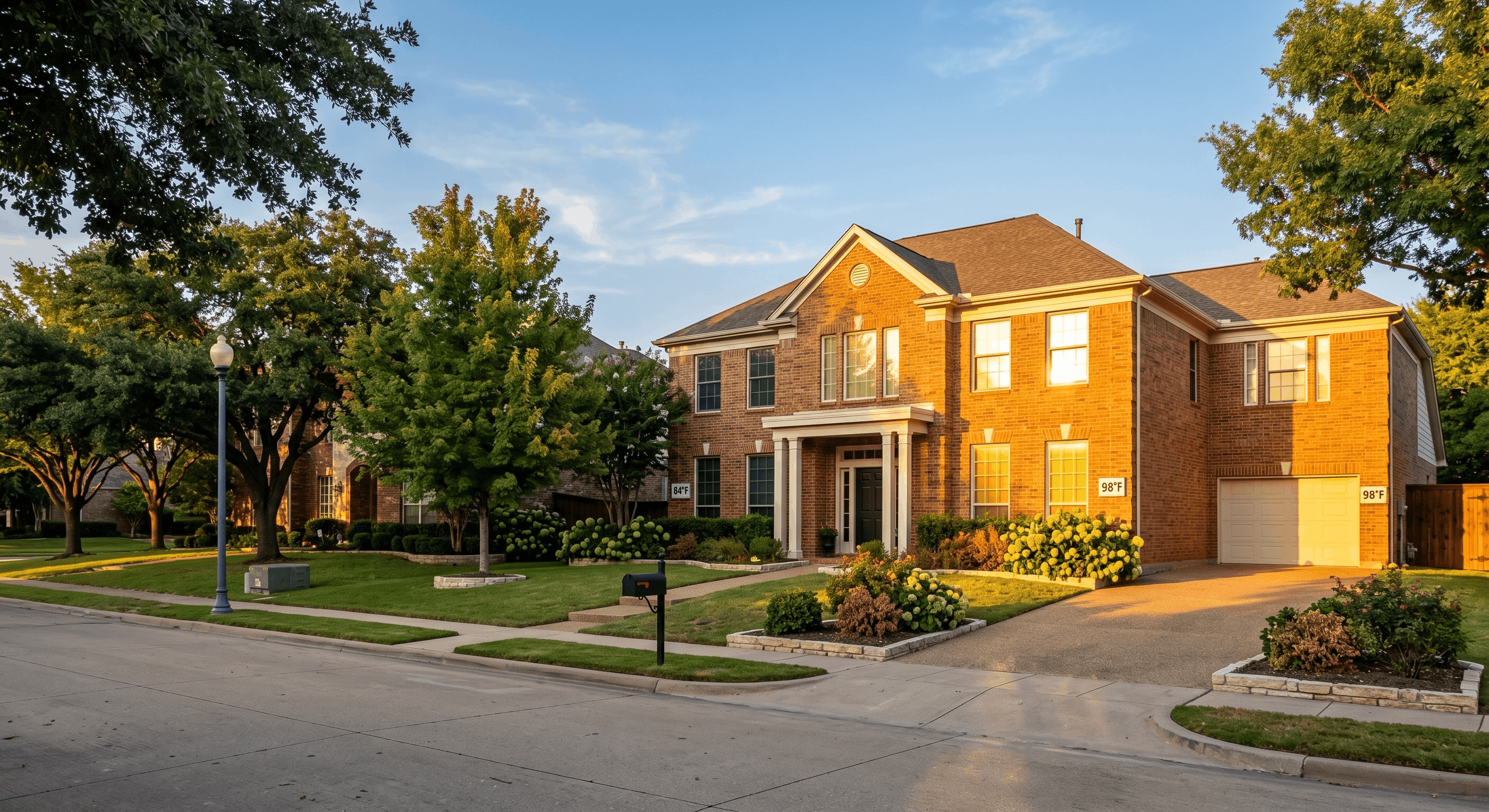
During summer, the sun rises in the northeast and sets in the northwest. At midday it's nearly overhead, which is actually the easiest to manage with standard roof overhangs. The real problem arrives in the late afternoon. From roughly 3 PM to 7 PM, the sun drops lower in the western sky and hits west-facing walls, windows, and patios with direct, intense radiation — at exactly the same time outdoor temperatures are peaking.
For a home with a west-facing rear yard, that means your patio, pool deck, family room windows, and master bedroom are absorbing maximum solar heat during the hours you most want to use them. An east-facing rear yard, by contrast, receives gentler morning sun and sits in shade all afternoon — a meaningful difference in daily livability during a Texas summer.
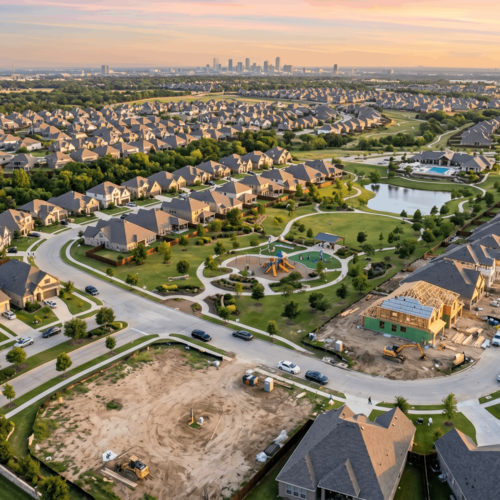
This matters even more in Trophy Club because of how the community was designed. As a master-planned golf course community, street layouts and lot geometries were often shaped around views and course frontage rather than optimal solar orientation. That creates a genuine mix of exposures across neighborhoods — some homes are well-positioned, others are not, and the difference isn't always obvious from a listing photo. If you're exploring Trophy Club homes and neighborhoods, orientation is one of the first things worth understanding before you fall in love with a floor plan.
The Real Cost of West-Facing Exposure: Energy Bills, HVAC Wear, and Fading
It's Normal to Feel Overwhelmed by Energy Costs
Many Trophy Club buyers worry about hidden energy bills and long-term comfort. Understanding orientation upfront — before you make an offer — is exactly how you avoid that stress and make a confident decision.
The financial impact of west-facing exposure isn't dramatic on any single bill. It accumulates quietly over years of ownership, which is why it's easy to underestimate during a home search.
In North Texas, homes with significant unshaded west-facing glazing can experience 10–25% higher cooling costs during peak summer months compared to similarly sized, well-oriented homes. For a Trophy Club home in the 3,000–4,000 sq ft range, summer electricity bills often run $300–$500+ per month. A 10–25% premium on that baseline adds $30–$100 per month — or roughly $1,800–$6,000 in additional energy costs over five years. That's real money that doesn't show up in the listing price but absolutely shows up in your budget.
The HVAC impact is less visible but equally significant. When a system has to fight intense afternoon solar gain during the hottest hours of the day, it runs harder and longer than it was designed to. In North Texas, a well-maintained HVAC system typically lasts 12–15 years. High, unmitigated cooling loads can shorten that to 10–12 years — meaning you may face a $7,000–$15,000 replacement several years earlier than expected. That cost rarely factors into a buyer's five-year ownership calculation, but it should.
There's also the interior damage that's easy to overlook. West-facing windows allow intense UV exposure into living spaces during the hottest part of the day. Over time, this fades hardwood floors, upholstery, artwork, and window treatments — replacement costs that can reach hundreds to thousands of dollars for the quality of finishes typical in Trophy Club homes. Oncor and retail electric providers do offer rebates for energy efficiency upgrades — solar screens, window film, insulation, and smart thermostats — that can offset mitigation costs meaningfully within 2–5 years, which we'll cover next.
Mitigation Strategies: What Actually Works (and What It Costs)
A west-facing home isn't a deal-breaker. It's a known problem with known solutions — and understanding those solutions before you make an offer puts you in a much stronger negotiating position. Here's what actually moves the needle, with realistic 2026 cost ranges for the DFW market.
| Mitigation Strategy | Estimated Cost (DFW) | Cooling Benefit | Typical ROI |
|---|---|---|---|
| Solar screens (whole house) | $1,000–$3,000 | Up to 25% cooling reduction | 2–5 years |
| High-performance window film | $100–$300 per window | 10–15% solar heat gain reduction | 3–7 years |
| Exterior shading (pergola/awning) | $3,000–$10,000+ | 50–75% reduction for shaded windows | Longer; high livability value |
| Upgraded attic insulation (R-38+) | $1,500–$4,000 | 10–20% overall thermal improvement | 2–6 years |
| Smart thermostat | $100–$500 installed | 10–15% energy use reduction | 1–3 years |
Combining two or three of these strategies — for example, solar screens plus upgraded attic insulation plus a smart thermostat — delivers compounding benefits that can bring a west-facing home's energy performance close to parity with a well-oriented one. A $3,000–$5,000 investment upfront can largely close the gap within the five-year ownership window.
One important caveat: Trophy Club's HOA Architectural Control Committee (ACC) requires approval for most exterior modifications, including solar screens, awnings, pergolas, and landscaping changes. Review your CC&Rs before planning any upgrades. This isn't a reason to avoid mitigation — it's a reason to plan it correctly from the start. If you're weighing a new build versus an existing home, our new construction buyer's guide for West Fort Worth covers how builders are addressing solar performance in current developments.
What Buyers Should Know: Disclosure, Inspection, and Red Flags
Pro Tip: Request Summer Utility Bills Early
The most reliable way to understand a home's actual energy costs is to ask the seller for past July and August electricity bills. This single step gives you real data instead of guesses and can reveal whether a west-facing home is truly a concern for your budget.
Home orientation is not a required disclosure item on the Texas Seller's Disclosure Notice (TXR 1406). Sellers are not legally obligated to tell you which direction the home faces or how that affects summer comfort. What they are required to disclose are known material facts — and if a seller is aware that their west-facing home runs significantly higher utility bills or has documented comfort issues, that information should be disclosed under Texas real estate law.
Licensed Texas Realtors have a broader obligation. A buyer's agent is required to act in your best interest, which includes advising you on factors like orientation and encouraging the right due diligence steps. If an agent dismisses orientation concerns without explanation, that's worth noting.
Here's what to ask and look for:
- Request July and August utility bills from the seller. This is the single most reliable data point you can get.
- Ask your home inspector to evaluate attic insulation R-value, window efficiency (Low-E, SHGC ratings), HVAC system sizing, and any signs of heat stress on materials or components.
- Ask your agent directly about the home's orientation and whether any mitigation upgrades are already in place.
- Verify agent licensing at trec.texas.gov using the License Holder Search tool.
Watch Out for Misleading Marketing
Some listings obscure west-facing exposure by using morning photos, avoiding aerial views, or emphasizing views without mentioning solar impact. Always ask your agent directly about orientation and request site plans or drone photos to see the home's true sun exposure.
Red flags include: an agent who dismisses orientation as irrelevant, a seller who can't or won't provide utility bills, an inspector who downplays heat gain without proper evaluation, or listing photos that only show the shaded side of the house. If you believe material facts about energy performance were withheld after closing, you have recourse through a TREC complaint or the Texas Deceptive Trade Practices Act (DTPA). Our buyer resources page walks through the full due diligence process for Texas homebuyers.
Trophy Club Market Context: How Orientation Affects Desirability and Resale
Trophy Club's median home price was approximately $685,000 as of January 2025, with luxury properties at $1M+ commanding premiums for desirable lot positions, outdoor livability, and premium finishes. With a homeownership rate of 91.5% and a median household income of $156,063, this is a community of buyers who have done their homework — and increasingly, that homework includes energy costs and outdoor comfort.
Post-2022 energy price spikes and the pandemic-driven emphasis on outdoor living have shifted buyer priorities in measurable ways. Buyers in the DFW luxury market now routinely ask about utility costs, insulation, and HVAC age in ways they didn't five years ago. East-facing rear yards and covered outdoor living spaces are consistently highlighted as selling features in Trophy Club listings — not because agents are being poetic, but because they move homes faster.
West-facing homes without adequate mitigation can linger longer on the market or require price adjustments when buyers run the numbers on long-term ownership costs. DFW inventory has been rising — active listings in the metro were up 7.28% year-over-year in February 2026, and months of supply increased from 4.7 to 5.0 between Q1 2025 and Q1 2026. In a more balanced market, buyers have more leverage to negotiate on orientation-related concerns or request seller credits for energy upgrades.
While no publicly available MLS data isolates orientation as a standalone price factor in Trophy Club, the pattern is consistent across DFW luxury suburbs: homes with documented energy efficiency, comfortable outdoor spaces, and favorable sun exposure attract more buyers and hold value more reliably. If you're curious how a specific home's features might affect its long-term value, our home valuation tool is a good starting point for understanding what drives pricing in this market. For a broader look at what makes Trophy Club a compelling place to own, the full community overview covers the factors that consistently drive demand.
Why TK Realty Is the Right Choice for Trophy Club Homebuyers
Buying in a community like Trophy Club — where median prices sit near $685,000 and the details of lot position, HOA rules, and energy performance genuinely affect your long-term satisfaction — requires an agent who slows the process down rather than rushing you toward a contract. That's exactly how TK Realty operates.
TK Realty has closed 300+ transactions and $100M+ in sales since 2018, earning 113+ five-star Google reviews from clients who consistently describe the same experience: clear explanations, honest guidance, and zero pressure. Broker-owner Tyler Kreis has been named a Top Realtor by Fort Worth Magazine in 2023, 2024, and 2025, and serves on both the MetroTex and Texas Realtors Boards of Directors — bringing a level of market knowledge and professional standing that directly benefits buyers navigating complex decisions.
When it comes to orientation specifically, TK Realty walks buyers through the solar implications of every home under consideration — explaining what west-facing exposure means for your energy bills, your outdoor comfort, and your long-term resale position. We coordinate with inspectors to ensure the right questions get asked, and we know Trophy Club's HOA rules well enough to advise on mitigation options before you're under contract. Our team is locally rooted in Roanoke, serving all of DFW from a community-driven perspective — never a corporate chain, always a real relationship.
Schedule a Free Consultation with TK Realty — and explore Trophy Club homes with an agent who explains orientation, energy costs, and long-term value before you make an offer.
Frequently Asked Questions: Home Orientation in Trophy Club, TX
Does an east-facing house mean a cooler house in Texas?
Generally yes, particularly for outdoor living spaces and afternoon comfort. An east-facing rear yard receives morning sun — which is less intense — and sits in shade during the hottest afternoon hours. This makes patios and pools significantly more usable during a Texas summer and reduces the cooling load on primary living areas like family rooms and master bedrooms. The result is a home that's more comfortable to live in and typically less expensive to cool during peak months.
How much more will I pay in electricity for a west-facing home in Texas?
A west-facing home in North Texas can experience 10–25% higher cooling costs during peak summer months compared to a similarly sized, well-oriented home. For a Trophy Club home where summer electricity bills commonly run $300–$500+ per month, that translates to $30–$100 in additional monthly costs. Over five years of ownership, that premium accumulates to $1,800–$6,000 in extra energy spending — before factoring in any accelerated HVAC wear or interior fading costs.
Can I fix the heat problem with a west-facing house?
Yes — and the solutions are well-documented. Solar screens ($1,000–$3,000 for a whole house) reduce cooling bills by up to 25% and typically pay for themselves within 2–5 years. High-performance window film ($100–$300 per window) cuts solar heat gain by 10–15%. Exterior shading structures like pergolas ($3,000–$10,000+) can reduce solar heat gain by 50–75% for shaded windows. Combining upgraded attic insulation ($1,500–$4,000) and a smart thermostat ($100–$500) with one or two of these strategies can bring a west-facing home's performance close to parity with a well-oriented one. Just confirm HOA ACC approval requirements before planning any exterior modifications.
Does home orientation affect resale value in a luxury market like Trophy Club?
While orientation alone rarely appears as a line item in an appraisal, it contributes meaningfully to market appeal in a community like Trophy Club. Homes with east-facing rear yards and comfortable outdoor living spaces consistently attract more buyers and tend to sell faster, especially as energy efficiency has become a higher priority for DFW luxury buyers post-2022. West-facing homes without adequate mitigation can face longer days on market or require price adjustments when buyers factor in long-term energy and comfort costs. The impact is real — it's just embedded in buyer behavior rather than published as a specific price differential.
Why should I choose TK Realty to help me evaluate a Trophy Club home's orientation and energy performance?
TK Realty brings 300+ closed transactions, $100M+ in sales since 2018, and 113+ five-star Google reviews — earned by slowing the process down and explaining every factor clearly, including things like home orientation, energy costs, and HOA rules that other agents gloss over. Broker-owner Tyler Kreis is locally rooted in Roanoke, knows Trophy Club's master-planned community layout in depth, and has been named a Top Realtor by Fort Worth Magazine three consecutive years. You'll never feel rushed or pressured — just informed and confident. Schedule a Free Consultation to discuss your Trophy Club home search with an agent who prioritizes your understanding and peace of mind.
Ready to Evaluate Trophy Club Homes with Confidence?
Orientation, energy costs, HOA rules, and long-term comfort are exactly the kinds of details that should be clear before you make an offer — not after closing. TK Realty walks you through every factor so you move forward informed, not guessing.
Schedule a Free Consultation →*Market data, property values, and trends discussed in this article are accurate as of the date of publication and subject to change. This article is for informational purposes only and does not constitute legal or financial advice. Equal Housing Opportunity. Contact us for current market conditions in your area.
Check out this article next