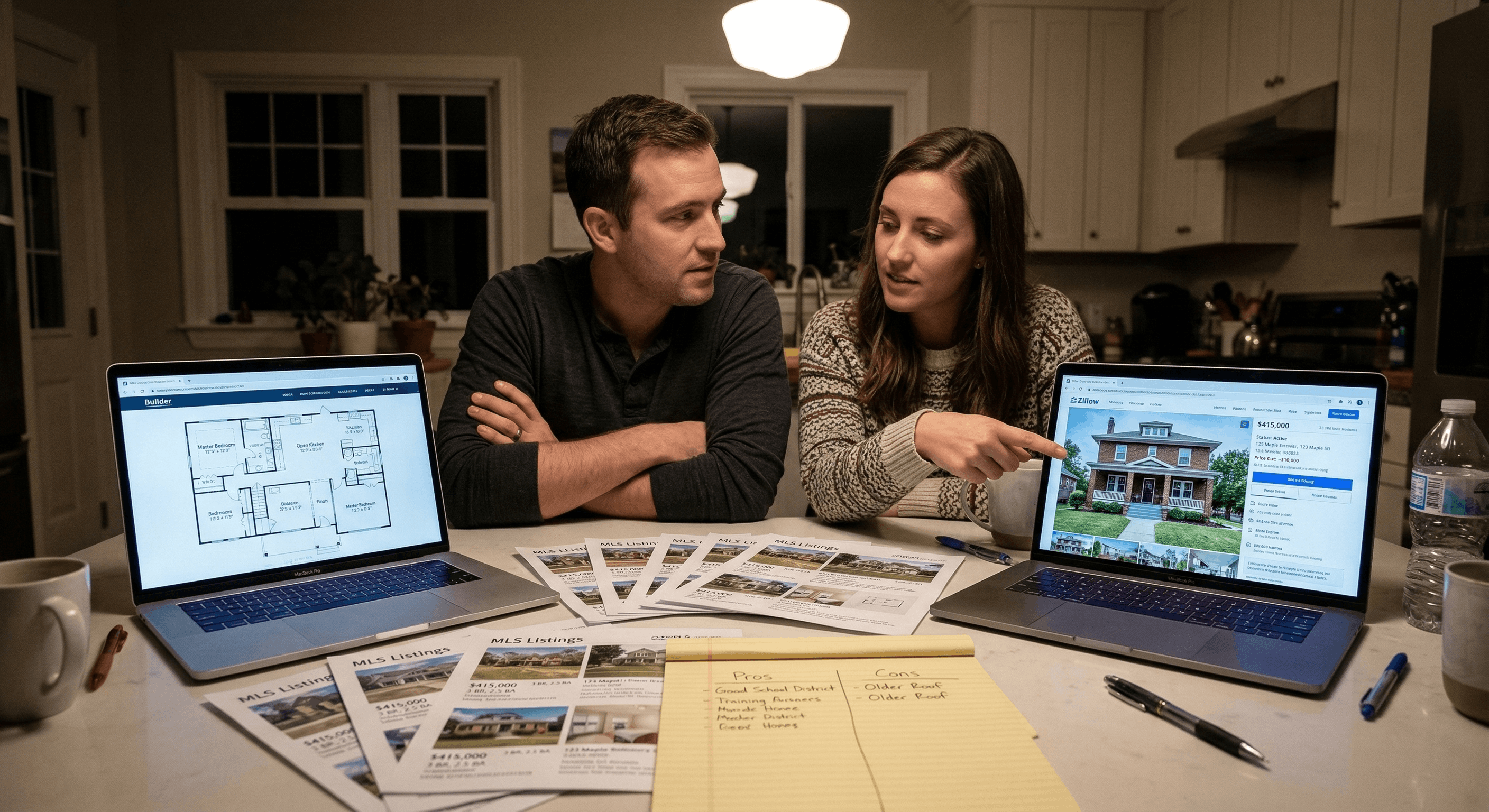
You've been saving for a while. You've been watching listings. You've probably had the conversation a dozen times — with your partner, your parents, your coworker who bought a house two years ago and now considers himself an expert. And somewhere in all of that, someone asked the question that stopped you cold: Should we buy new construction or an existing home?
It sounds like a simple question. It isn't. And the fact that you're not sure how to answer it doesn't mean you're behind — it means you're paying attention. This is one of the most consequential decisions a first-time buyer makes, and it deserves more than a quick Google search or a builder's sales pitch.
Let's slow this down and actually look at what each option involves — the real costs, the real trade-offs, and what actually matters for someone buying their first home in the Dallas-Fort Worth area right now.
Key Takeaways
- New construction and existing homes each have genuine advantages — the right choice depends on your timeline, budget, and priorities, not a universal rule.
- New construction often comes with hidden costs (upgrades, lot premiums, HOA fees) that can push the real price well above the base price advertised.
- Existing homes typically offer more negotiating room, established neighborhoods, and faster move-in timelines — but may require near-term repairs or updates.
- Builder contracts are not buyer-friendly by default. Having your own agent and a real estate attorney review the contract matters more than most first-time buyers realize.
- In the DFW market specifically, new construction inventory has expanded significantly — giving buyers more options and, in some communities, more leverage than they've had in years.
- The best decision is the one that fits your real life — your finances, your timeline, your family's needs — not the one that looks best on paper.
Why First-Time Buyers Struggle With This Decision
Here's what usually happens: a first-time buyer starts browsing Zillow, sees a shiny new community with a model home and a friendly sales rep, and walks away with a brochure and a head full of excitement. Then they drive through an older neighborhood, fall in love with a house that has original hardwood floors and a mature backyard, and suddenly the decision feels impossible.
Both reactions are completely normal. New construction is designed to be appealing — the builder has spent significant money making sure of that. And existing homes carry a kind of character and rootedness that a brand-new subdivision sometimes can't replicate. Neither instinct is wrong. But instinct alone isn't a decision-making framework.
The problem is that most of the information first-time buyers find online is either too generic to be useful or written by someone with a financial stake in one answer. Builder websites obviously favor new construction. Some real estate blogs favor resale because that's where most agents earn commissions. What's missing is an honest, side-by-side look at what each path actually involves — costs, risks, benefits, and the specific dynamics of the DFW market where you're buying.
You're Not Overthinking This
If this decision feels bigger than you expected, that's because it is. Your first home purchase is likely the largest financial commitment you've made in your life. Taking time to understand both options before you commit isn't hesitation — it's smart. The buyers who rush this decision are usually the ones who end up with regret.
Let's start by understanding what each option actually is, before we get into the comparison.
What "New Construction" Actually Means in the DFW Market
New construction isn't one thing — it's a spectrum. In the Dallas-Fort Worth area, you'll generally encounter three types of new construction situations, and they're meaningfully different from each other.
Production Builds: The Most Common Type
Production builders — companies like D.R. Horton, Lennar, Perry Homes, and Highland Homes — build homes on a large scale using standardized floor plans. They buy land in bulk, develop entire communities, and build dozens or hundreds of homes using the same set of designs with some variation in elevation and interior finishes.
When you buy a production build, you're typically choosing a floor plan, selecting from a menu of options and upgrades, and waiting for the home to be completed — anywhere from four to ten months depending on where you are in the build cycle. In some cases, you can buy a "spec home" that's already under construction or nearly complete, which shortens the timeline significantly.
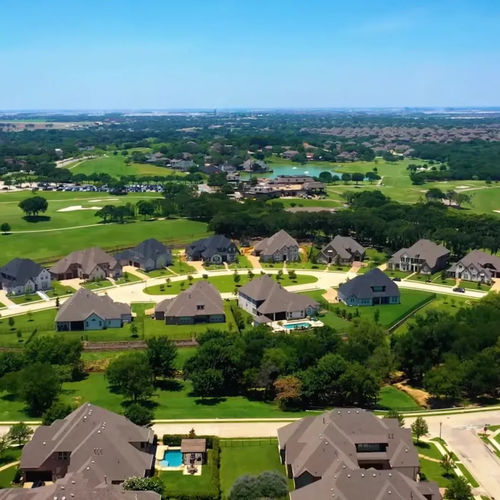
Production builds dominate the new construction market in DFW suburbs like Celina, Prosper, Anna, Forney, Mansfield, and communities throughout Tarrant and Denton counties. If you're looking at new construction in the DFW area, this is most likely what you're considering.
Semi-Custom Builds
Semi-custom builders offer more flexibility than production builders — you can often modify floor plans, choose finishes from a broader range, and sometimes make structural changes. These homes cost more and take longer to build, but the result is a home that feels more tailored to you. Builders like Darling Homes and Coventry Homes occupy this space in DFW.
Spec Homes and Move-In Ready New Construction
Spec homes are new homes that a builder started without a specific buyer in mind. They're often completed or nearly completed, and they can be purchased and moved into quickly — sometimes within 30 to 60 days. Spec homes give you most of the benefits of new construction (new systems, builder warranty, modern layout) without the long wait. The trade-off is that the finishes and options have already been chosen, so you get what the builder picked, not what you would have selected.
DFW New Construction Context
The Dallas-Fort Worth metroplex is one of the most active new construction markets in the country. Builders have been expanding inventory significantly over the past few years, particularly in the northern and eastern suburbs. This means first-time buyers in DFW have more new construction options — and in some communities, more negotiating leverage with builders — than buyers in many other major metros. That context matters when you're weighing your options.
The Real Costs of New Construction: Beyond the Base Price
This is where a lot of first-time buyers get caught off guard. The base price a builder advertises is rarely the price you'll actually pay. Understanding the full cost picture before you fall in love with a floor plan is essential.
Upgrades and the Design Center Experience
After you sign a contract on a new build, most builders invite you to a "design center" appointment where you select your finishes — flooring, countertops, cabinets, fixtures, lighting, and more. This experience is carefully designed to be enjoyable. It's also where the cost of your home can increase by $20,000 to $80,000 or more without you fully realizing it's happening.
Standard finishes in production builds are often builder-grade — functional, but not what you saw in the model home. The model home is almost always loaded with upgrades. When buyers see the gap between the standard options and what they experienced in the model, the upgrade selections add up fast. Quartz countertops instead of laminate. Hardwood instead of carpet. A larger shower instead of the standard tub. Each individual upgrade feels reasonable. The total can be shocking.
Lot Premiums
Not all lots in a community are priced equally. Corner lots, cul-de-sac lots, lots backing to greenspace or a pond, and lots with better views carry "lot premiums" that can range from a few thousand dollars to $30,000 or more. These are added directly to the base price and are often not prominently advertised until you're deep into the process.
HOA Fees and Community Amenities
Most new construction communities in DFW have homeowners associations. HOA fees vary widely — from $50 a month to $200 or more — and some communities have both a primary HOA and a secondary HOA for specific amenities. These fees are ongoing costs that affect your monthly budget and your long-term affordability. Always ask for the full HOA disclosure before you sign anything.
Builder Preferred Lender Incentives
Builders frequently offer incentives — closing cost credits, rate buydowns, or upgrade allowances — if you use their preferred lender. These incentives can be genuinely valuable, sometimes worth $10,000 to $20,000. But they come with a catch: the builder's preferred lender may not offer the most competitive interest rate or loan terms. Always get a comparison quote from an independent lender before committing. The incentive needs to actually pencil out better than the alternative.
Watch Out: The Builder Contract Is Not Neutral
Builder contracts are written by the builder's attorneys to protect the builder. They often include provisions that limit your ability to back out, allow the builder to extend the completion timeline without penalty, and restrict your options if something goes wrong. Having your own real estate agent and a real estate attorney review the contract before you sign is not optional — it's essential protection. Many first-time buyers skip this step and regret it later.
Understanding the full cost picture of new construction — upgrades, lot premiums, HOA fees, and builder contracts — is a lot to sort through on your own. If you're weighing a new build and want a clear-eyed look at the numbers before you commit, let's talk through it together.
Get a Straight Answer on New Construction CostsWhat Existing Homes Offer That New Construction Can't
Existing homes — sometimes called "resale" homes — are properties that have been lived in before. In the DFW market, this covers an enormous range: homes built in the 1970s in established Dallas neighborhoods, 1990s brick homes in Keller or Southlake, and 2010s builds in communities that were new just a decade ago. "Existing" doesn't mean old. It means previously owned.
Established Neighborhoods With Real Character
One of the things that's genuinely hard to replicate in a brand-new community is the sense of an established neighborhood. Mature trees. Sidewalks that have been walked for decades. Neighbors who have lived there for years and know each other. Schools with a track record you can actually research. A community identity that goes beyond the builder's marketing materials.
For some buyers, this matters enormously. For others, it doesn't. But it's worth being honest with yourself about what kind of environment you actually want to live in — not just what looks good in photos.
More Room to Negotiate
In a resale transaction, you're negotiating with a homeowner — a real person with their own motivations, timeline, and flexibility. Depending on the market conditions and the seller's situation, there can be meaningful room to negotiate on price, closing costs, repairs, and terms. Builders, by contrast, are running a business. They have pricing models, margin targets, and sales teams trained to hold the line on price. The negotiating dynamic is fundamentally different.
That said, in a competitive resale market — which DFW has been at various points — negotiating room can shrink significantly. The key is understanding current conditions in the specific area and price range you're targeting, not assuming one environment or the other.
Faster Move-In Timelines
If you need to be in a home within 60 to 90 days — because your lease is ending, you're relocating for work, or you have kids starting school in a specific district — a resale home is almost always the faster path. A typical resale transaction closes in 30 to 45 days from contract to keys. A new construction build can take six months to a year or more. Even spec homes, which are faster, often take 45 to 60 days to close.
What You See Is What You Get
With a resale home, you can walk through the actual house you're buying — not a model, not a rendering, not a floor plan on paper. You can see the backyard, feel the layout, notice how the light comes in, and identify anything that needs attention. This transparency is genuinely valuable. You're making a decision based on reality, not a promise.
Pro Tip: The Inspection Is Your Best Friend in a Resale Purchase
A thorough home inspection on an existing home typically costs $350 to $500 and is one of the best investments you'll make in the entire process. A good inspector will identify issues you'd never spot on your own — from roof age to HVAC condition to foundation concerns. Use the inspection report as a negotiating tool, not just an information document. In many cases, sellers will either make repairs or reduce the price to account for needed work.
The Hidden Costs of Existing Homes: What to Budget For
Just as new construction has hidden costs beyond the base price, existing homes have their own financial realities that first-time buyers sometimes underestimate. Being prepared for these isn't pessimistic — it's smart.
Deferred Maintenance and Near-Term Repairs
Every home has systems that age: the roof, the HVAC, the water heater, the plumbing, the electrical panel. In an existing home, some of these systems may be approaching the end of their useful life. A roof that's 18 years old might have 5 good years left — or it might need replacement in the next 18 months. A 15-year-old HVAC system is running on borrowed time in a Texas summer.
The inspection will help you understand the condition of these systems. The key is factoring the likely cost of near-term repairs and replacements into your overall budget before you make an offer — not after you've already fallen in love with the house.
Updates and Cosmetic Work
Existing homes, especially those built before 2010, may have kitchens and bathrooms that feel dated. Popcorn ceilings. Carpet in places you'd prefer hardwood. Paint colors that aren't yours. Some buyers are completely fine with this and plan to update over time. Others underestimate how much it costs to update a kitchen or bathroom and feel stretched thin after closing.
Be realistic about your tolerance for living with things you don't love while you save up to change them. And if you plan to update soon after purchase, build those costs into your financial planning before you buy — not as an afterthought.
Energy Efficiency Differences
Newer homes are built to more current energy codes, with better insulation, more efficient windows, and modern HVAC systems. An older existing home may have meaningfully higher utility costs — something that matters in a Texas climate where summer electric bills can be substantial. This isn't a reason to avoid existing homes, but it's a real cost difference worth factoring in.
Figuring out what repairs and updates to budget for in an existing home — and whether the numbers still make sense after you factor them in — is exactly the kind of thing that's easier with a second set of eyes. We walk through the full picture before recommending anything.
Let's Look at the Full Picture TogetherSide-by-Side Comparison: New Construction vs. Existing Homes
Let's put the key factors in one place so you can see them clearly.
| Factor | New Construction | Existing Home |
|---|---|---|
| Move-in Timeline | 4–12 months (spec homes 45–60 days) | 30–45 days from contract |
| Negotiating Room | Limited on price; incentives available | More flexible depending on market |
| What You're Buying | A promise, floor plan, and model | The actual home you walked through |
| Near-Term Repairs | Minimal — everything is new | Varies; inspection reveals specifics |
| Builder Warranty | Yes — typically 1/2/10 year warranty | No — buyer assumes responsibility |
| Customization | Yes, within builder's options | Post-purchase renovations only |
| Neighborhood Maturity | New; community develops over time | Established; known character |
| Hidden Costs | Upgrades, lot premiums, HOA fees | Repairs, updates, energy costs |
| Contract Terms | Builder-written; less buyer-friendly | Standard TREC contract; more balanced |
| Energy Efficiency | Built to current codes; more efficient | Varies by age and updates |
No single row in that table makes the decision for you. The right answer depends on which factors matter most in your specific situation — and that's a conversation worth having carefully.
The Builder Warranty: What It Actually Covers (and What It Doesn't)
One of the most frequently cited advantages of new construction is the builder's warranty. And it is a real advantage — but it's worth understanding exactly what you're getting, because "builder warranty" covers a lot of ground and not all of it equally.
The Standard 1-2-10 Warranty Structure
Most production builders in Texas offer a warranty structured around three timeframes. The first year typically covers workmanship and materials — things like drywall defects, paint issues, trim problems, and fixture malfunctions. The second year usually covers mechanical systems: plumbing, electrical, and HVAC. The ten-year coverage is typically limited to structural defects — foundation issues, load-bearing walls, and similar major structural problems.
That sounds comprehensive. And for major issues, it is. But there are important limitations. Cosmetic issues that appear after the first year generally aren't covered. Appliances are typically covered by the manufacturer's warranty, not the builder's. And getting warranty work done can require persistence — builders have post-sale service departments that vary significantly in responsiveness and quality.
The New Home Inspection Myth
Many first-time buyers assume that because a home is brand new, it doesn't need an inspection. This is a mistake. New construction homes have defects — sometimes significant ones. Framing errors. Plumbing that wasn't installed correctly. Insulation gaps. HVAC ductwork issues. These aren't rare; they're common enough that experienced buyers routinely hire independent inspectors to review new builds at multiple stages of construction, not just at completion.
Always Get an Independent Inspection on New Construction
The builder's inspector works for the builder. Their job is to ensure the home meets code — not to advocate for your interests. Hiring your own inspector for a new construction home typically costs the same as a resale inspection ($350–$500) and can identify issues while the builder still has clear responsibility to fix them. This is one of the most important things a first-time buyer can do when purchasing new construction, and it's one of the most commonly skipped.
DFW-Specific Factors That Should Influence Your Decision
The Dallas-Fort Worth market has its own dynamics that affect this decision in ways that general advice doesn't capture. If you're buying in DFW specifically, here's what matters.
New Construction Inventory Has Expanded
After years of tight inventory across DFW, builders have been delivering more homes — particularly in the northern suburbs (Celina, Prosper, Anna, Gunter, Waxahachie) and the eastern corridor (Forney, Kaufman, Royse City). This expanded inventory means buyers have more options and, in some communities, more leverage than they've had in recent years. Builders who are sitting on completed spec homes are often more willing to negotiate on price, rate buydowns, or closing cost credits.
School Districts Matter Enormously in DFW
In the DFW market, school district boundaries can significantly affect both your quality of life and your home's long-term value. Some of the most desirable districts — Prosper ISD, Carroll ISD in Southlake, Keller ISD — have both new construction and existing home options. Others are primarily served by one or the other. If school district matters to you (and for many families it does), map the boundaries carefully before you narrow your search.
Texas Foundation Conditions
North Texas has expansive clay soil that moves with moisture changes — a well-known challenge for home foundations. This affects both new and existing homes, but in different ways. Existing homes may have foundation movement that's already been addressed (or needs to be). New homes are built with engineered foundations designed for local soil conditions, but they can still develop issues over time. In either case, understanding foundation health is a specific priority in DFW that buyers in other markets don't always think about.
The Commute and Infrastructure Reality
Many of the most affordable new construction communities in DFW are in outer suburbs where land is cheaper. The homes are newer and often larger for the price — but the commute to major employment centers can be significant, and community infrastructure (restaurants, services, walkability) may still be developing. Existing homes in more established areas often come with better access to amenities and shorter commutes, at the cost of older construction. This trade-off is real and worth thinking through honestly.
"The right neighborhood for your family isn't just about the home — it's about the 20 minutes before and after work, the school your kids will actually attend, and the community you'll build your life in. Those factors deserve as much attention as the home itself."
How to Actually Make This Decision: A Framework for First-Time Buyers
Rather than telling you which option is "better" — because that answer genuinely depends on your situation — here's a framework for thinking through the decision clearly.
Start With Your Real Timeline
When do you actually need to be in a home? If you have a hard deadline — a lease ending, a job start date, kids starting school — that constraint may make the decision for you. New construction with a six-month build timeline doesn't work if you need to move in 60 days. A spec home or resale purchase does.
If your timeline is flexible, you have more options. But "flexible" needs to be genuinely flexible — not "I could probably extend my lease if I had to." Be honest about your real constraints.
Understand Your Full Budget, Not Just Your Approval Amount
Your mortgage approval amount tells you the maximum you can borrow. It doesn't tell you what you can comfortably afford. There's a meaningful difference. When you're comparing new construction to existing homes, factor in the full cost of each path: for new construction, add realistic estimates for upgrades, lot premiums, and HOA fees to the base price. For existing homes, add a realistic repair and update budget based on the inspection findings.
The goal is to compare apples to apples — the total cost of living in each home over the first few years, not just the purchase price.
Be Honest About Your Tolerance for Uncertainty
New construction involves a degree of uncertainty that some buyers handle fine and others find genuinely stressful. Build timelines slip. The finished product doesn't always match what you imagined from the floor plan. The neighborhood takes years to fully develop. If uncertainty and waiting are hard for you, a resale home — where you can see exactly what you're getting and move in within weeks — may be a better fit regardless of what the numbers say.
Think About Where You're Going, Not Just Where You Are
Your first home doesn't have to be your forever home. Many first-time buyers treat the decision as more permanent than it is. If you're buying in a growing DFW suburb, both new construction and existing homes have generally appreciated over time. The question isn't just "which is better right now" but "which sets me up better for the next five to seven years." Think about resale potential, neighborhood trajectory, and how your life might change.
Working through this framework on your own is possible — but having someone who knows the DFW market walk through it with you makes the numbers clearer and the decision a lot less stressful. There's no pressure and no rush.
Talk Through Your Situation With No PressureQuestions to Ask Before You Commit to Either Path
Whether you're leaning toward new construction or an existing home, these questions will help you make sure you're seeing the full picture before you sign anything.
For New Construction
- What is the total price including my selected upgrades, lot premium, and HOA fees? Get this number in writing before you sign the contract, not after the design center appointment.
- What is the estimated completion date, and what happens if the builder misses it? Understand your options if the timeline slips — especially if you have a lease ending or a rate lock expiring.
- Can I have my own real estate agent represent me? Yes, you can — and you should. The builder's sales rep works for the builder. Your agent works for you.
- What does the builder warranty actually cover, and what is the claims process? Ask for the warranty document in writing and read it before you close.
- What is the builder's financial stability? This matters more than most buyers realize. A builder who runs into financial trouble during your build can create serious complications.
For Existing Homes
- When were the roof, HVAC, and water heater last replaced? These are the three systems most likely to require significant near-term investment. Get the ages upfront.
- Has there been any foundation work done on the home? In North Texas, this is a specific question worth asking directly. Previous foundation work isn't necessarily a dealbreaker, but you need to understand what was done and why.
- What are the average monthly utility costs? Sellers can often provide utility history. This gives you a realistic picture of ongoing costs.
- Why is the seller selling? You may not always get a straight answer, but it's worth asking. Sellers who are motivated — relocating for work, downsizing, going through a life change — often have more flexibility than sellers who are testing the market.
- What will the inspection reveal, and how will we handle it? Go into the inspection with a plan for how you'll respond to findings — whether that's negotiating repairs, asking for a price reduction, or walking away if the issues are too significant.
Frequently Asked Questions: New Construction vs. Existing Homes for First-Time Buyers
Not always — and the comparison is more nuanced than a simple price comparison suggests. In some DFW submarkets, new construction base prices are competitive with or even lower than comparable existing homes. However, once you add realistic upgrade costs, lot premiums, and HOA fees, the total cost of a new build often exceeds the initial base price by $30,000 to $80,000 or more. The honest answer is that you need to compare the full cost of each option — not just the listed price — to know which is actually more expensive for your specific situation.
Yes, and this is one of the most important things to understand about new construction purchases. The builder's sales representative works for the builder — their job is to sell homes at the best price for the builder. Having your own buyer's agent costs you nothing (the builder typically pays the buyer's agent commission) and gives you someone in your corner who can review the contract, help you understand what you're agreeing to, and advocate for your interests throughout the process. Skipping your own representation to save money is a false economy — there's no money to save, and the protection you give up is real.
It depends significantly on where you are in the build process when you sign the contract. If you're buying a home that hasn't broken ground yet, you're typically looking at six to twelve months from contract to close — sometimes longer if there are supply chain delays or weather issues. If you're buying a spec home that's already under construction or nearly complete, the timeline shortens to 45 to 90 days in most cases. Always get the builder's estimated completion date in writing, and ask specifically what happens — and what your options are — if that date is missed.
In addition to the standard inspection items (roof, HVAC, plumbing, electrical), there are a few North Texas-specific things worth paying close attention to. Foundation condition is the big one — expansive clay soil in DFW causes more foundation movement than in most other parts of the country, and understanding the current state of the foundation and whether any previous repairs have been made is critical. HVAC condition matters enormously in a Texas climate — a system that's 12 to 15 years old may work fine today but could need replacement within a few years. And attic insulation and ventilation are worth checking, as they directly affect your energy costs during hot summers.
The negotiating dynamic with a builder is different from negotiating with an individual seller, but it's not impossible. Builders are generally reluctant to reduce the base price because it affects their comp values throughout the community. However, they're often more willing to offer incentives — closing cost credits, rate buydowns, upgrade allowances, or free options — especially on spec homes they're motivated to move. The key is understanding what the builder values (protecting their price per square foot) and negotiating around that, rather than directly against it. Your buyer's agent can help you understand what's realistic in the current market with a specific builder.
Neither option is inherently riskier than the other — the risk profile is just different. New construction carries risks around timeline uncertainty, upgrade cost creep, builder contract terms, and the fact that you're buying something that doesn't fully exist yet. Existing homes carry risks around deferred maintenance, hidden defects, and the need for near-term repairs. The way to manage risk in either case is the same: understand the full cost picture before you commit, get proper representation, use the inspection process fully, and don't let excitement override clear thinking. A first-time buyer who goes in informed and patient is well-positioned with either option.
Not Sure Whether New Construction or an Existing Home Is Right for You? Let's Figure It Out Together.
This decision doesn't have to feel overwhelming. Whether you're drawn to a new build in Celina or a resale home in an established DFW neighborhood, the right answer is the one that actually makes sense for your budget, your timeline, and your life — not the one that looks best on paper. We'll slow this down, look at the real numbers, and help you move forward with confidence. No pressure, no rush, no sales pitch.
Let's Talk Through Your Home SearchCheck out this article next