
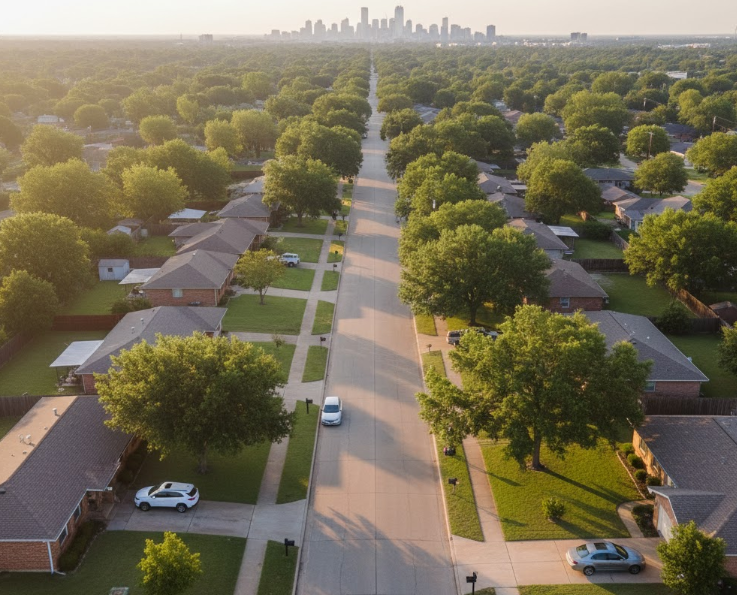
A Young Couple's First Home
A few months ago, a young couple came to us feeling exactly how you might be feeling right now—excited about buying their first home, but overwhelmed by everything they didn't know. They'd been scrolling Zillow for months, reading conflicting advice online, and weren't sure where to actually start. We spent time understanding their situation, walked them through the real numbers, and helped them get positioned before they even looked at a single house. When the right home came along, they were ready. They spent just one day touring homes before finding the perfect fit—and closed without a hitch. As they put it: "We were tactical in our approach... we took his advice with how to approach the deal, and are so glad we did." That's what this guide is about: helping you get from "maybe someday" to confidently closing on your first home—without the stress of figuring it out alone.What This Guide Covers
Key Takeaways
- Start preparing 6-12 months before you want to buy. This gives you time to optimize your credit, save strategically, and get pre-approved—not just pre-qualified.
- Texas has unique rules. The Option Period, earnest money structure, and new 2026 buyer representation requirements are different from other states.
- Down payment assistance is real. Programs like Fort Worth HAP offer up to $25,000. Tarrant County's program offers up to $50,000. Most require a 620+ credit score.
- Property taxes vary wildly. The difference between cities can be $300-400/month on the same priced home. MUD districts add even more.
- The 2026 market has normalized. Homes are staying on market 38-42 days. You have time to think, inspect, and negotiate.
- Common mistakes are avoidable. Not getting pre-approved, draining savings for the down payment, and skipping inspections are the biggest first-time buyer errors.
Step 1: Get Your Finances Ready (6-12 Months Before)
Check and Improve Your Credit Score
- 620-640 is the minimum for most Texas assistance programs and FHA loans
- 680+ gets you access to better conventional rates
- 740+ qualifies you for the best rates available
- Pay down credit card balances to below 30% of your limit (below 10% is ideal)
- Don't open any new credit accounts
- Don't close old accounts (length of credit history matters)
- Set up autopay to avoid any late payments
- Check your credit report for errors and dispute any inaccuracies
Which Score Matters?
Mortgage lenders use your "middle FICO score"—they pull from all three bureaus (Equifax, Experian, TransUnion) and use the middle number. If you're buying with a partner, they use the lower of your two middle scores. Free credit monitoring apps are helpful but may show different scores than what lenders see.Build Your Savings
| Savings Component | Purpose | Target Amount |
|---|---|---|
| Down Payment | Equity in the home | 3% - 20% of purchase price |
| Closing Costs | Lender fees, title, prepaids | 3% - 5% of purchase price |
| Due Diligence Fund | Inspection, option fee, appraisal | $1,500 - $3,000 |
| Emergency Reserve | Post-purchase safety net | 2-6 months of housing payment |
Don't Drain Your Savings
One of the biggest mistakes first-time buyers make is putting every dollar toward the down payment and closing costs, leaving nothing for emergencies. The water heater doesn't care that you just spent all your money on closing costs—it will still break. Keep a reserve.Step 2: Understand Your Real Budget
The 28/36 Rule
- 28% of your gross monthly income should be the maximum for housing costs (mortgage, taxes, insurance)
- 36% of your gross monthly income should be the maximum for all debt combined
Example: What Can a $85,000 Household Income Afford?
Gross Monthly Income: $7,083
28% Maximum Housing Payment: $1,983/month
Estimated Home Price (at 6% rate): $280,000 - $320,000
With Texas property taxes factored in: Closer to $260,000 - $300,000
Texas property taxes are significantly higher than the national average. A home that might be affordable in another state could stretch your budget here. Always calculate with real local tax rates.
Step 3: Get Pre-Approved (Not Just Pre-Qualified)
What You'll Need for Pre-Approval
- Last two years of W-2s (or tax returns if self-employed)
- Last 30 days of pay stubs
- Last 2-3 months of bank statements
- Government-issued ID
- Social Security number for credit check
Understanding Your Loan Options
| Loan Type | Down Payment | Credit Minimum | Best For |
|---|---|---|---|
| Conventional | 3% - 20% | 620-680 | Strong credit, want to avoid lifetime mortgage insurance |
| FHA | 3.5% | 580 | Lower credit scores, smaller down payment |
| VA | 0% | No minimum (lenders typically want 620+) | Veterans and active military |
| USDA | 0% | 640 | Rural areas (some Tarrant County areas qualify) |
January 2026 Mortgage Rates
As of late January 2026, 30-year fixed rates in Texas are averaging between 5.5% and 6.5%, depending on loan type and credit profile. This is significantly improved from the 7%+ rates of 2023-2024 but still higher than the historic lows of 2020-2021. Shop multiple lenders—rates can vary significantly.Step 4: Build Your Home Buying Team
Your Buyer's Agent
Your Mortgage Lender
- What are your current rates and fees?
- How long does your typical closing take?
- Do you work with Texas down payment assistance programs?
- Will you be available evenings/weekends if issues arise?
Your Home Inspector
- Foundation issues — The expansive clay soil in DFW causes significant foundation movement
- Roof and hail damage — DFW is a prime hail zone
- HVAC systems — Texas summers stress cooling systems
Your Title Company
Step 5: Find the Right Home
Needs vs. Wants
Research Neighborhoods
| City | Estimated Tax Rate | Annual Tax on $400K Home |
|---|---|---|
| Southlake | 1.22% - 1.79% | $4,880 - $7,160 |
| Keller | 1.34% - 1.91% | $5,360 - $7,640 |
| Fort Worth | 1.53% - 2.45% | $6,120 - $9,800 |
| Roanoke | 1.55% - 2.38% | $6,200 - $9,520 |
| Arlington | 2.62% - 2.90% | $10,480 - $11,600 |
The MUD Tax Surprise
We've seen buyers fall in love with a new construction home, only to discover at closing that the MUD taxes add $350/month to their payment. Always ask: "Is this property in a MUD or PID?" and get the exact tax rate before making an offer.New Construction vs. Resale
Step 6: Make an Offer
Key Components of a Texas Offer
The Option Period Is Your Protection
During the Option Period, you can walk away for any reason—bad inspection, cold feet, whatever. You lose the option fee, but your earnest money is returned. After the Option Period ends, backing out becomes much more complicated and expensive. Use this time wisely.Negotiation in the 2026 Market
- You have time to think (homes are averaging 38-42 days on market)
- Inspections and contingencies are normal (no pressure to waive them)
- Negotiation is expected (most homes sell below list price)
- Sellers are often willing to offer closing cost credits
Step 7: Under Contract to Closing
Days 1-3: Deliver Earnest Money and Option Fee
The option fee goes directly to the seller. Earnest money goes to the title company. Missing these deadlines can void your contract protections.Days 1-10: Option Period (Inspections)
Schedule your general inspection immediately. You may also need specialty inspections: foundation, roof, pool, sewer scope. Review results and negotiate repairs or credits with the seller.Days 7-14: Appraisal
Your lender orders an appraisal to verify the home's value supports the loan amount. If it comes in low, you'll need to renegotiate, pay the difference, or potentially walk away.Days 14-21: Financing Contingency
Your loan moves through underwriting. Respond quickly to any lender requests for additional documentation.Days 20-30: Title Work and Survey
The title company researches ownership history and identifies any issues. A surveyor verifies property boundaries.Days 28-30: Final Walkthrough
24-48 hours before closing, you'll walk through the property to verify it's in the agreed-upon condition and any negotiated repairs are complete.Day 30-45: Closing
Sign the final documents at the title company. Bring government ID and any required funds (cashier's check or wire transfer). After recording, you get the keys.Don't Do These Things While Under Contract
Don't open new credit cards or loans. Don't make large purchases. Don't change jobs. Don't move money between accounts without documentation. Any of these can derail your loan approval at the last minute.Step 8: Close and Move In
What to Bring to Closing
- Government-issued photo ID
- Cashier's check or wire confirmation for closing funds (the title company will give you the exact amount)
- Any documents your lender requested
Immediate Post-Closing Tasks
First Week Checklist
- Change all locks and garage door codes
- Set up utilities (electricity, water, gas, internet)
- Update your address (USPS, driver's license, voter registration)
- Locate the main water shut-off valve
- Locate the electrical panel
- Change HVAC filters
- Test smoke and carbon monoxide detectors
File for Your Homestead Exemption
- Removes a portion of your home's value from property tax calculations
- Caps annual assessed value increases at 10%—this is huge protection in a rising market
- Provides protection from certain creditors
Don't Forget This Step
We've seen first-time buyers forget to file their homestead exemption and pay thousands more in taxes than necessary. Set a reminder to file within your first month of ownership.Texas First-Time Homebuyer Assistance Programs (2026)
Fort Worth Homebuyer Assistance Program (HAP)
Up to $25,000 in down payment and closing cost assistance for buyers within Fort Worth city limits.
Income Limit: At or below 80% of Area Median Income
Property Limits: Existing homes up to $309,000; new construction up to $329,000
Asset Limit: Liquid assets cannot exceed $25,000
Repayment: Forgiven over 5-10 year affordability period
Credit Requirement: Typically 620+
Tarrant County Homebuyer Assistance Program
Up to $50,000 in assistance for buyers in Tarrant County (outside Fort Worth, Arlington, Grand Prairie).
Funding Source: HUD HOME Investment Partnerships Program
Affordability Period: 10-20 years
Note: Longer commitment but significantly higher assistance amount
TSAHC (Texas State Affordable Housing Corporation)
State-level programs including "Homes for Texas Heroes" (teachers, police, firefighters, veterans) and "Home Sweet Texas Home Loan Program."
Assistance: Down payment assistance as a grant or forgivable second lien
Credit Requirement: Typically 620+
Includes: Below-market interest rates
TDHCA - My First Texas Home
30-year fixed-rate mortgages with down payment assistance up to 5% of the loan amount.
Can be paired with: Mortgage Credit Certificate (MCC) for up to $2,000 annual federal tax credit
Credit Requirement: 620+
Income Limits: Vary by county and household size
Can You Combine Programs?
Yes, in many cases you can stack multiple assistance programs. For example, you might combine a TDHCA mortgage with their MCC tax credit. Your lender should be familiar with how to structure this—ask specifically about combining programs when you're getting pre-approved.Common First-Time Buyer Mistakes (And How to Avoid Them)
Mistake #1: Not Getting Pre-Approved First
Touring homes before you know what you can afford wastes time and leads to disappointment. Get pre-approved before you start looking.Mistake #2: Draining Your Savings for the Down Payment
Putting every dollar toward closing leaves you vulnerable. Unexpected repairs, appliance failures, and emergencies don't wait. Keep a reserve.Mistake #3: Making Big Purchases Before Closing
That new car or furniture set can wait. New debt or large purchases while under contract can kill your loan approval. Don't do anything financially significant until after you have the keys.Mistake #4: Waiving Inspections
In North Texas, foundation issues and hail damage are common and expensive. Skipping inspections to make your offer more competitive can cost you tens of thousands later.Mistake #5: Ignoring Property Tax Variations
Two identical houses priced the same can have dramatically different monthly payments based on their tax districts. Always calculate with real tax rates.Mistake #6: Falling in Love Too Fast
Emotional attachment clouds judgment. It's okay to love a house, but make decisions based on data—comps, inspection results, and real costs—not feelings.Mistake #7: Forgetting to File Homestead Exemption
This costs you money every single year you don't file. Set a reminder to file within your first month of ownership.Tarrant County Market Data: January 2026
$333K Median Price (County)
38-42 Days on Market
98.2% Sale-to-List Ratio
3.8-4.0 Months of Inventory
Prices by City (January 2026)
| City | Median Price | Days on Market | Market Conditions |
|---|---|---|---|
| Southlake | $1,320,000 | 52 | Luxury hub, competitive |
| Keller | $629,000 | 28 | Fast-moving, top schools |
| Roanoke | $585,000 | 124 | Balanced, high growth area |
| Grapevine | $567,500 | 61 | Historic charm, moderate pace |
| Fort Worth | $340,500 | 42 | Urban core, still competitive |
| Arlington | $334,000 | 66 | Most buyer-friendly, balanced |
What This Means for Buyers
Frequently Asked Questions
How much do I need for a down payment in Texas?
It depends on your loan type. VA and USDA loans offer 0% down. FHA requires 3.5%. Conventional loans can go as low as 3%. Plus, down payment assistance programs can cover some or all of this. You don't necessarily need 20% down—that's a common misconception.What credit score do I need to buy a house?
For most Texas assistance programs and FHA loans, you need at least 620. Conventional loans typically want 620-680+. The higher your score, the better your interest rate. If you're below 620, focus on credit improvement for 6-12 months before applying.How long does it take to buy a house in Texas?
From offer acceptance to closing, typically 30-45 days. But you should start preparing 6-12 months before you want to buy (credit optimization, saving, getting pre-approved). The active search phase varies—some buyers find the right home in days, others take months.What is the Option Period in Texas?
A unique Texas protection that gives buyers 5-10 days to terminate the contract for any reason in exchange for a small fee ($100-$500). This is when inspections happen. If you back out during this period, you lose the option fee but get your earnest money back.Do I need a Realtor to buy a house in Texas?
Legally, no. Practically, for most first-time buyers, yes. The Texas process has unique elements (Option Period, MUD disclosures, TREC contracts) that are easy to mishandle. For a detailed breakdown, see our guide: Do You Need a Realtor to Buy a House in Roanoke, Texas?What are closing costs in Texas?
Typically 3-5% of the purchase price. This includes lender fees, title insurance, appraisal, survey, prepaid taxes, and insurance. On a $350,000 home, expect $10,500-$17,500 in closing costs. Sellers can contribute toward these in negotiations.What is a homestead exemption and why does it matter?
The homestead exemption reduces your property tax burden and caps annual assessed value increases at 10%. In a rising market, this protection is significant. File with the Tarrant Appraisal District within your first year of ownership—the deadline is April 30.What are MUDs and PIDs?
Municipal Utility Districts (MUDs) and Public Improvement Districts (PIDs) are special taxing districts common in newer Tarrant County developments. They fund infrastructure and amenities but add to your tax bill—sometimes significantly. Always ask if a property is in a MUD or PID before making an offer.Ready to Start Your Home Buying Journey?
Whether you're six months out or ready to start looking now, we're here to help you navigate the process at your pace. No pressure, no rush—just clear guidance and honest answers to your questions. Schedule a Conversation Try Our Mortgage CalculatorThe Bottom Line
"If all of this feels like a lot, that's okay. It is a lot—but you don't have to figure it out alone. Take it one step at a time. Bookmark this guide and come back to it as you move through the process. And when you're ready to talk, we're here."
Check out this article next